
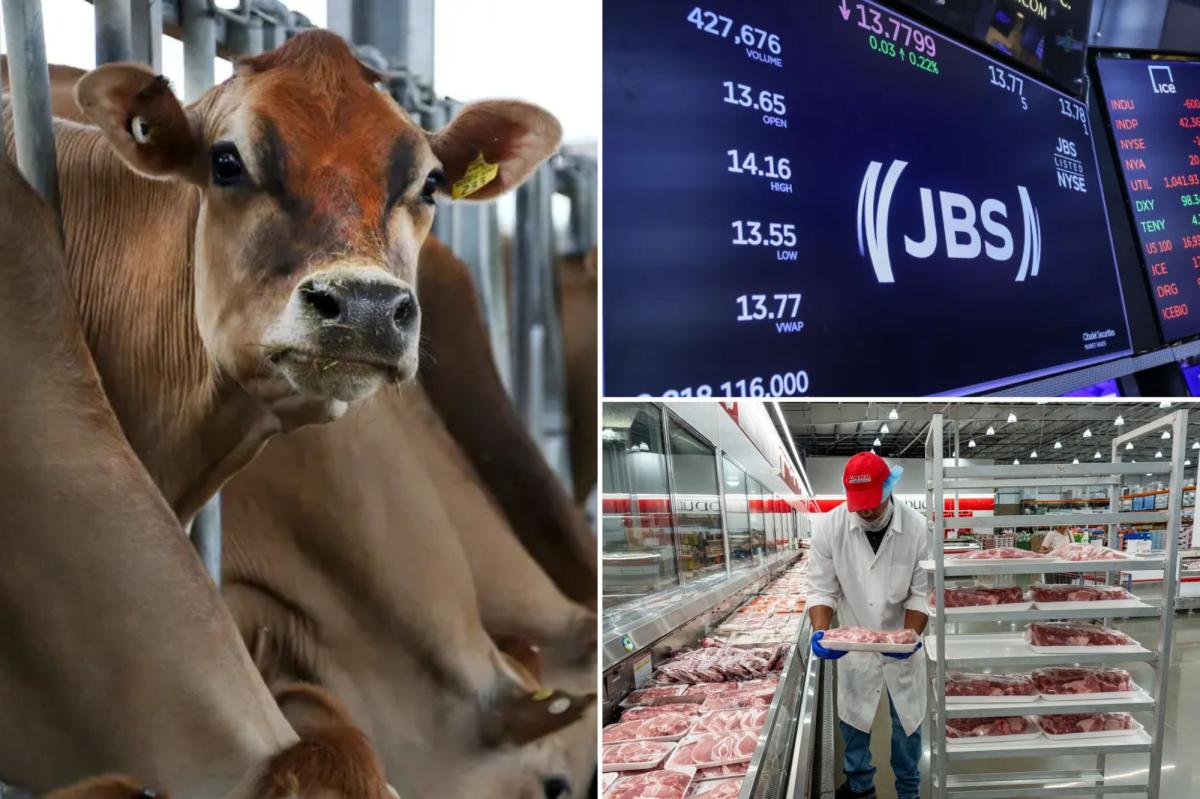
A major meat supplier is shuttering two US plant locations, and experts say it’s bad news for carnivores.
JBS USA, a meat-processing company that supplies Costco and BJ’s, as well as grocers such as Food Lion, Weis Markets, WinCo, and Stop & Shop, announced this week that it is closing its operations in Philadelphia and Memphis, eliminating a total of 2,000 jobs.
“These decisions are never easy because they directly affect our team members and the communities where we operate,” said Wesley Batista Filho, CEO of JBS USA.
“We are deeply grateful to the team members at these facilities for their efforts and contributions over many years. Our focus right now is on supporting them with transparency, respect, and access to new opportunities wherever possible.”
According to JBS, which packages, processes, and prepares meat in 15 countries, the shuttered beef plants will be absorbed into other operations.
Earlier this year, JBS announced it was consolidating its beef and case-ready businesses to improve efficiency and enhance productivity.
JBS controls about 20 percent of the slaughtering capacity for US cattle and hogs, according to industry estimates.
Along with Tyson, Cargill, and National Beef, JBS processes about 85% of the nation’s grain-fed cattle.
Although the herd has shrunk to a 75-year low amid record drought levels and higher production costs.
It remains to be seen how the JBS closures will impact the price or plentitude of beef.
The closures come as beef prices continue to rise. However, paying a premium has yet to lessen American appetites for beef.
According to US Department of Agriculture data, the average price of beef climbed from about $8.70 per pound in March 2025 to $10.08 a year later, an increase of roughly 16%.
Even so, demand has held up. In 2025, shoppers spent more than $45 billion on beef, buying more than 6.2 billion pounds, according to data from Beef Research, a contractor for the National Cattlemen’s Beef Association.
Spending jumped about 12% from a year earlier, while the amount of beef sold rose more than 4% — a sign consumers aren’t just paying more, they’re buying more.
Despite consistent consumer demand, JBS has been battling losses.
In the first quarter of 2026, the company reported a net loss of $279 million, compared with a $158 million loss in the first quarter of 2025.
Experts maintain that the closure of the two US plants will leave consumers with fewer options for beef purchases.
JBS underscored that these forthcoming closures are integral to a “broader strategy focused on growth, modernization, and long-term competitiveness in the United States.”
In the poultry game, JBS-owned Pilgrim Pride announced it would transition some of its chicken production from Chattanooga, Tennessee, to Ellijay, Georgia, where it plans to invest $75 million into an existing location.
Investment notwithstanding, 348 Pilgrim Pride employees are expected to lose their jobs.
Representatives clucked that a portion of the investment money will be directed toward the production of boneless chicken products.
“We must ensure our operations are efficient, modern, and positioned to compete,” said Filho.
“By investing where we are growing and making difficult adjustments where needed, we are building a stronger and more resilient company,” he added.
In 2021, a cyberattack shut down all of JBS’s US beef plants.
Read the full article here