


In a city that changes faster than a Midtown rent hike, some New Yorkers are doing the unthinkable: hitting pause — on the present.
From Jazz Age cocktail bars to punk-rock basements that still smell like hairspray and rebellion, a growing set of young New Yorkers are spending their weekends time-traveling through the five boroughs — no flux capacitor required.
The inspiration? TikTok creator Dasha Kofman, whose nostalgic “day in the decade” videos have turned NYC into a living, breathing time machine.
“I’m on a mission to spend a day in New York City like all the decades. Here’s how you could do it as if you were in the 1950s and ’60s,” the 29-year-old says in one viral video.
She adds that the idea is to “start each day the way New Yorkers would’ve in the mid-century,” before heading to a famous “Goodfellas” filming spot and calling Jackson Hole Diner one of the only places in the city that truly captures the era.
“I love to feel like I am back in time and can really experience the city’s history, even if for a moment,” Kofman told The Post.
Old World NYC (early 1900s–1940s): tuxedos, tiles, and time standing still
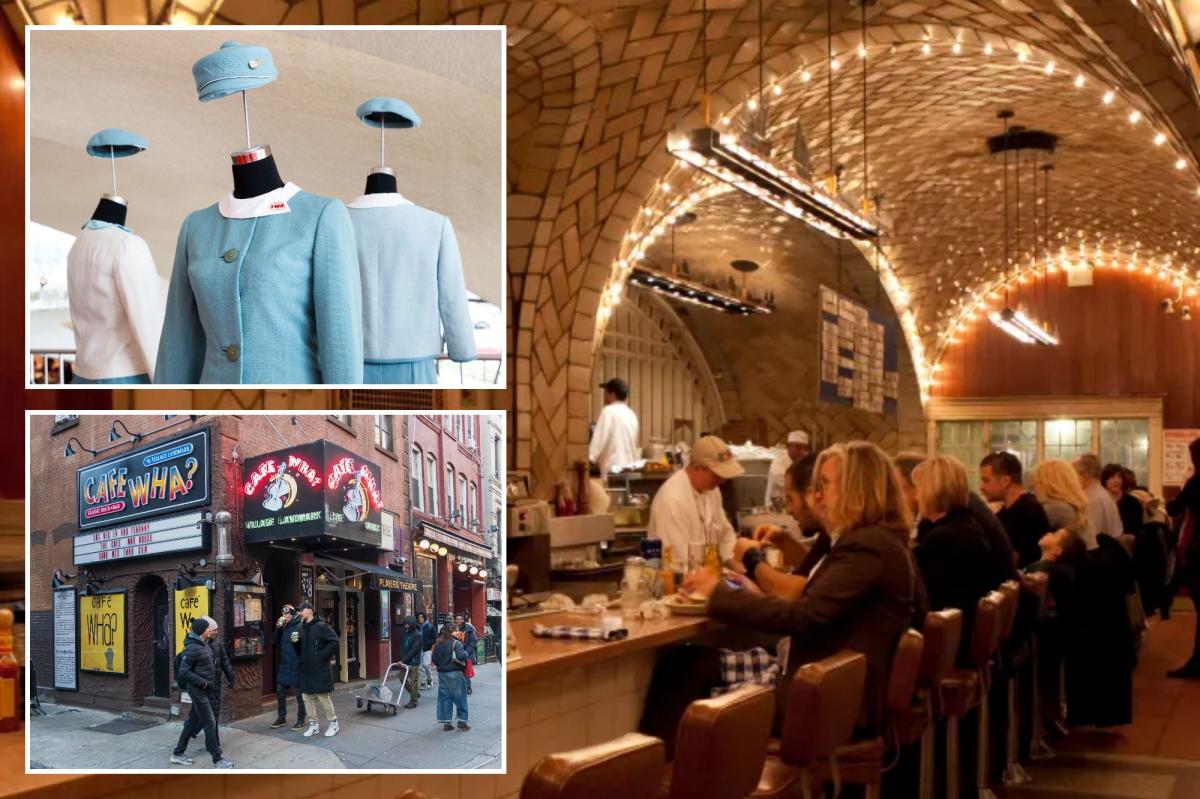
At the Grand Central Oyster Bar within Grand Central Terminal, vaulted Guastavino tile ceilings arch overhead like a cathedral dedicated to shellfish and commuting suits.
It’s all white-jacketed servers, echoing footsteps, and the sense you may have accidentally ordered lunch in 1928.
“‘It’s so fun to imagine all of the people who have walked through the same doors and what they might have talked about or felt like when living in New York City back in the day,” the vintage lover said.
Down in the Union Square, Pete’s Tavern (129 E. 18th St.) leans hard into its gaslamp mythology — a bar so old it allegedly survived Prohibition by pretending to be a flower shop.
Then there’s Bemelmans Bar at 35 E. 76th St., where hand-painted murals glow under dim lighting, and a pianist casually resurrects the Jazz Age nightly.
For something more edible than aesthetic, uptown relics like Barney Greengrass (541 Amsterdam Ave.) still serve smoked fish like it’s a sacred trust.
Then there’s the East Village’s McSorley’s Old Ale House (15 E. Seventh St.), opened in 1854 and still stubbornly serving only light or dark beer like it hasn’t received a single memo since the Civil War.
1950s–’60s Americana: diners, jet set dreams, and soda fountain glow
At Astoria’s Jackson Hole Diner (69-35 Astoria Blvd. North), booths glow under chrome lighting, burgers arrive like clockwork, and everything feels permanently stuck in 1972 — in the best possible way.
La Bonbonniere (28 Eighth Ave.) is the West Village’s cash-only, no-frills, proudly unchanged diner — open since the 1930s, long before “brunch” became a personality trait.
For dessert, Eddie’s Sweet Shop in Forest Hills (105-29 Metropolitan Ave.) delivers ice cream sundaes in a parlor so frozen in time it might qualify as historical preservation.
Then there’s the jet-age fantasy of the TWA Hotel (1 Idlewild Drive, JFK International Airport), where retro-futurism meets rooftop pool lounging.
And because NYC always finds a way to mix old and new, spots like Fidi’s Conwell Coffee Hall (6 Hanover St.) are turning historic interiors into modern caffeine temples.
1960s Village Bohemia: poetry, protest and perpetual espresso
Here’s where Gotham gets smoky, artistic and unwashed in a romantic way.
At the Greenwich Village staple Caffe Reggio (119 MacDougal St.), Renaissance paintings hang above espresso machines that allegedly served America’s first cappuccino; you can still imagine Bob Dylan and Allen Ginsberg rambling in the corner.
Just steps away, Cafe Wha? (115 MacDougal St.) continues its basement-club legacy, where Jimi Hendrix and Simon & Garfunkel once played. Today’s bands still sweat through the same mythology.
Jazz devotees also often drift to the nearby Village Vanguard (178 Seventh Ave. South), where the ’60s never really ended — they just added better acoustics.
And for pizza-as-time-capsule energy, John’s of Bleecker Street (278 Bleecker St.) serves coal-oven slices in a dining room that looks like it’s actively refusing renovation out of principle.
1970s downtown grit + punk chaos
This is the New York of cigarette burns, graffiti-covered subway cars, and CBGB nights that ended sometime after sunrise.
East Village punk emporium Trash and Vaudeville (96 E. Seventh St.) still looks like the uniform shop for a band that never broke up.
Having outfitted iconic rockers like the Ramones, Debbie Harry and Iggy Pop, it’s packed with leather pants, studded belts and countless pairs of Doc Martens.
Popular vintage haven Search & Destroy (25 St. Marks Place) is filled floor-to-ceiling with fishnets, platform boots, vinyl jackets and plenty of neon animal print.
Late-night energy lives on in Chinatown at Wo Hop (17 Mott St. basement), a beloved Chinese restaurant where fluorescent lighting and red vinyl booths feel unchanged since disco peaked, while Gray’s Papaya (2090 Broadway) keeps the uptown 1970s alive one hot dog at a time.
1980s Wall Street vibes + yuppie Manhattan
By the ’80s, the vibe shifted from downtown grit to uptown prestige.
Dinner at Tribeca’s The Odeon (145 W. Broadway) channels peak pre-crash Manhattan — all martinis, suspenders and expensive optimism.
Harry’s Bar & Restaurant (1 Hanover Square) is old Wall Street in restaurant form, drawing Financial District traders, dealmakers, and suit-and-tie regulars in a refreshingly untouched way.
Midtown’s Lotte New York Palace (455 Madison Ave.) taps into the glossy luxury fantasy that defined late-1980s New York — all marble lobbies, gold accents and “Dynasty”-style excess.
1990s–early 2000s: rom-com bookstores, indie bands and downtown cool
This is the era of flip phones, fluorescent optimism, and people discovering themselves in $3 coffee shops.
At Greenwich Village’s Generation Records (210 Thompson St.), vinyl crates and band tees make downtown feel trapped in the grungy pre-streaming era, while the Lower East Side’s indie venue and bar Arlene’s Grocery (95 Stanton St.) hums like it’s one unpaid gig away from becoming The Strokes’ rehearsal space again.
Book lovers drift between Three Lives & Company (154 W. 10th St.) in the West Village and Books of Wonder (42 W. 17th St.) in Flatiron, both forever lifted from “You’ve Got Mail.”
For peak sitcom nostalgia, Tom’s Restaurant (2880 Broadway) on the Upper West Side remains “Seinfeld”-coded, with memorabilia lining the walls, and the instantly recognizable facade immortalized as the show’s fictional diner exterior.
Even the restaurant scene leans ’90s nostalgic.
Soho brasserie Balthazar (80 Spring St.) buzzes like it’s the height of the late-’90s media boom, while Gramercy Tavern (42 E. 20th St.) and Jean-Georges (1 Central Park West) serve up polished Manhattan ambition that defined turn-of-the-millennium dining culture.
Read the full article here