



Ask a Gen Z or Millennial traveller where they’re heading this year, and you might get very different answers.
New research has shown that the two generations travel dissimilarly, and it’s down in part to budget or social influence.
Youth travel specialist Adventure360 analysed more than 4,700 bookings made over the past year to see where the two generations are actually travelling.
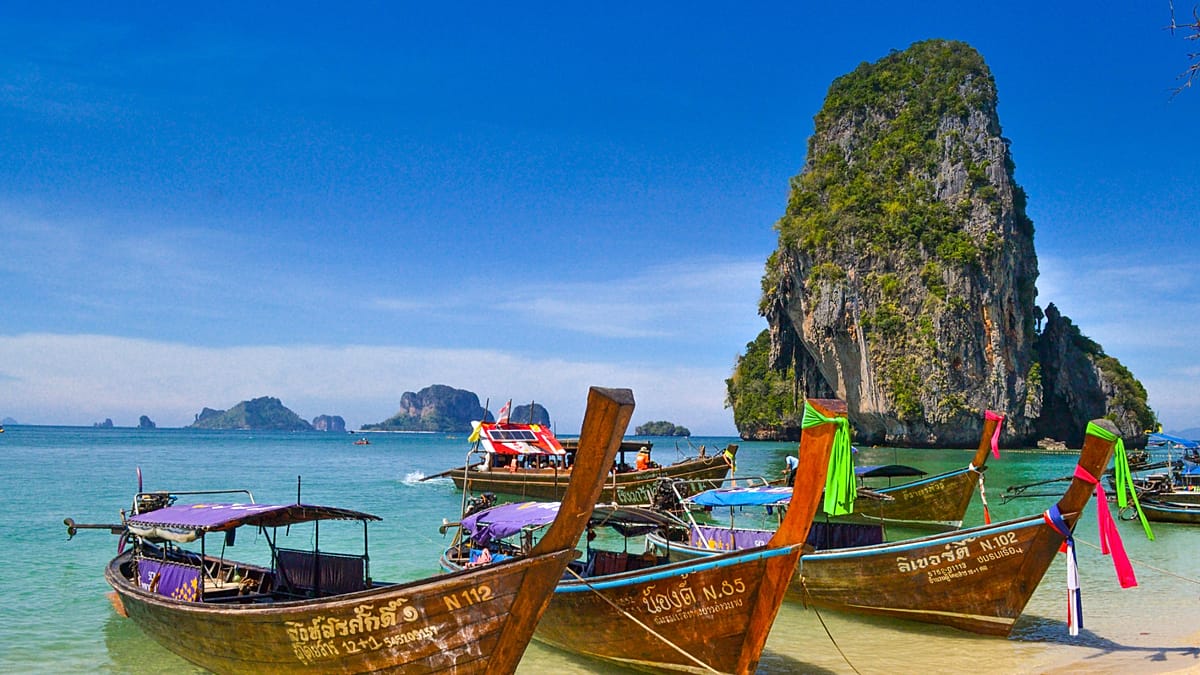
Thailand tops the Gen Z list, while Australia takes the Millennial crown, with Cambodia, Laos and New Zealand emerging as Gen Z favourites and Japan, Greece and Iceland proving more popular with slightly older travellers.
To rank the most popular options, travellers were split into Gen Z and Millennials, and each country was measured on the share of bookings. In the end, percentages showed how many of every 100 bookings in each age group included a visit to a particular country.
The differences between Gen Z and Millennials’ travel habits
For Gen Z, Thailand was far and away the most popular choice, featuring in 29.2% of bookings – that’s the single highest figure recorded for either generation.
Thailand was also in second place for Millennials, with a score of 17.4%, behind Australia, which had slightly more at 17.8%.
Cambodia and Laos as well as New Zealand all ranked in the Gen Z top 10, but none of them appeared in the Millennial list at all.
At the same time, Japan, Greece and Iceland all made the Millennial top 10 and not one of them came close to ranking for Gen Z.
Experts at Adventure360 put Gen Z’s favourite destinations partially down to what’s trending.
For instance, video clips recreating the mobile game Temple Run through the corridors of Angkor Wat in Cambodia have passed two million views on social media.
Long Beach in Koh Rong, also in Cambodia, has been going viral this year, after it was named among the 10 best beaches in the world while, in Laos, the Kuang Si waterfalls are drawing millions of views from travellers adding them to their bucket lists.
From affordability to visas: Other trends revealed in the study
Thailand is popular with both generations due to its affordability – and there’s a reason why it’s been a favourite destination with young travellers for years, not least because the island of Koh Tao is the most affordable place on the planet to qualify as a scuba diver.
Cambodia and Laos used to be added on to trips to mega-popular Thailand and Vietnam, but the study shows they’re both being booked deliberately, and individually now.
That new popularity is partly thanks to TikTok videos, a significant source of travel inspiration for Gen Z, as well as its serious affordability, with rock bottom prices for decent accommodation very common.
New Zealand’s popularity with Gen Z seems to be down to its working holiday visa, which allows many passport holders aged 18 to 35 to stay for up to 36 months. The island nation ranks ninth for Gen Z but doesn’t feature for Millennials, as many have aged out of being able to get the visa.
Gen Z are also keen to visit places which are quieter, with the study looking at Skyscanner data which shows that 76% are open to picking a lesser-known destination over a popular one.
According to the data, 51% were found to have actively planned a quieter trip because of crowding, with one in three saying crowds have spoiled a previous holiday.
Financial differences come into play, too, with Japan, Greece and Iceland belonging to Millennials, because of their higher price points.
Interestingly, 60% of UK-based Gen Zs said they expect to travel abroad more this year, but only 45% plan to spend any more on flights to do it, which takes some destinations out of the equation.
“Iceland and Japan are the two I get asked about most frequently by millennial customers,” Jane McLellan-Green, travel expert at Adventure360, said.
“A £5 (€5.85) coffee in Reykjavík is a hard sell for Gen Z when the same money covers a bed for the night in Vientiane (the capital of Laos), but millennials are much happier to pay the price.”
Where Gen Z and Millennials travel: The top 10 countries
Gen Z
- Thailand
- Australia
- Indonesia
- Vietnam
- Cambodia
- Laos
- Peru
- Phillipines
- New Zealand
- Morocco
Millennials
- Australia
- Thailand
- Philippines
- Japan
- Indonesia
- Peru
- Morocco
- Greece
- Iceland
- Vietnam
Read the full article here