




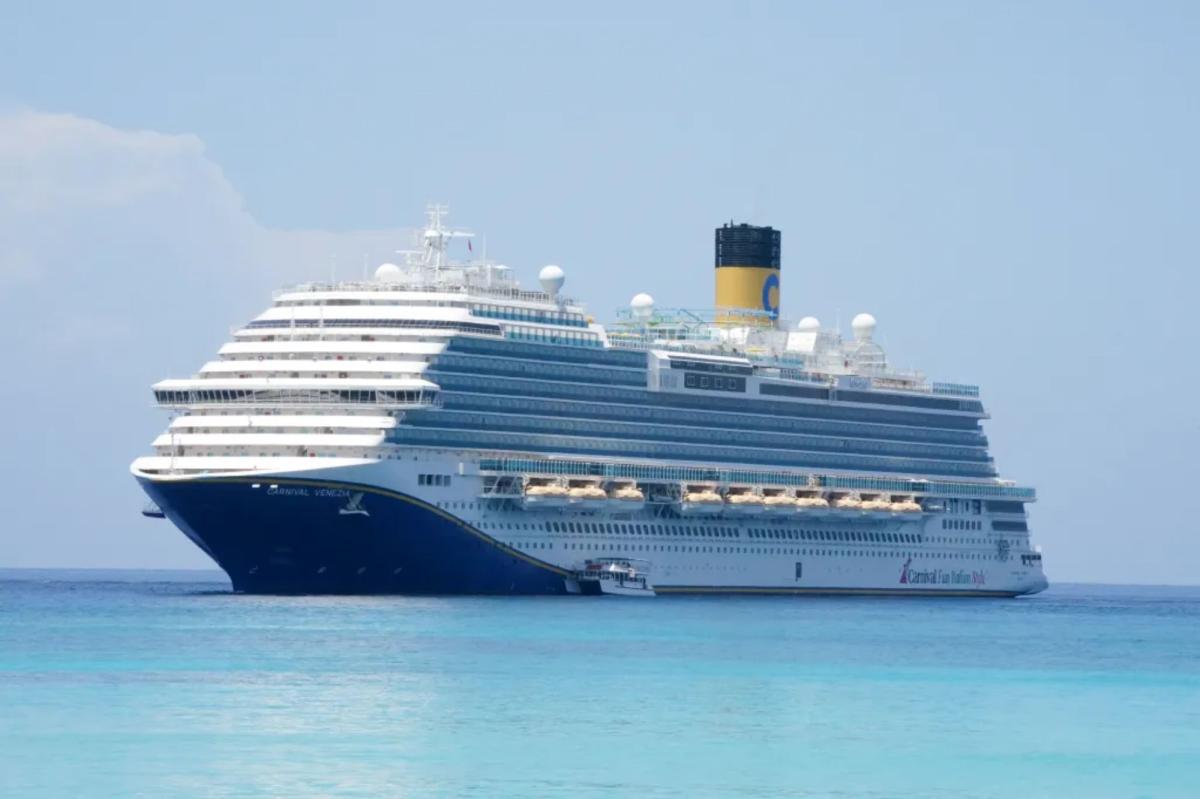
Here’s your chance to finally seas the day.
If you’re a seafaring wannabe looking to take a cruise but don’t want to break the bank, look no further than one of travel’s best-kept secrets.
Repositioning cruises are essentially one-way trips on a ship that moves from one seasonal route to another due to itinerary changes. But rather than letting a ship simply sit empty on its journey overseas, cruise companies allow passengers to hop aboard and enjoy the ride — often for a discounted rate, without the annoying crowds.
When do repositioning cruises happen?
Most take place twice a year during “shoulder” seasons — the time between the high and low peaks of travel, as ships move between their summer and winter ports during the spring and fall.
For example, if a ship is positioned in the Caribbean over the winter, it likely needs to get over to the Mediterranean in the spring.
How long are the cruises?
The sailings can run for several weeks, compared to a typical cruise sailing of around three to seven nights, and there are more days at sea since you’ll be crossing oceans. Because of that, guests on repositioning cruises will also spend more time on the ship, rather than disembarking at different spots throughout the trip.
This can be good or bad, depending on the type of person you are and what you prefer in your travels. If you want time to explore a ship, a repositioning cruise is a great opportunity to do so — but if you’re looking to stop at as many traditional ports as possible, you might want to try a traditional cruise.
Where do they go?
Of course, that doesn’t mean there are no stops at all on repositioning cruises. The voyages often visit uncommon or exotic ports during the relocation process, and some even transit the Panama Canal.
The most common itineraries feature sailings from Alaska to Hawaii or transatlantic sailings from the Mediterranean to the Caribbean, as well as the reverse, according to RepositioningCruise.com.
On transatlantic sailings, destinations may include the Azores, Madeira or Bermuda. Transpacific sailings may stop at Easter Island or Pitcairn Island, while longitudinal cruises from the Arctic or Great Lakes to Antarctica may visit Manaus in the Amazon.
For example, Celebrity Cruises’ Spain and Bermuda Transatlantic repositioning cruise is a whopping 16 nights long and only spends nine days at sea, departing from Barcelona, Spain, and stopping at ports such as Cartagena, Spain; Malaga, Spain; Gibraltar, UK; Seville, Spain; Madeira, Portugal; and Royal Naval Dockyard, Bermuda, before docking in Miami, Florida.
How much do repositioning cruises typically cost?
They are often cheaper than a traditional cruise, but the total price is dependent on the route and availability. For example, the Celebrity transatlantic trip mentioned above starts at $3,360 per person — but it’s also a lengthy voyage.
When looking at a cruise on a per-day basis, repositioning cruises ultimately come out to be extremely affordable, and since there are traditionally fewer ports of call, there are lower taxes and port fees to run up.
Celebrity Cruises, for example, lists its Spain and Morocco transatlantic 13-night repositioning cruise for a current starting price of just $722 per person — about $56 per night.
By comparison, the popular cruise line offers a round-trip,13-night jaunt from Singapore to Thailand, Malaysia, Bali and back for more than twice that, starting at $1,728 per person.
In addition, Norwegian Cruise Line’s 14-day transatlantic repositioning trip from Lisbon, Portugal, to Jacksonville, Florida, starts at $1,039 per person, and Virgin Voyages’ 12-night Bermuda and Caribbean cruise, journeying from New York City to San Juan, currently starts at $2,138 per cabin.
Besides Celebrity, Norwegian and Virgin, major cruise lines including Royal Caribbean, Carnival Cruises and Princess Cruises all list their repositioning travel and prices on their respective websites.
What are the pros and cons?
Traveling in the off-season means fewer crowds and better chances of getting peak perks of a cruise, such as luxe and premium cabins, entertainment, and food and drink. To keep passengers busy while at sea, many lines offer a range of programming, such as guest speakers, comedy nights, evening shows, wine tastings and fitness classes.
Repositioning cruises also aren’t heavily promoted, so they tend to attract seasoned cruisegoers and are rarely full. In fact, there are whole communities of people who are loyal to the one-way voyage and won’t cruise any other way.
One downside is that because repositioning cruises are always one-way, you’ll end up at a different port than where you started, possibly on the other side of the world, so you’ll have to pay for a flight back home.
But the cost of that flight back might be offset by the discounted price of the cruise in general, plus the fact that by covering more ground and going to unique and lesser-visited ports, you’re stretching your dollar. Some travelers may also want to use the cruise’s final destination as a jumping-off point to continue traveling on the ground.
Another advantage of most repositioning cruises is that there are no restrictions on how much luggage guests can bring, though airlines do have certain restrictions, so travelers should check with their airline if their baggage will add to the cost of their trip.
Read the full article here