




NEWYou can now listen to Fox News articles!
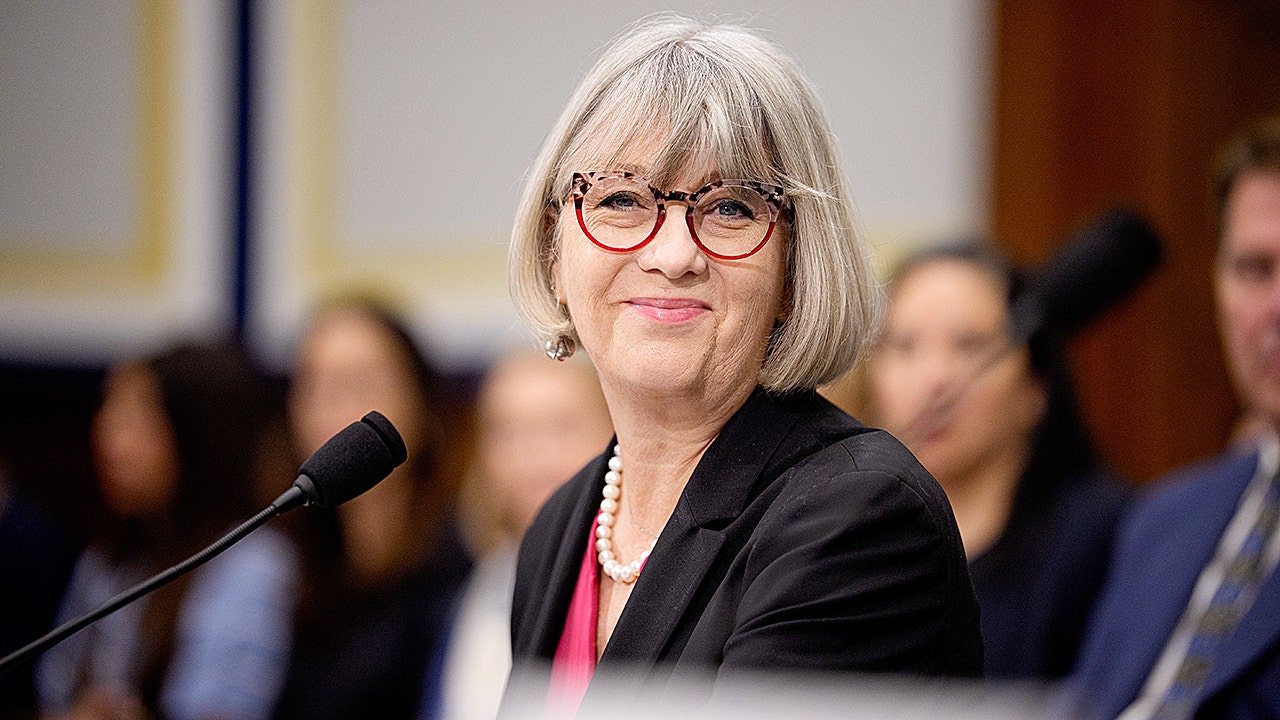
After an explosive series of congressional hearings on alleged woke “ideological capture” at the Smithsonian, a resurfaced video of a presentation by National Museum of American History Director Anthea Hartig shows her calling “history as a practice” a “prime tool of social justice.”
In a series of July hearings on Capitol Hill, Hartig defended the Smithsonian’s record of objectivity and nonpartisanship. However, in a resurfaced presentation to University of California, Los Angeles students in February 2025, Hartig described “a number of ways in which your National Museum of American History is taking an equity-based, justice forward, community driven and necessarily humble approach to public history and to service.”
Later in her presentation, Hartig asserted that the “United States’ long and violent racial history continues to be present in our reckoning, if you will.”
She said that “redress in the form of reparation, of course, goes beyond acknowledgement of wrongdoing; it should leverage responsibility, it should think about the act of correction, as we pursue restorative justice and, for us [on the call], restorative justice through history.”
TRUMP V. SMITHSONIAN: A TIMELINE OF HOW THE WHITE HOUSE FIGHT OVER ‘WOKE’ HISTORY UNFOLDED
During her testimony on Capitol Hill last month, Hartig stated: “Our work is governed by the Smithsonian standards of scholarship, accuracy, independence and nonpartisanship.” She said, “the museum does not take sides in America’s political debates,” but instead, “We preserve and document the evidence of American life in all of its breadth, so that the public can encounter the past and draw their own conclusions.”
However, in her presentation to UCLA, she asserted that “history as a practice … is for me a prime tool of social justice.”
Hartig began her talk with a land acknowledgement and a slide showing a picture of an American flag defaced with words that appeared to read “Defund the Police.” Her caption said the photo was from a Black Lives Matter protest in Washington, D.C., in 2020. Another photo Hartig showed later in the presentation depicted a protester holding a sign that read, “America loving you is complicated.”
She remarked that the museum opened in 1964 as “this kind of Cold War, you know, ‘We’re going to be the best and most technologically advanced country in the nation and we’re going to show everyone how we did that’ … We clearly have moved away from that.”
TRUMP ORDERS SIGNS OUTSIDE SMITHSONIAN MUSEUM AMID ROW OVER ITS DEPICTION OF AMERICAN HISTORY

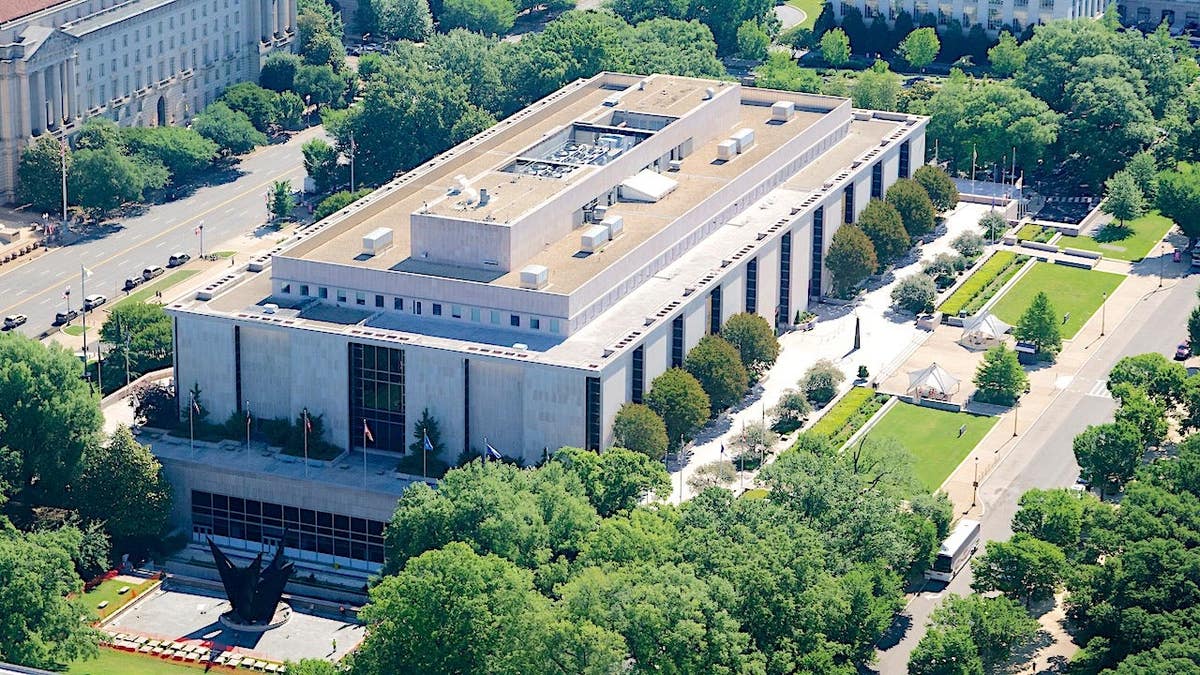
Instead, Hartig highlighted what she called the museum’s “bold new vision” to become the “most accessible, inclusive, relevant, and sustainable public history institution in the country.” This, the vision states, will allow the museum to “serve an audience that reflects the full racial, class, gender, ethnic, and geographic demographics of the United States.”
To this end, Hartig said the museum “joined a very collaborative Smithsonian-wide collecting effort around Black Lives Matter … to document and preserve and share objects focused on Black Lives Matter to show the history of the movement starting in 2012.”
She shared a picture of protest signs outside the White House from the summer of 2020 and spoke highly of “these phenomenal, ephemeral statements, signs … expressing that kind of very heartfelt and incredibly poignant [message].”
Hartig also praised an anti-ICE organization called “Tsuru for Solidarity” as a “truly remarkable group,” highlighting its collaboration with the Black Lives Matter movement.
According to its website, Tsuru for Solidarity is a “nonviolent, direct action project of Japanese American social justice advocates and allies working to end detention sites and support directly impacted immigrant and refugee communities that are being targeted by racist, inhumane immigration policies.” Its website also states, “We stand on the moral authority of Japanese Americans who suffered the atrocities and legacy of U.S. concentration camps during WWII and we say, ‘Stop Repeating History!’”
FORMER DEMOCRATIC STAFFERS, DEI LEADERS SHAPE SMITHSONIAN LEADERSHIP AMID POLITICAL FIRESTORM

Besides the Black Lives Matter initiative, Hartig said the museum is pursuing a “proactive multilingual strategy to support language justice.”
She explained that “the idea, of course, [is] that everyone has the right to communicate in the language in which they feel most comfortable to be understood and to understand.”
To this end, she said that since the fall of 2019, “all exhibitions and signage and digital projects will be at least bilingual in English and Spanish and a number of them in more languages depending on the project and communities of origin.”
Hartig asserted, “We’re under attack for speaking complicated truths” and urged students to “raise your voices and speak them together.”
She said, “It continues to grow resolute in my mind, [history] is the key that unlocks the mysteries of humanity, of meaning, of place, of conquest, of love, power, authority and self.”
SIGN UP TO GET THE POLITICS NEWSLETTER
“We are tellers of stories and seekers of truths, hopefully embracers of nuance, ambassadors of empathy and defenders of inalienable rights,” she said.
CLICK HERE TO DOWNLOAD THE FOX NEWS APP
Fox News Digital reached out to the National Museum of American History, the Smithsonian Institution, Black Lives Matter and Tsuru for Solidarity for comment.
Read the full article here