




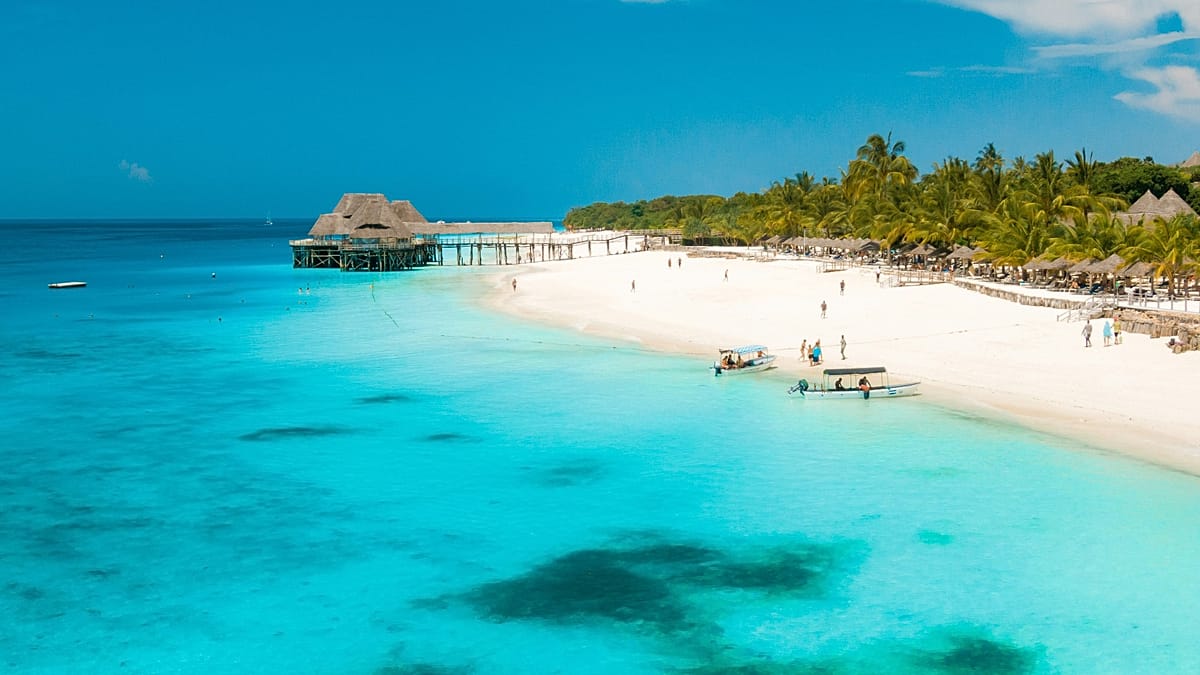
With its stunning beaches, turquoise waters and a rich blend of African, Arab and European heritage, Zanzibar has become one of the Indian Ocean’s fastest-growing travel destinations.
Long known as a backpacker favourite and honeymoon hotspot, the Tanzanian archipelago is increasingly attracting European visitors thanks to improved flight connections, luxury resorts and its reputation for offering a more affordable alternative to destinations such as the Maldives and Mauritius.
Whether you’re looking for a beach escape, cultural experiences or a safari-and-sea adventure, here’s everything you need to know before visiting Zanzibar.
Where is Zanzibar?
Zanzibar is a semi-autonomous archipelago off the coast of Tanzania in East Africa, surrounded by the warm waters of the Indian Ocean.
Located around 35 kilometres from the mainland city of Dar es Salaam, it is made up of two main islands, Unguja (commonly referred to as Zanzibar) and Pemba, along with several smaller islands.
How to get to Zanzibar from Europe
Situated on Unguja Island, Abeid Amani Karume International Airport (ZNZ) is approximately five kilometres south of Zanzibar City.
You can fly directly to Zanzibar from several European destinations using airlines like Air France, KLM, Edelweiss Air, and TUI fly. For indirect flights, passengers can connect through major global hubs using Turkish Airlines, Qatar Airways and Emirates.
Italy is also expanding access, with Neos airline launching a seasonal weekly service from Milan Malpensa to Zanzibar via Kilimanjaro from 14 July to 20 October.
The biggest recent development for UK holidaymakers is TUI’s announcement that it will launch the first-ever direct flights from London Gatwick to Zanzibar as part of its winter 2027 programme.
The twice-weekly service will operate every Wednesday and Sunday from 3 November 2027 until 22 March 2028, opening up the islands to travellers looking for guaranteed winter sunshine without changing planes.
Where to stay
Accommodation ranges from boutique guesthouses in historic Stone Town to ultra-luxury beachfront resorts along the island’s east and north coasts.
According to Tripadvisor’s traveller rankings, favourites include the all-inclusive Meliá Zanzibar, the upscale The Mora Zanzibar and TUI BLUE Bahari Zanzibar. Other popular stays include Hotel Riu Palace Zanzibar, Zuri Zanzibar and The Residence Zanzibar, all known for their beachfront settings, spacious villas, extensive dining options and Indian Ocean views.
Budget travellers are equally well catered for, with affordable boutique hotels and beach lodges making Zanzibar considerably cheaper than many other Indian Ocean destinations.
Top things to see and do
Stone Town, a UNESCO-listed historic centre, is famous for its carved wooden doors, bustling markets and maze of narrow streets. It reflects centuries of Swahili, Arab, Persian and European influence.
The island is also known as the “Spice Island”, with guided spice farm tours introducing visitors to cloves, cinnamon, vanilla and nutmeg that helped shape Zanzibar’s history.
Beach lovers can head to Nungwi and Kendwa for crystal-clear waters and spectacular sunsets, while the east coast offers excellent kitesurfing and quieter stretches of sand. The surrounding Indian Ocean is ideal for snorkelling, scuba diving and dolphin-watching, with colourful coral reefs and abundant marine life.
Many visitors also combine Zanzibar with a Tanzanian safari, flying between the island and national parks including the Serengeti or Ngorongoro Conservation Area.
Weather, visas and insurance: Tips for travellers
According to zanzibar.com, the best time to visit is during the dry seasons between June and October and from December to February. Zanzibar has two rainy seasons: the “long rains” (Masika) in April and May, and the “short rains” (Vuli) from November to December.
Most European travellers do need a visa to visit Zanzibar, as it is part of Tanzania. They can apply for a Tanzania eVisa online before departure or, for many nationalities, obtain a single-entry tourist visa on arrival at major airports and ports. The standard tourist visa costs US$50 (€43.56).
One important extra requirement is that all international visitors (except residents) must also purchase mandatory inbound travel insurance from the Zanzibar Insurance Corporation before arrival or on arrival, regardless of any other travel insurance they already hold. You may be refused entry if you do not have the correct insurance, says the UK’s Foreign, Commonwealth & Development Office.
Read the full article here