


Experts have long said the key to amazing sleep is a steady schedule, morning sunlight exposure and a calming wind-down routine.
Then, there are the social media users pushing shortcuts to shuteye — tweaks here and there that could unlock our best rest yet.
It can be difficult to know which sleep tips are worth trying — and which are the stuff of nightmares.
Enter David Warkentin, Catholic Health system director for sleep service.
“Sleep is really about consistency. It’s about your biology. It’s about behavior, so the basics are going to work better than anything that’s trendy,” Warkentin said.
Still, there are some popular practices you shouldn’t sleep on. Warkentin reviews four of the most celebrated so-called bedtime boosts — and provides tricks of his own.
Mouth taping
Taping your mouth — a trend that has stuck around for the last few years — is supposed to promote nasal breathing to reduce snoring and improve sleep quality. The tape keeps the lips sealed overnight.
“That one really scares me,” Warkentin said, citing asphyxiation concerns.
He’s especially worried about sleep apnea sufferers who use CPAP machines. Mouth taping could create a safety risk, especially if the person needs to vomit during the night due to severe acid reflux.
“I would stay away from the mouth taping,” Warkentin advised. “There’s very limited evidence that it’s even helpful.”
Try this instead: Warkentin’s snooze strategies begin at the start of your day, not bedtime.
- Stick to a consistent wake time, even on weekends — it’s more important for setting our body clocks than a consistent bedtime, he said. “Your brain loves predictability more than anything else.”
- Get 10 to 30 minutes of natural light within the first hour of being awake. It anchors your biological clock and proves more powerful than a melatonin supplement.
- Exercise in the morning because that’s when cortisol levels are the highest. Don’t do strenuous activity right before bed.
Fat-rich foods before bed
Social media users claim that eating certain fat-rich foods right before bed can keep you fuller for longer by stabilizing blood sugar.
“The reality is, dietary fats are not absorbed … in any meaningful way” when it comes to sleep, Warkentin said. “There’s really no science behind” the movement, he added.
Try this instead: Be smart about your bedtime habits.
- Practice a wind-down routine that involves reading, stretching or “low-stimulation” TV. Warkentin said it’s more crucial to quell mental stimulation and engagement than blue light from screens.
- Create a dark, quiet and cool environment, ideally 65 to 68 degrees Fahrenheit. “The darkness is important because it helps with melatonin preservation.”
- Ditch alcohol, which leads to poor sleep quality. A glass of red wine at dinner is fine, but avoid nightcaps. “It’s going to suppress that final stage of sleep, that rapid eye movement (REM) phase of sleep.”
Natural melatonin
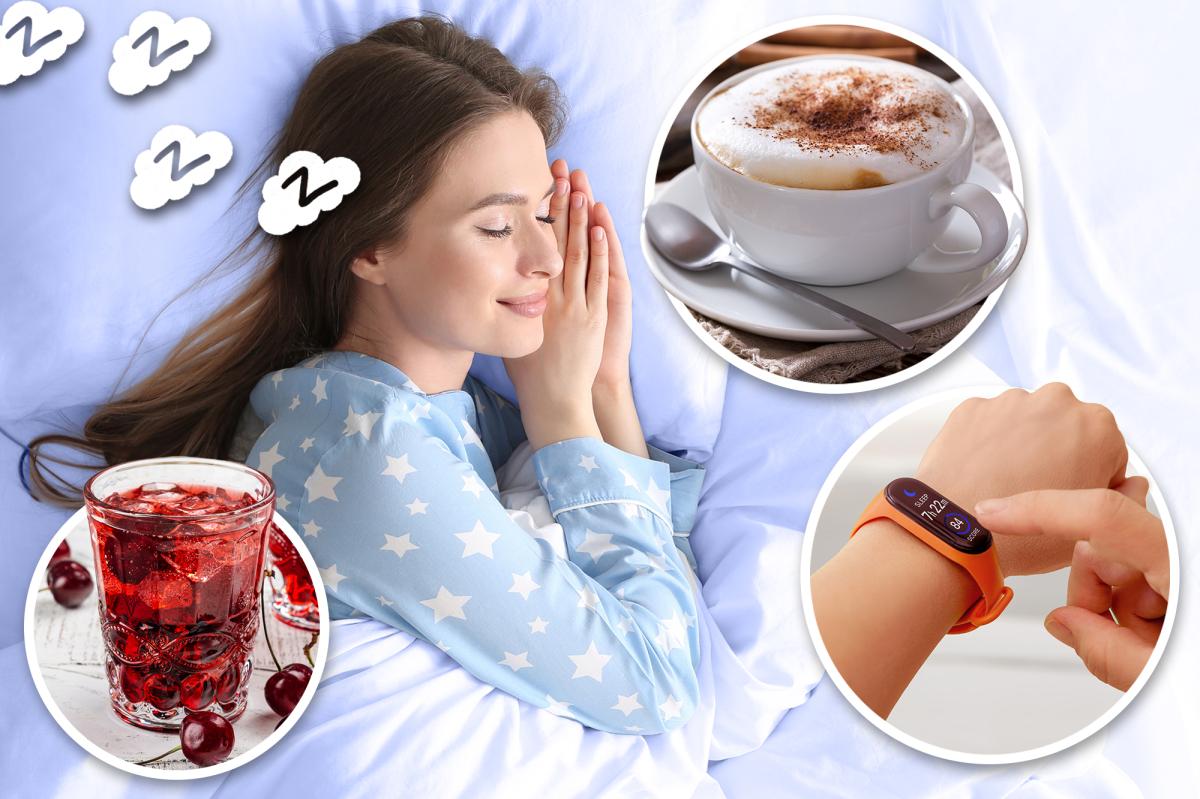
There is a viral “sweet treat” that some swear leads to sweet dreams. This evening mocktail consists of tart cherry juice (for natural melatonin) and magnesium powder (to relax muscles). The mixture is topped with prebiotic soda or sparkling water.
Warkentin is on board with this bedtime beverage as long as there’s not too much sugar in the soda and not too much cherry juice, because you don’t want to overdo the melatonin.
The slumber-promoting supplement is “not a blanket fix for insomnia,” he advised. It’s best used to combat jet lag or reset a circadian disorder.
Overall, the fizzy fad is “more health-focused” than some of the other trends, Warkentin laughed.
“But I would check with your physician …. you don’t want to overdo it with any kind of ingredient [because] it can have other consequences.”
Try this too: Even better than a mocktail is being realistic about what healthy sleep looks like — and not becoming obsessed with eight hours a night.
- “The amount of sleep that you need at night is totally based on your genetic makeup,” Warkentin said. “A more realistic range that I like to tell patients and friends and family [is] six to nine hours. It’s all dependent on you.”
- Sleep trackers can be helpful, unless you become obsessed with the data. “Really, the biggest problem today isn’t that people can’t sleep,” he said. “It’s that they’re doing everything except giving themselves the opportunity to sleep.”
Nappuccino
This seemingly counterintuitive trend has you drinking a cup of coffee right before snoozing for 20 to 30 minutes. Since caffeine takes about 15 to 30 minutes to kick in, you wake up as it hits.
Warkentin said the move is “incorporating caffeine strategically,” but “it’s not a replacement for good sleep hygiene and consistency.”
If you decide to give nappuccinos a shot, Warkentin recommends scheduling one between noon and 1 p.m., because late afternoon java and siestas can mess with evening sleep.
Cut off caffeine altogether six to eight hours before bedtime.
Try this too: If caffeine — or anything else — keeps you from going into dreamland, Warkentin has some counterintuitive but helpful advice.
- Devise a 20-minute exit strategy from your bed if you can’t sleep. “We want to prevent our brains from associating the bed with wakefulness,” he said. “Go do something for about 20 minutes. Come back, see if you can get to sleep then.”
Read the full article here