




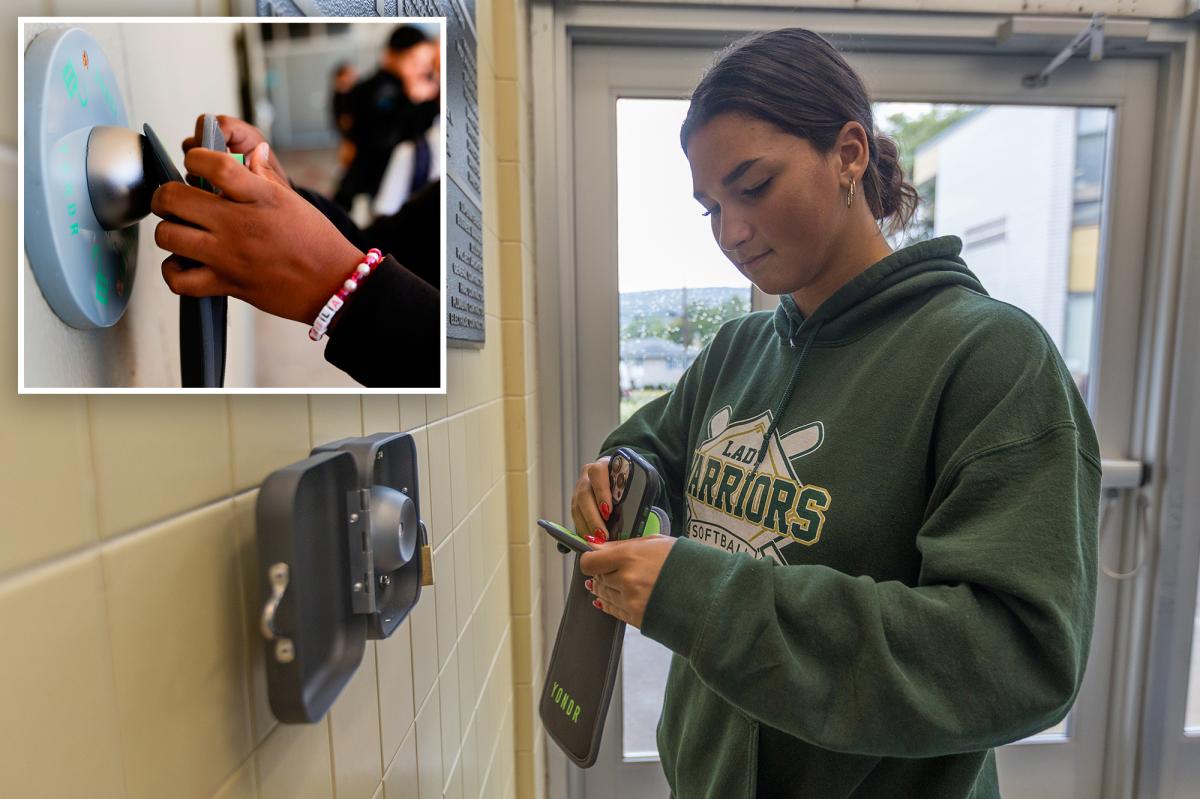
A nationwide study of cellphone bans at thousands of American schools showed little improvement in test scores — but significant gains in student wellbeing.
The May study amassed data from over 40,000 schools between 2019 and 2026, and compared the experience of students with minimal phone restrictions over three year cycles against those required to lock their phones in Yondr pouches from the day’s first bell to last.
It found mixed results, but ones many teachers desperate to get their students attention back will be immediately pleased to see — stringent phone bans led to an 80% decrease in phone usage in the classroom, dropping personal phone use from 61% of students to just 13% over three years.
With about 75% of teachers calling phone use a “major problem” in a 2024 Pew Research study, those reductions alone could justify pleas for intervention from lawmakers and administrators.
But the study — carried out by researchers from Stanford and Duke University, and the University of Pennsylvania and Michigan — did not yield the results many lawmakers touting the bans hoped they would, as test score changes were “consistently close to zero” in the first three years of phone bans.
Those muted results were found in standardized test scores, and across individual subject grades.
Some experts, however, urged educators and lawmakers not to be dissuaded by the lack of test results and explained it may take a few years for those improvements to show.
“I firmly believe that getting student phone use down, recapturing their attention in classrooms within schools, is a critical antecedent to realizing their academic potential,” said Stanford economist and study co-lead, Thomas Dee.
“I think it’s reasonable to view these results as sobering,” he told the Associated Press, while admitting the test score results were “somewhat disappointing.”
But Lee touted perhaps the study’s most significant findings — student well-being improved with phone bans.
“Students’ well-being is actually above what it was at baseline,” Dee said.
That change took place over just two years, with well-being declining in the first year of the ban before breaking even and going positive by the end of the second year, according to the study.
Part of that temporary decline in well-being mirrored a 16% spike in disciplinary actions like suspensions during the first year, which then declined in later years.
Bully incidents saw little change during the study.
It comes as New York released similar results in a comprehensive survey of its own “bell to bell” phone ban at public schools, with about 75% of 600 teachers surveyed saying their classrooms had significantly improved since the rule was rolled out statewide in September.
New York wasn’t able to look at test results as the year’s marks won’t be in until the end of June, but a majority 60% of teacher said they’ve seen a decline in bullying. Another 80% reported seeing social connections flourish between students.
“They’re participating in class discussions, and teachers can finally teach,” Gov. Kathy Hochul said Monday while revealing the study findings. “We have finally kids talking to each other.”
Read the full article here