




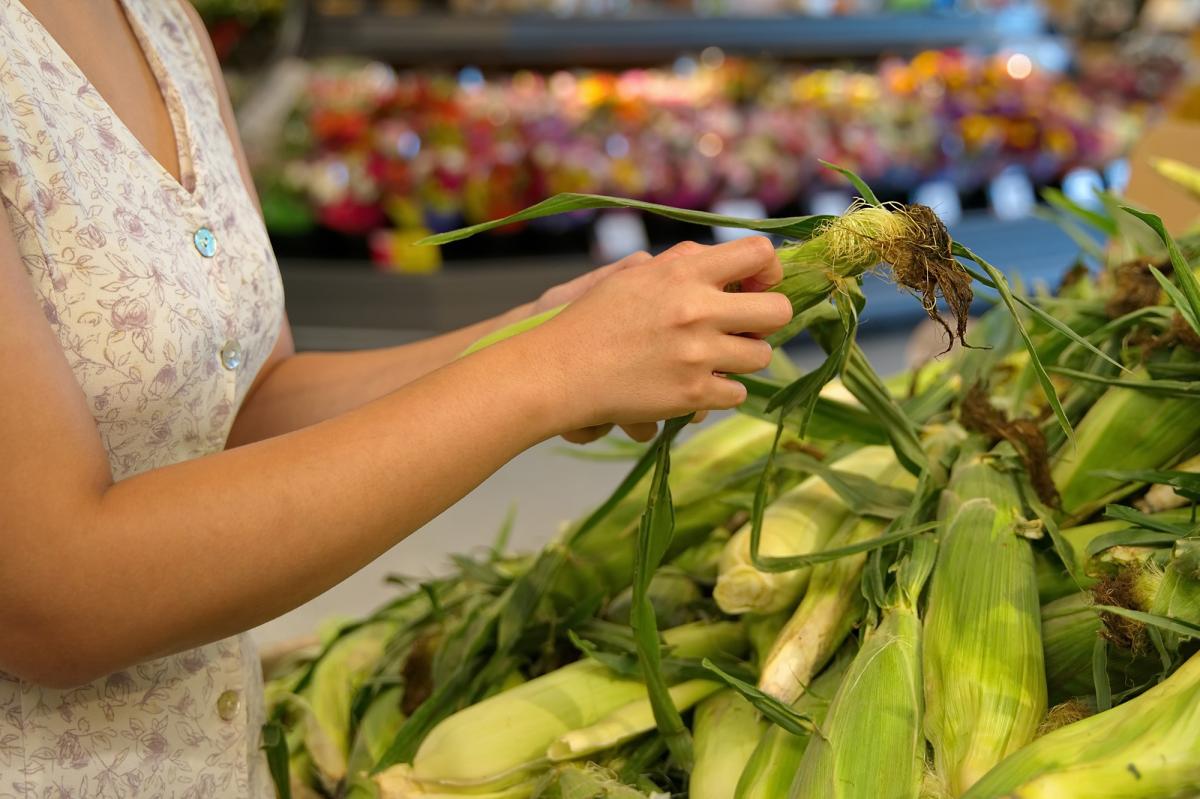
The arrival of fresh summer corn at grocery stores and farmers’ markets across the country is reviving a long-running debate: Should shoppers shuck corn before buying it?
Shucking corn involves peeling off the outer green husks and removing the corn silk to get to the edible kernels underneath.
Some shoppers shuck ears of corn before they buy it to inspect the kernels for quality and check for insects.
“Some stores encourage customers to shuck corn in the store by providing trash bins beside the corn display,” Florida-based etiquette expert Jacqueline Whitmore told Fox News Digital.
“Here’s the caveat: If you shuck it, buy it. If the ear of corn is bad, let a manager know or discard it in the trash bin provided.”
Partially shucking corn at the market and putting it back can also make it unappealing to the next shopper and increase the chance of food waste.
“If no bin is provided, don’t shuck the corn,” Whitmore said. “It can be messy and wasteful. Plus, no one wants to buy corn that has already been shucked.”
Beyond etiquette concerns about the mess shucking corn can create, sanitation is also a factor. Husks act as a barrier to protect the corn from dirt, bacteria and moisture loss.
By partially shucking corn before buying it, shoppers may expose the kernels to bacteria from hands, shopping carts and store conveyor belts.
Experts advise waiting until just before preparing and eating corn to shuck it, because the husk also preserves the kernels’ freshness.
Shucking too early exposes the kernels to oxygen, leading to moisture loss. Sugars will also turn into starch more quickly, which will reduce the corn’s sweetness.
Shucking corn and discarding the debris is also wasteful, Ohio-based farmer Lee Jones of The Chef’s Garden farm told Delish.
“What some people don’t realize is that you can use every part of an ear of corn,” he said.
“Corn is such an iconic American food, and chefs are finding creative ways to use every part of the plant — from the stalk and silk to the husk and cob. Each part of the plant’s life adds something unique to the plate.”
Corn husks are used for teas, soup stocks and as wraps for grilling or steaming, Delish reported.
Many Reddit users admitted to pulling back corn husks to examine ears before purchasing them.
“Sometimes the husk hides worms or bad spots that would make you not want to buy or eat it,” one user wrote in a forum asking why people are shucking corn in the grocery store.
“Do you know how expensive things are? No one wants to go home and open it to find moldy, gross corn,” someone else wrote.
“Shucking? Or just peeking? Because sometimes you have to throw away a whole ear,” commented another user.
“Shucking,” another Redditor replied. “Grocery stores around here put a bin at the corn table just for this. That way I don’t have to do it at home into my little kitchen trash can and get the threads absolutely everywhere.”
Experts say there are better ways to judge an ear’s quality without peeling back the husk.
Start by comparing weights and giving the corn a squeeze. Heavier ears generally contain more moisture, making for juicier, sweeter kernels, according to America’s Test Kitchen.
The ear itself should feel firm, full and plump.
Inspect the corn tassels, or silk, and the husk itself.
If the silk is light brown, golden or slightly sticky, the corn is likely fresher, Lisa Lin, a California-based food writer who runs the Healthy Nibbles website, noted in a 2023 post. Black or dried-out silk indicates corn is older.
The husk should be bright green and wrap tightly around the ear if the corn was harvested recently. Faded or brittle husks could mean the corn has been sitting around.
Also look for holes in the husk, which can be a sign of insect damage, Australia-based horticulturist Toni Salter wrote on her website.
If you don’t plan to eat corn right away, keep it cool and covered. Always wash produce before consuming it to remove dirt, bacteria and potential pesticide residue, according to Everyday Health.
Read the full article here