


AI’s rapid growth is reshaping data center infrastructure needs. While many assume chips are the main bottleneck, supply is not the primary constraint. The immediate challenge is powering and cooling systems at scale.
It’s not control of the GPUs that will grant you control of the AI economy. The processors are certainly important, but computing availability is not a major constraint on growth. Operators need assurance that the underlying infrastructure can deliver power, cooling, and resiliency at scale. At the moment, many markets fall short of delivering the energy and reliability required.
This shift from computing to energy constraints is already affecting business outcomes. Timelines are shifting, capital is being spent on stalled projects, and in this atmosphere, securing power has become a primary competitive advantage. No matter what your model looks like, if you can’t deliver power and run the center efficiently, then your fancy model is of no use.
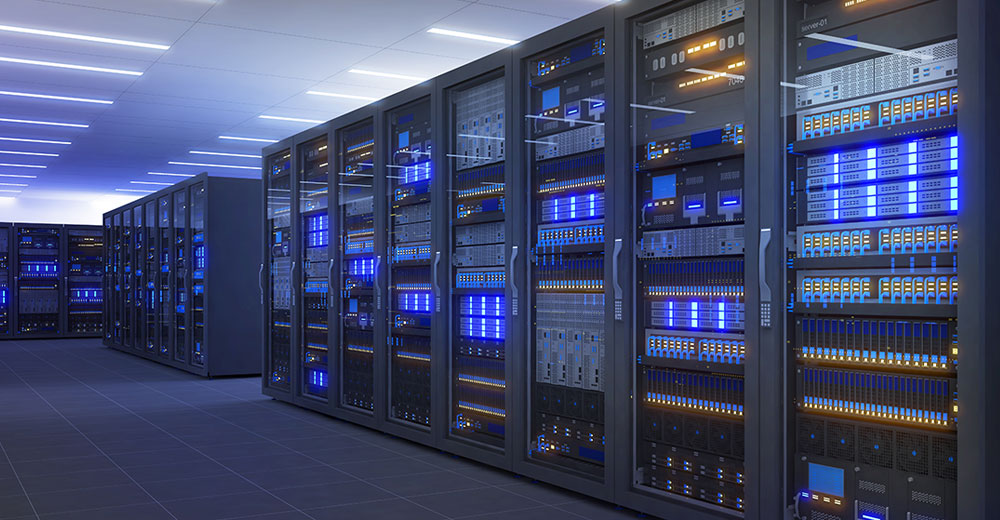
Data center design requirements have changed due to high cabinet-level densities with GPU clusters drawing 30–60 kW per cabinet. Facilities built just five years ago may already be ill-equipped to handle the sustained load and thermal output required today. So, you can have all the high-quality chips you want, but if a facility isn’t equipped for these demands, the underlying silicon becomes irrelevant.
AI Timelines Depend on Infrastructure
Financial or demand-side concerns are not holding up progress; physical constraints are. The biggest problem is a site that cannot secure enough power. Substations would help, but new construction is years behind schedule. Backorders for critical equipment are common. It’s not unheard of to have a fully funded AI deployment sitting idle, waiting for infrastructure that could be two years away from being ready.
Such delays directly impact business outcomes. Time-to-market gets lost in this scenario. AI models need to be trained and deployed, and if that cannot be done on schedule, ROI gets moved further away. Projected returns get compressed when facilities take longer to come online. Whoever solves these constraints the fastest will capture a stalled market. This makes infrastructure readiness a prerequisite for AI success.
Power Is the New Competitive Advantage
Driven largely by AI workloads, the U.S. data center power demand is projected to increase significantly. According to the Electric Power Research Institute (EPRI), data centers may double their share of U.S. power by 2030, at 9%-17% of all electricity generation.
The scale of the challenge is significant. However, plans for the grid expansion required to support this growth are operating on a different timeline: Data centers can be built in under two years. Large-scale power generation and transmission projects often take a decade or more.
This temporal mismatch is creating a bottleneck. Even where energy generation capacity exists, transmission constraints and interconnection delays are inadequate, preventing sufficient power from reaching data center sites.
Renewable energy has its promises, but with permitting cycles, land-use issues, and grid integration challenges, renewables can add extra layers of complexity.
The primary determinant for where AI infrastructure can be deployed is no longer land or capital; it is now location — specifically, access to available power. This constraint is now the primary concern for site developers.
Supply Chains Extend Project Risk
As with power requirements, equipment availability is another significant factor. Lead times for transformers, switchgear, UPS systems, and cooling infrastructure now often stretch beyond a year. This is no longer viewed as a temporary disruption but as the result of sustained demand. Hyperscalers, colocation providers, and enterprise operators are all scaling simultaneously.
Under these conditions, the traditional order of business for data center development has been revised. Rather than the steps being first design, then procure, and next build, developers must now lock in equipment orders earlier. Even if designs have yet to be fully realized, equipment is ordered to assure a spot in the supply chain queue.
Ordering equipment ahead of finalized designs introduces new risks because it requires an earlier capital commitment. As a result, flexibility is reduced. If there are any misalignments between the design assumptions and the delivered equipment, it can lead to rework costs. In a market moving as fast as AI, those delays are not just inconvenient; they are financially material.
Cooling Is a Primary Constraint
Following power and supply chain issues, cooling is an equally critical challenge. Traditional air-based systems cannot properly handle the heat loads generated by today’s high-density GPU racks. Equipment is strained, and the risk of failure rises due to rapidly forming hot spots. UPS infrastructure, originally designed for resiliency, can become a liability under these thermally stressed conditions.
Advanced cooling strategies are now mandatory, not optional. Methods considered experimental, such as liquid cooling, hot-aisle containment, and direct-to-chip solutions, are becoming common practice. New power-distribution models, such as higher-voltage direct-current architectures, are being explored to reduce conversion losses and meet cooling demands.
Being AI-ready now depends on your power and cooling abilities. Retrofitting existing facilities won’t cut it. In many cases, it means redesigning the entire infrastructure stack.
Power-First Strategy
The power-first model is reshaping development. Power is no longer just a component in a larger project; it is a priority. The result is a model that requires developers to secure utility partnerships earlier, identify sites with existing or expandable grid capacity, and, in some cases, integrate on-site generation to reduce dependency on external infrastructure.
Project timelines have also been revised. Equipment needs to be procured earlier. To speed up deployment, modular construction has been introduced. Rather than waiting for capacity to become available, co-planning expansions with utilities is increasingly necessary. Together, these changes represent a profound shift in how data centers are being conceived and delivered.
What It Means for the Business of AI
The message to investors is clear: infrastructure risk is now business risk. Assuming capacity will be available when needed is no longer a wise plan. Power availability, supply chain timelines, and cooling requirements all must be accounted for in planning cycles.
Vendor selection, site strategy, and deployment models must all align with these infrastructure constraints. Projects that offer solutions to all power and cooling challenges earlier on will have a measurable advantage.
AI is forcing a reckoning between digital infrastructure and physical energy systems. Data centers are no longer seen as real estate assets or IT environments; they are sophisticated components of broader energy ecosystems. In many respects, they are starting to resemble utilities more than traditional infrastructure.
Infrastructure Will Decide AI Winners
Models and chips alone will not drive AI’s rise. Instead, infrastructure will govern these technologies at scale. Power, cooling, and supply chain resilience are now central to AI initiative success or failure.
Organizations that recognize and embrace this new reality will move faster, deploy sooner, and capture more market value. Those who don’t will risk falling behind in a market increasingly defined by infrastructure readiness.
So, in the race to scale AI, the leaders will not necessarily be the ones with the best algorithms, but those with the power to run them.
Read the full article here