




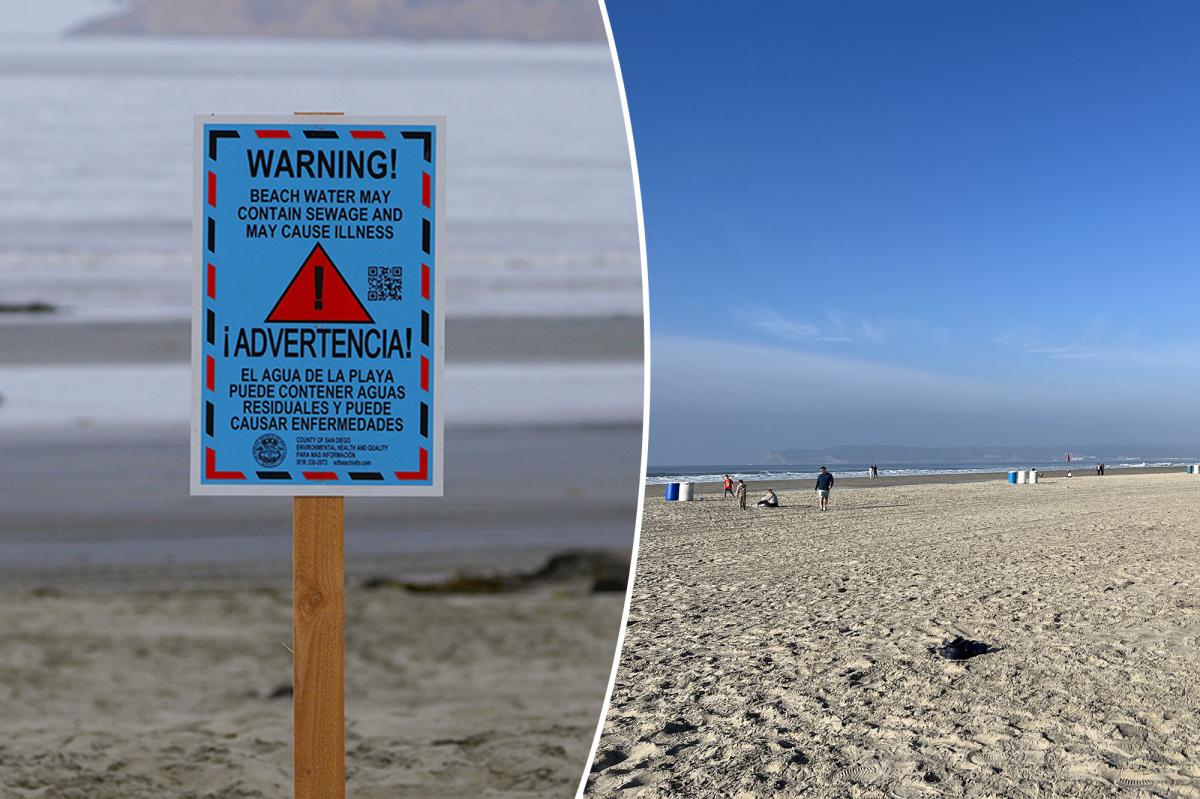
They’re up s–t creek without a plunger.
Just when you thought it was safe to get back in the water: A picturesque California beach is at risk of being shuttered amid a deluge of sewage from Mexico that’s befouled the coastline.
“It was heaven on Earth, and now I call it paradise lost,” Whitney David, 63, a retired surgeon and surfer, told the WSJ of the odiferous scourge.
Located off the coast of San Diego Bay, the upscale resort city of Coronado has long been a mecca for bathers.
However, recently the region has been polluted by gallons of wastewater — as many as 38 million per day — from our neighbor to the South, which has increasingly rendered this idyllic seaside hub off-limits.
New Jersey resident Kristin Cohen, 36, claimed she attempted to take her 3-year-old daughter Chloe, only to be stopped in her tracks by a sign that read “Water Contact May Cause Illness.”
“I guess we can’t do that, babe,” she lamented.
And it’s not just sunbathers who are affected by the “poonami.” Larry Delrose, entertainment director at the Coronado Shores condo community, claims that he’s forced to close his windows several times a week to keep out the “sewer”-like aromas.
In 2025, the beaches in front of the historic Hotel del Coronado, whose rooms can cost up to a grand per minute, were shuttered for 129 days due to the fecal flood. Many of these were during the peak of summer, like a malodorous version of the movie “Jaws.”
The source of this excremental tidal wave is the Tijuana River, which fill with wastewater that then empties into the Pacific Ocean.
This crap cocktail ends up tainting the waters off of San Diego.
While Tijuana’s sewage has affected the US for years, poo-llution has surged amid a population boom in the border town, whose numbers have more than doubled over the past 30 years to 2.3 million, putting a strain on its wastewater resources.
This problem is not only smelly — it can be dangerous due to the hydrogen sulfide gas, which has soared to unsafe levels in the South Bay. According to a recent survey of residents and workers in the region, symptoms of exposure included respiratory issues, headaches, stomach illness, and even cognitive issues such as difficulty concentrating.
San Diego County Board of Supervisors Paloma Aguirre noted these issues in a recent PSA, in which she called on Governor Gavin Newsom to do something about the contamination, dubbing it the “worst environmental disaster in the United States.”
“We are breathing in toxic gases, and we can’t wait any longer,” Aguirre said in a video posted on Instagram. “Please declare a State of Emergency for the Tijuana River crisis.”
The official added, “Our children are waking up with headaches, our seniors are struggling to breathe, and our families are prisoners in their own homes.”
In 2022, Newsom vetoed a bill that would’ve designated $50 million toward efforts to help clean up the Tijuana River.
Meanwhile, the Environmental Protection Agency insisted that President Trump has made the issue a priority.
The US is currently working with Mexico to upgrade and expand their wastewater infrastructure, along with expanding a facility on this side of the border that they erected years ago as a failsafe.
“Moving at TRUMP speed, The Trump Administration negotiated and signed two historic new agreements with Mexico — the Memorandum of Understanding in July 2025 and Minute 333 in December 2025 — committing both sides to speed up project timelines and take additional actions to prevent this crisis from reoccurring down the road,” the EPA told the Post in a statement. “In addition, we completed a 100-day expansion of the South Bay International Wastewater Treatment Plant, which prevents an additional 10 million gallons per day of raw sewage from reaching U.S. waters.”
Read the full article here