



California drivers could be seeing lower gas prices once a new mega-pipeline project reaches completion, flooding the state with the much needed black gold.
In a recent joint announcement, Phillips 66 and Kinder Morgan, Inc. said its Western Gateway Pipeline project was moving forward following the closure in the state of multiple refineries.
“Customer response during the open season underscores the importance of Western Gateway in addressing long‑term refined products logistics needs in the region,” Phillips 66 Chairman and CEO Mark Lashier said.
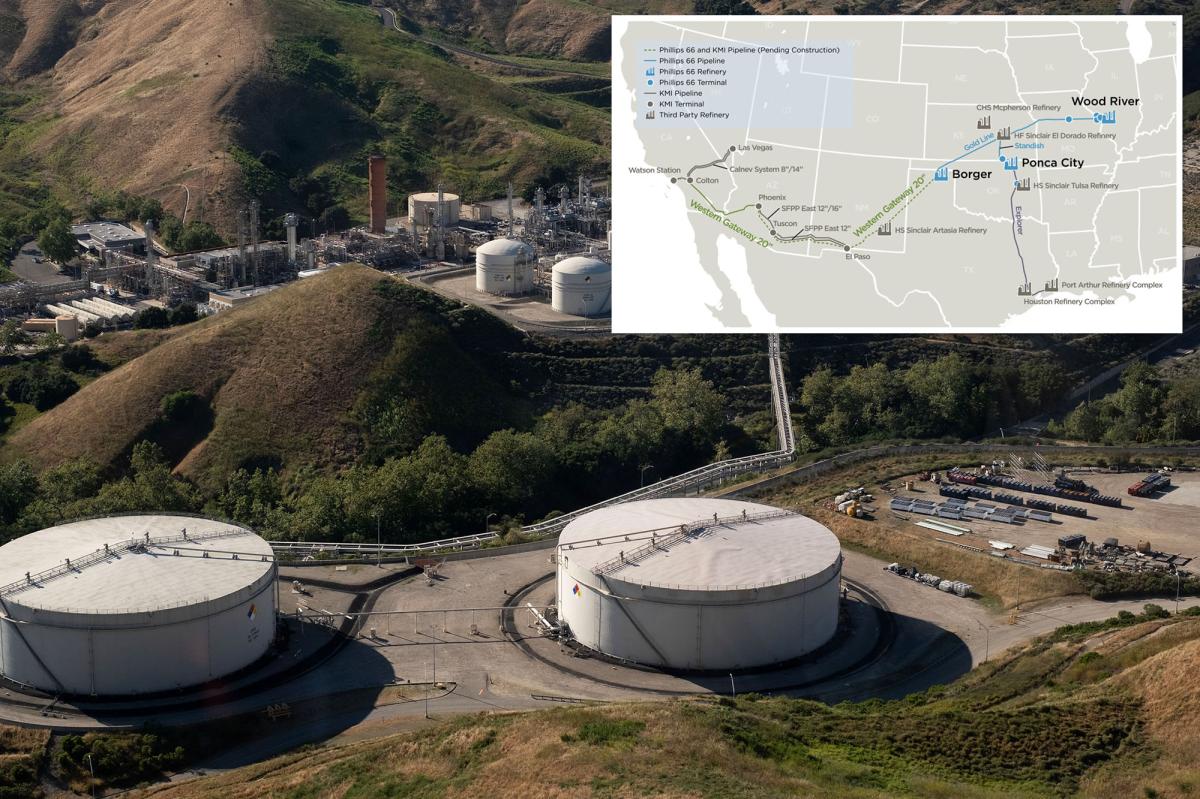
Once fully operational, the massive pipeline will stretch from St. Louis, MO. to California, and be able to supply 200,000 barrels per day (bpd) into Phoenix, per the details about the project.
This will then replace the current 125,000 barrels AZ currently receives from California, allowing that fuel to stay and be used in the state.
The news could come as a huge relief as drivers in LA and across the state continue to contend with sky-high gas prices. As of Saturday, the average price in the Golden State is $5.92 a gallon, according to AAA.
Right now, Arizona and Nevada depend heavily on California for oil, according to the U.S. Energy Information Administration (EIA).
The Western Gateway pipeline would help address California’s diminishing refining capabilities. The state is currently on track to lose as much as 20% of its capacity by mid-2026 according to the project’s report.
The new pipeline will be co‑located alongside an existing pipeline from El Paso, Texas with products not only coming from refineries in the middle of the country but from Gulf Coast spots as well, including refineries in Houston and Port Arthur.
“We’re pleased to be able to use our existing assets to leverage growth opportunities for the Arizona and California markets,” Kinder Morgan CEO Kim Dang said. “By utilizing existing pipeline assets across multiple states along the route, we’re uniquely well-positioned to support a refined products transportation solution.”
A map provided about the project, shows where the new Western Gateway pipeline would be constructed connecting Borger, Texas to Phoenix, combining it with Kinder Morgan’s existing pipeline which sends oil from southern CA’s Colton to AZ, but would be “reversed to enable east-to west product flows into California.”
The project is expected to be completed by 2029 and would still be “subject to the execution of definitive transportation service agreements, joint venture agreements, and respective board approvals,” per the release.
Most of the US is connected by pipelines from places like Texas, but California isn’t. The Golden state relies heavily on imported fuels by ship and in-state refineries.
California has no access to interstate pipelines, which would allow the state to receive much more oil.
Over the last few years, several major oil refineries in California have closed or begun the process of closing. As these refineries stop operating, gas prices in California have already increased.
The situation in California is made worse by Gov. Gavin Newsom’s green agenda, which risks sending the price of a gallon above $8 per gallon, lawmakers and experts have warned.
Drivers in the Golden State pay a “California premium” that includes higher-than-average state excise and sales taxes, as well as hefty fees for climate programs unique to the state.
California also requires a special and more costly fuel blend designed to prevent pollution, which only the state’s refineries and specific Asian countries can produce.
Last year, a massive Phillips 66 refinery, stretching across LA’s Carson and Wilmington, once a major source of in-state fuel, shut down sending ripple effects straight to the pump.
When it announced the closure, Phillips 66 pointed to declining gasoline demand, rising costs, and the challenges of operating under CA’s strict environmental and fuel regulations.
Gov. Gavin Newsom, who has opposed pipeline openings due to environmental concerns, appeared to react favorably to the news, through a spokesperson.
“The Western Gateway project is a promising opportunity to bring additional gasoline supply into the state and bolster resilience,” Anthony Martinez, deputy communications director for the governor’s office, said in an email to the Orange County Register.
“At the same time, we’ll continue pursuing every solution that reduces the state’s dependence on oil — a volatile product that is tied to the global oil market, including foreign conflicts that raise prices on Americans in all states.”
The Post reached out to Phillips 66 and Kinder Morgan, the US Oil and Gas Association, and Newsom for further comment.
Download The California Post App, follow us on social, and subscribe to our newsletters
California Post News: Facebook, Instagram, TikTok, X, YouTube, WhatsApp, LinkedIn
California Post Sports Facebook, Instagram, TikTok, YouTube, X
California Post Opinion
California Post Newsletters: Sign up here!
California Post App: Download here!
Home delivery: Sign up here!
Page Six Hollywood: Sign up here!
Read the full article here