



It was the Sunday before Christmas, 1975, and Vienna was covered by a foot of snow.
Just before 11:30a.m., six strangers stepped off a red tram outside the headquarters of OPEC, the world’s most powerful oil cartel, “their long coats and heavy bags casting dark shadows against the snow,” writes Joby Warrick in his new book, “The Jackal: The Rise and Fall of Carlos, the World’s First Super-Terrorist” (Scribner, Aug. 18). A trio of reporters staking out the building guessed the group was a delegation from some junior member state.
Minutes later, the strangers pulled submachine guns from their identical sports bags and shot their way through the second floor, killing three people and capturing 62 hostages, including the top oil officials of nearly every petroleum-producing nation on Earth.
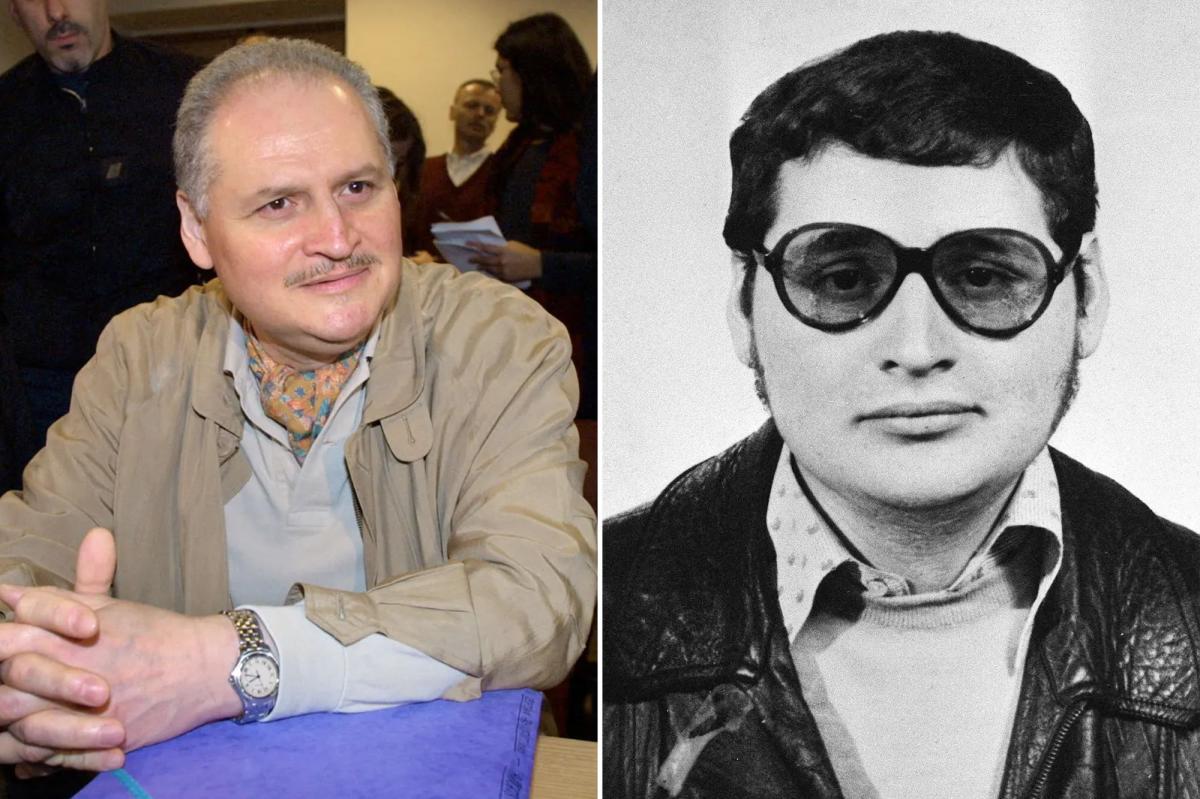
Their leader, a handsome young man in a leather jacket and a rakishly cocked black beret, had just emptied his pistol into a wounded Libyan economist. Now he set down his weapon, passed out cigarettes, and grinned kindly at his terrified captives.
“With remarkable aplomb the ice-cold executioner had transformed himself into a charming host,” Warrick writes, calling the killer “a terrorist emcee presiding over his own coming-out party.”
“I am the famous Carlos!” the gunman announced. “You know who I am.”
Almost nobody did, but that would change fast. Drawing on declassified CIA cables, communist secret-police archives, hours of surreptitiously recorded prison phone calls, and a rare 2025 face-to-face meeting with Carlos himself, the Pulitzer Prize-winning journalist reconstructs how a chubby Venezuelan playboy became “the first of a breed of international super-terrorists, a larger-than-life outlaw whose deeds spanned four continents,” and how scrotal surgery finally brought him down.
Carlos volunteered his body count before Warrick even asked. “I killed 83 people by my own hand,” the 75-year-old inmate told the author across a prison table. “Another thousand were killed on my orders.”
Whatever his revolutionary pretensions, Warrick concludes, “Carlos was, at his core, a criminal narcissist” who “killed seemingly without feeling, often wantonly.”
He was born Ilich Ramírez Sánchez in Venezuela in 1949, the son of a wealthy lawyer so devoted to communism that he named his three boys after the founder of the Soviet Union, Vladimir Ilyich Lenin. Ilich got the middle name, and his brothers got Vladimir and Lenin.
In July 1970, fleeing a college expulsion, a pregnant girlfriend and his parents’ disappointment, the 20-year-old showed up unannounced in Beirut and asked to join the Popular Front for the Liberation of Palestine, then the most feared terror group in the Middle East. Asked how he intended to fight the enemy, the pudgy rich kid seemed puzzled by the question. “With weapons!” he declared. The PFLP gave him an Arabic code name, Salim, and shipped him to a Jordanian boot camp.
His new bosses soon discovered his singular gift. “Ilich Ramírez Sánchez could carry himself as though he owned the world,” Warrick writes, “even when, as would later be the case, half the planet seemed to be chasing him.” He sauntered through checkpoints in a Savile Row raincoat and Nina Ricci neckties, trailing “a faint scent of baby powder, with which he habitually doused himself after his baths,” while stashing guns and grenades in the apartments of the many girlfriends he juggled across London and Paris.
French intelligence officers, acting on a tip from his own captured handler, first discovered his name in June 1975. They knocked on the door of a farewell party in the Latin Quarter. Cornered, Ilich pulled a pistol and shot four men in seconds, killing two officers and the handler who had betrayed him, then vaulted a 12-foot wall and strolled off past crowded sidewalk cafés.
Police, tearing through his abandoned suitcase, found a fake Peruvian passport in the name of Carlos Martinez.
The nickname came courtesy of the press. Days after the shootings, Barry Woodhams, the live-in boyfriend of one of Carlos’s former girlfriends, reopened a briefcase Carlos had left in their London apartment. Inside were pistols, grenades, gelignite and an apparent list of potential targets. Woodhams carried it to the newsroom of The Guardian.
The paper’s reporter noted, purely as scene-setting color, that the case had been stashed beside a bookcase holding Frederick Forsyth’s assassin thriller “The Day of the Jackal.” The novel belonged to the flatmate, and there’s no evidence that Carlos ever read it. It didn’t matter.
“In just 24 hours, the British tabloids had turned a trivial detail from The Guardian’s article into a headline, and then an identity,” Warrick writes. “As Carlos the Jackal, he could become the glamorous anti-hero he had long dreamed of being.”
Carlos found it flattering. “The jackal is a very nice little animal, you know?” He later told Sophie Bonnet, a French journalist who spent four years visiting him in prison. “It’s a predator, but very pretty.”
The book’s strangest cameo comes in the mid-1970s, when Carlos scouted a Lebanese mountain resort for a scheme to kidnap and ransom members of a fabulously rich Saudi construction clan. Among the vacationers he sized up was a lanky teenager relaxing with his mother, a 17-year-old named Osama bin Laden.
The OPEC raid, dreamed up by Libyan dictator Moammar Khadafy as revenge against his oil-pricing rivals, made Carlos a global celebrity. Austria caved within hours, handing the gang a DC-9 jet and safe passage to Algiers with dozens of VIP hostages aboard. Some hostages asked for his autograph. To one sobbing young secretary, Carlos cooed, “You can go home. You are too beautiful to die.”
The Saudi and Iranian oil ministers, marked for execution, instead walked off the plane alive after ransom money changed hands. Carlos put the sum at $50 million and kept most of it, and a retired Israeli intelligence officer confirmed to Warrick that the transfer was real.
His boss was unimpressed. Wadi Haddad, the PFLP’s feared operations chief, hauled Carlos before a tribunal in Yemen for sparing the ministers and pocketing the cash. “You are an executioner, and not a movie star!” Haddad thundered, then banished him.
Cut loose, Carlos spent two decades as terror’s premier gun for hire, bombing trains and streets for Middle Eastern dictators while living lavishly under state protection in East Berlin, Budapest and Damascus.
By 1994, the patrons were gone, and the Jackal was hiding in Khartoum, drinking and chasing women in a country that publicly denied he existed. The CIA had found him, aided by a mole inside his own gang, a disillusioned Swiss militant earning $3,000 a month under the code name FDBONUS/1. Then fate handed the hunters a gift.
Carlos, 44, was suffering from a varicocele, “essentially a varicose vein in the scrotum,” Warrick writes, and his young wife wanted a baby. On Aug. 13, 1994, he checked into a Khartoum hospital for corrective surgery. The doctors would sedate him, and “for a crucial few hours,” Warrick writes, “Carlos the Jackal would not be himself.”
Hours later, groggy, unarmed, and wearing only pajamas and a bandage, the man who once made his getaway on a gifted passenger jet was carried by Sudanese commandos onto a waiting jet, hooded and handcuffed, and flown to Paris. When he realized he had landed in France rather than Israel or Saudi Arabia, he felt only relief.
“I was so happy. Prison, no problem,” he told Warrick. “I am alive.”
Three trials and three life sentences later, prisoner No. 11939 holds court at Poissy Central Prison outside Paris, where guards greet him with cries of “Monsieur Carlos!” and, Warrick writes, “the old man still knows how to make an entrance.”
When the author visited in March 2025, the aging terrorist complimented a young French prison official on her hair, then asked, “Are you a real blonde?”
He expressed no remorse for any of it. His single regret, he told Warrick, was leaving witnesses. “In Sudan I should have shot those bastards,” the Jackal said. “I wouldn’t be in prison.”
Read the full article here