




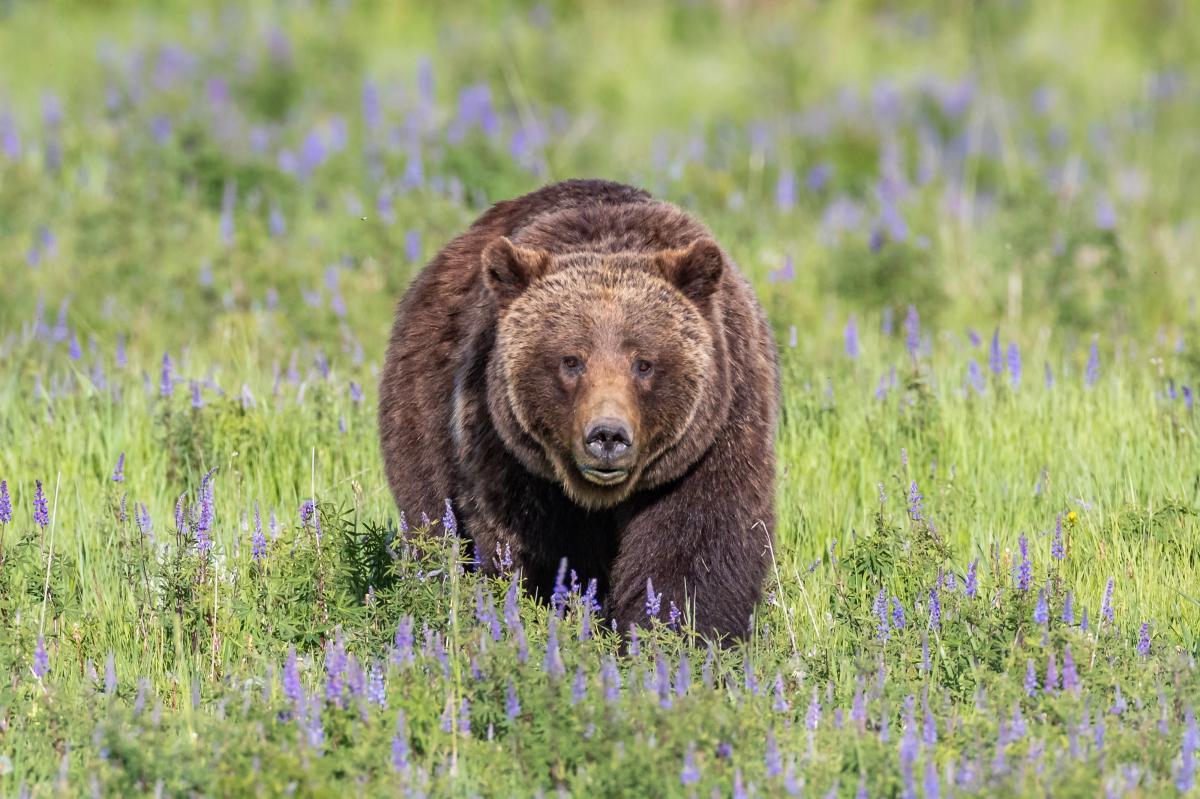
Grizzly bears have taken one lumbering step closer to roaming California again.
California’s State Senate voted 29-9 on party lines last week to approve a roadmap to evaluate whether it is possible to reintroduce the apex predator, which is featured on the state flag.
The bill now moves to California’s State Assembly, where it has been read and held at the desk. It can next be assigned to a committee or take another path at lawmakers’ discretion.
SB 1305 has faced changes since The California Post reported on it in March. The bill has considerably softened its language toward bringing grizzly bears back to California after concerns from ranchers that bringing another apex predator into the state could threaten livestock.
The bill has shifted its language from painting the grizzly bear reintroduction to California as an inevitable outcome to a possibility. Its title was changed from the California Grizzly Restoration Act to the California Grizzly Recovery Assessment Act.
Several parts of the bill have been struck or changed to add protections for potential grizzly bears, including a section protecting livestock owners from bears by allowing them to kill the bears if they are hunting livestock.
A critical section of the bill outlining its intent has changed. The original bill text suggested that the state wished to restore the bear to California. But the amended text clarified that the bill sought just to see if the bear’s reintroduction “is biologically feasible and whether areas of the state exist in which the conditions necessary for long-term coexistence and stewardship can be achieved.”
A deadline for the roadmap has been extended from June 30, 2028, to June 30, 2030. Legislators’ reasoning for bringing back the bear remains in the bill, which is that it holds significance “for many California Native American tribes” and deserves a second chance in California’s ecosystem after hunting drove the bears out of the state.
If the roadmap is approved by the California State Assembly and signed by the governor, legislators would still likely need to formally take steps to reintroduce the bear to the state. Grizzlies have been extinct in the state since 1924.
Peter Tira, a spokesperson for California’s Department of Fish and Wildlife, told The California Post that the department’s policy was to not comment on legislation. Officials noted it was an ongoing issue that came up “every few years” with “viewpoints all over the map” on whether the bears should be reintroduced to California.
Chris Servheen, who worked as the Grizzly Bear Recovery Coordinator for the U.S. Fish and Wildlife Service for 35 years until his retirement in 2016, told The Post that any reintroduction “is not a simple matter.”
“I think it’s going to be careful consideration of where they’re going to be placed because you’ve got to match habitats and food with the target habitats and food,” he said. “You would have to get a source for the bears, and that’s not a trivial matter because there’s not a lot of extra bears sitting around.”
He added that people managing the bears and their potential interactions with people would be required.
Servheen said 50 to 100 people in the Northern Rocky Mountains manage grizzly bears across four states.
If bears don’t adjust to their new habitat, they could die, Servheen said.
But if they do thrive, they could pose a danger to people.
Servheen said they’re known for being more aggressive than the common black bear, particularly females protecting their cubs. He says most encounters are by surprise, when hikers and bears happen on each other while on trails, and it commonly ends with the bear running over the hiker and fleeing.
“Grizzly bears have a little bit more potential for conflict than black bears. But it’s all based on encounter frequency,” he said, noting black bears are much more common in California.
Grizzly bear attacks are generally rare, Servheen noted. But a catholic deacon was mauled to death by a member of the bear species last month in Montana’s Glacier National Park.
Servheen believes a “balanced approach” is needed to reintroduce the bears but advises against sensationalizing bear attacks.
“All the times that a grizzly bear wasn’t attacking a person or people did lots of recreation and didn’t have any problems in grizzly bear habitat, or all the cows that live and are never attacked,” he said. “Those don’t make news stories.”
California ranchers previously expressed their concern that the apex predator could turn to hunting their cattle.
“California is already struggling to take care of the apex predators that we have now, and what’s happened with the wolves has woken people up to the fact that we don’t have enough prey for the predators that we have, and we don’t have the staff for (the department of fish and wildlife) to manage them,” Rick Roberti, a Sierra Valley rancher and president of the California Cattlemen’s Association, told SF Gate.
“And wolves are nothing compared to the grizzly.”
Read the full article here