



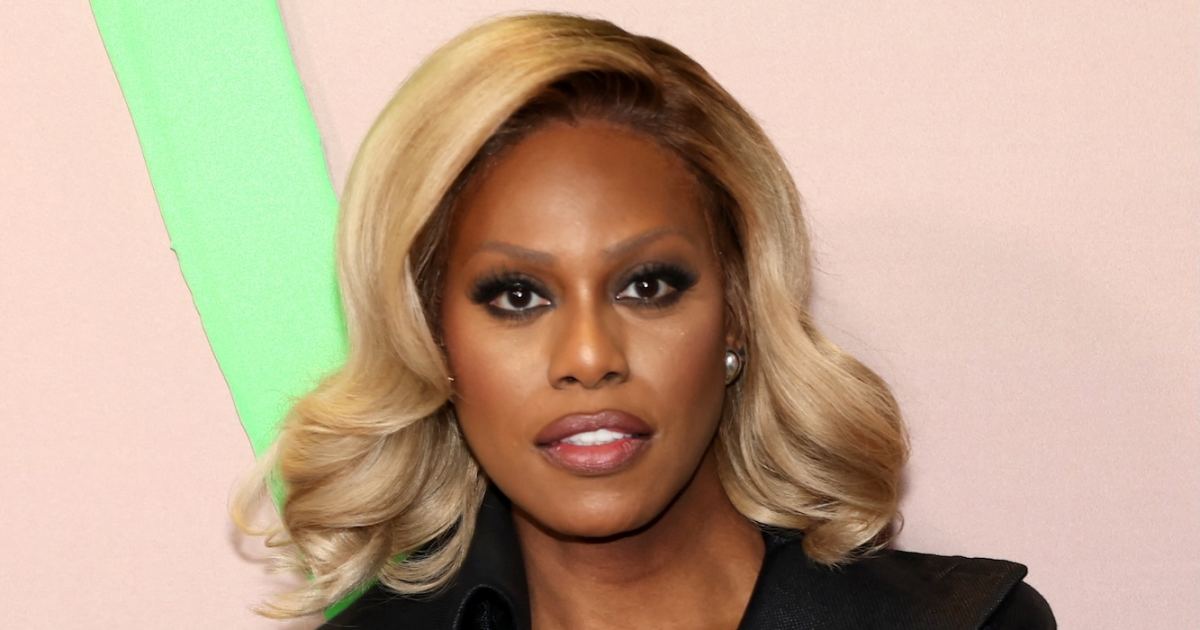
Laverne Cox is opening up about the “blessings” that come with being a trans woman — including the way it can protect a person from narcissistic men.
“Being trans has really helped me with the Hollywood thing and not getting too full of myself,” Cox, 54, exclusively told Us Weekly while promoting her new memoir Transcendent, out now. “It really, it really checks you. Because even I just think about all the women colleagues of mine, in my age range or whatever, like — all the, like, famous athletes, rappers [and] actors who kind of hit on me but, like, would never date me publicly because I’m trans.”
Cox went on to add, “My transness has protected me from a lot of things that a lot of other women experience in Hollywood that aren’t good things — like a lot of narcissistic men. Rejection is really God’s protection.”
Cox, who opens up about her traumatic childhood and how she has found healing and safety as a Black trans woman in Hollywood, says a vital part of her journey has been learning how to set healthy boundaries with and at times avoid or cut loose potentially toxic people — including men — in her life.
“Loving myself is about going to the doctor, eating, getting enough sleep, but also the people, places and things,” she explained to Us. “Who am I surrounding myself with? Do I have people in my life who suck me dry, who make me feel bad about myself, who trigger my patterns and, if these people aren’t serving me, I need to let go of those people.”
She continued, “A lot of it’s been about letting go of certain kinds of people that just are toxic and bring up old traumas, or they don’t have healthy boundaries.”
In her memoir and a Wednesday, June 10, interview with The New York Times “Modern Love” podcast, Cox opened up about the pain of letting go of someone she came to realize did not serve her — her boyfriend of almost four years who, she discovered, was a NYPD officer who voted for President Donald Trump three times.
“I was in sheer bliss with this man and you know, things would come up and we would agree to disagree about some political things,” Cox said on Wednesday. “Problematic but not, like, offensive. He had been, the way he grew up and algorithms he was given, information he was consuming that he had been propagandized to. So I tried to give him grace there.”
While speaking exclusively to Us, Cox — who came out as a trans woman in 1999 while attending college in New York City — explained that there was a certain moment in her relationship with the officer that she realized there is a “soul connection” that transcends politics. At the same time, she realized that a person’s politics matter — particularly when the policies they support or defend harm the most marginalized of communities.
“I do believe that there is, like, a spiritual realm connection that we have that’s beyond politics and in history, but those things are material reality, right?” she told Us. “Like, they inform who we are. I wasn’t able to build in a relationship and build a life with him because of his politics, but that doesn’t negate the soul connection, right?”
She continued, “Those two things are different — things that are social constructs, like me being a Black trans woman is only really relevant because of discrimination that Black trans people experience. Wouldn’t it be lovely if we could live in a colorblind, genderless world? But we can’t because of oppression.”
Read the full article here