




NEWYou can now listen to Fox News articles!
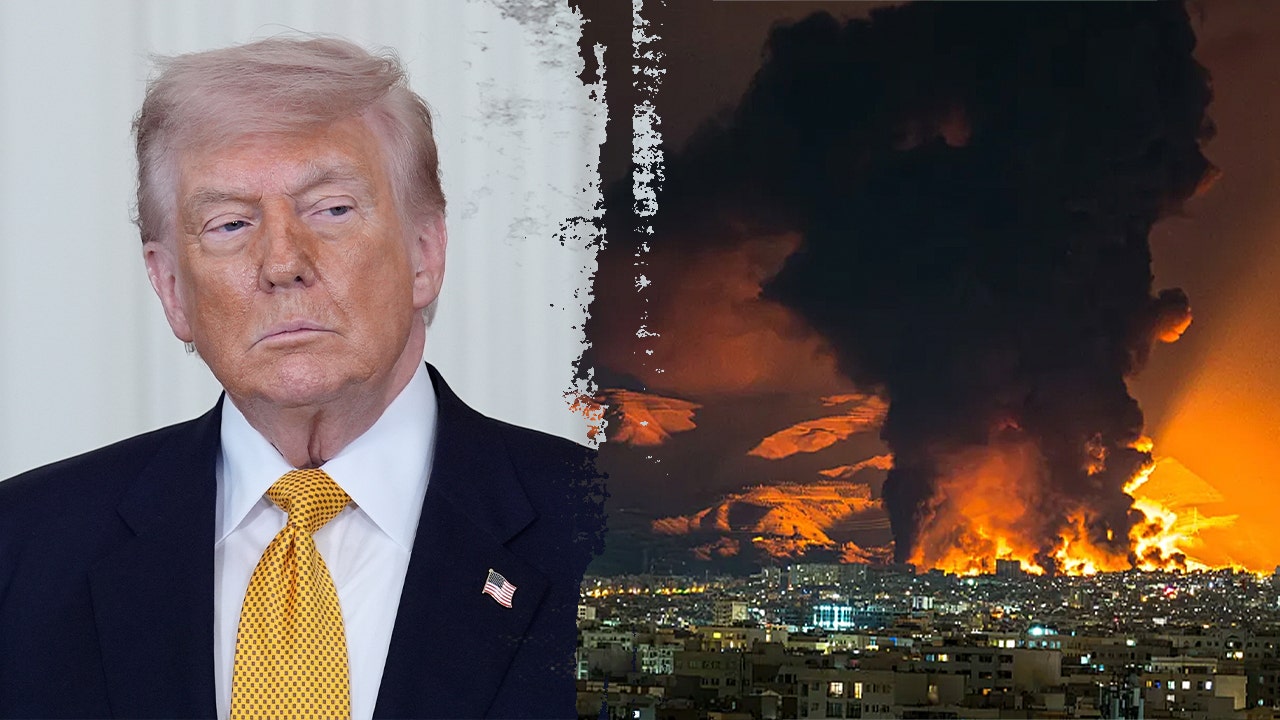
If negotiations with Iran collapse, the U.S. likely is to move quickly to degrade Tehran’s military capabilities — a campaign analysts say would begin with missile systems, naval assets and command networks before escalating to more controversial targets.
Negotiators are still working toward what officials describe as a preliminary framework agreement — effectively a one-page starting point for broader talks centered on Iran’s nuclear program and potential sanctions relief. But deep mistrust on both sides has left the process fragile, raising the stakes if diplomacy fails.
“We’re not starting at zero,” retired Army Lt. Col. Seth Krummrich, a former Joint Staff planner and current global risk analyst, told Fox News Digital. “We’re both starting at minus 1,000 because neither side trusts each other at all. This is going to be a pretty hard process going forward.”
That tension was on display Thursday, when a senior U.S. official confirmed American forces struck Iran’s Qeshm port and Bandar Abbas — key locations near the Strait of Hormuz — while insisting the operation did not mark a restart of the war or the end of the ceasefire.
The strike on one of Iran’s oil ports came two days after Iran launched 15 ballistic and cruise missiles at the UAE’s Fujairah Port, drawing anger from Gulf allies. Defense Secretary Pete Hegseth and Joint Chiefs Chairman Gen. Dan Caine said earlier this week the attack did not rise to the level of breaking the ceasefire, describing it as a low-level strike.
President Donald Trump repeatedly has warned that if negotiations collapse, the U.S. could resume bombing Iran — even signaling before the recent ceasefire was implemented that Washington could target the country’s energy infrastructure and key economic assets. But any escalation would likely unfold in phases, beginning with efforts to dismantle Iran’s ability to project force across the region before expanding to more controversial targets.
If talks break down, any renewed conflict would likely become a “contest for escalation control,” where Iran seeks to impose costs without provoking regime-threatening retaliation while the U.S. works to strip away Tehran’s remaining leverage, according to retired Air Force Lt. Gen. David Deptula.
“The capabilities that would come into focus are the ones Iran uses to generate coercive leverage: ballistic missiles, cruise missiles, air defense systems, maritime strike assets, command-and-control networks, IRGC infrastructure, proxy support channels, and nuclear-related facilities,” he said, referring to the Iranian Revolutionary Guard Corps.
“The military objective would be less about punishment and more about denying Iran the tools it uses to escalate,” he said.
“President Trump has all the cards, and he wisely keeps all options on the table to ensure that Iran can never possess a nuclear weapon,” White House spokesperson Olivia Wales told Fox News Digital. The Pentagon could not immediately be reached for comment.
One early focus could be Iran’s fleet of fast attack boats in the Strait of Hormuz — a central component of Tehran’s ability to threaten global shipping in one of the world’s most critical energy corridors.
RP Newman, a military and terrorism analyst and Marine Corp veteran, said leaving much of that fleet intact during earlier strikes was a mistake.
IRAN’S REMAINING WEAPONS: HOW TEHRAN CAN STILL DISRUPT THE STRAIT OF HORMUZ
“We’ve blown up six of them,” he said. “They’ve got about 400 left.”
The small, fast-moving boats are a key part of Iran’s asymmetric maritime strategy, capable of harassing commercial tankers and U.S. naval forces — and could quickly become a priority target in any renewed campaign.
Much of Iran’s core military structure also remains intact.
INSIDE IRAN’S MILITARY: MISSILES, MILITIAS AND A FORCE BUILT FOR SURVIVAL
Newman said “we’ve only killed less than one percent of IRGC troops,” leaving a large portion of the force still capable of carrying out operations. He estimated the group “numbers between 150 and 190,000.”
But targeting the IRGC is far more complex than eliminating senior leadership.
“They’re not just a group of leaders at the top that you can kill away,” Krummrich said. “Over 47 years it’s percolated down to every level.”

Retired Rear Adm. Mark Montgomery, a senior fellow at the Foundation for Defense of Democracies policy institute, said Washington may continue tightening economic pressure before broadening military action, arguing the U.S. should “squeeze them for at least another three to six weeks” before considering more aggressive escalation.
“You could have blown Kharg Island back to smithereens,” Krummrich said, referring to Iran’s primary oil export terminal in the Persian Gulf. “But what the planner said was, no — what we can do is a maritime blockade. It will have the same effect.”
Iran has continued moving crude through covert shipping networks and ship-to-ship transfers, with tanker trackers reporting millions of barrels still reaching markets in recent weeks.
A CIA analysis found Iran may be able to sustain those pressures for another three to four months before facing more severe economic strain, according to a report by The Washington Post.
The question is how far a U.S. campaign could expand if initial pressure fails to force concessions.
Trump has signaled a willingness to go further, warning before the ceasefire that the U.S. could “completely obliterate” Iran’s electric generating plants, oil infrastructure and key export hubs such as Kharg Island if a deal is not reached.
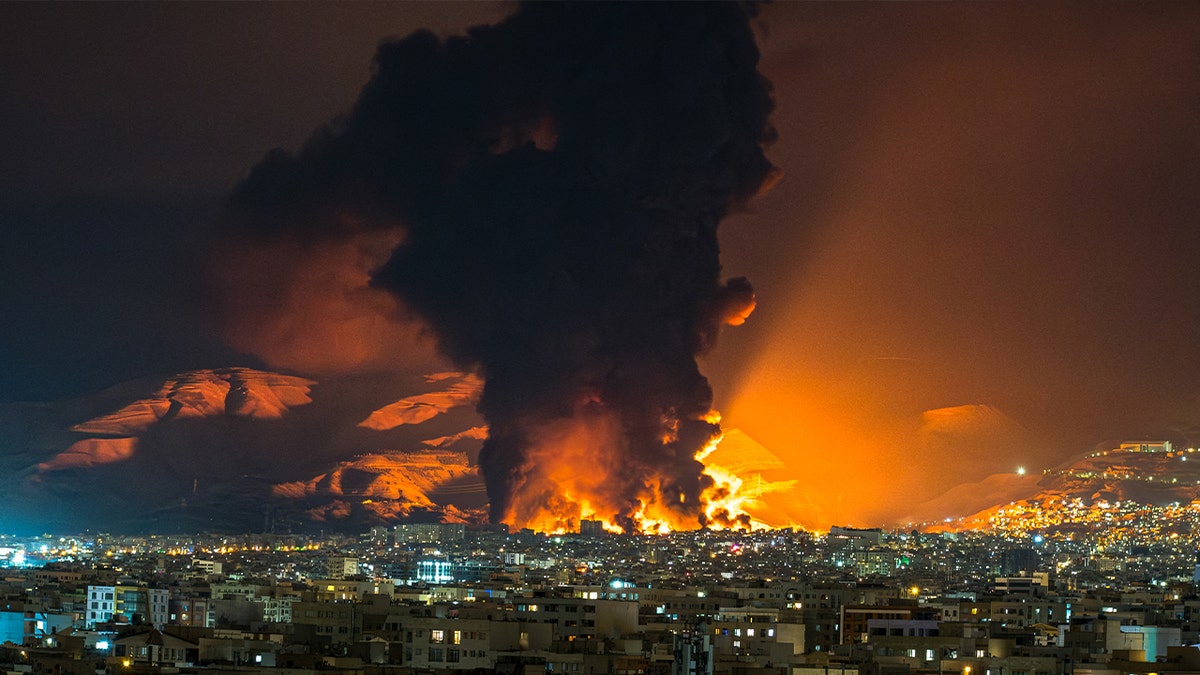
“You don’t do that at first,” Montgomery said, describing strikes on dual-use infrastructure as a conditional step dependent on Iran’s response.
Targeting dual-use infrastructure presents significant legal and operational challenges.
“I’ve got 500 people standing on my target. You can’t hit that,” Newman said.
Such decisions carry political and legal risks, particularly given the likelihood of international scrutiny.
Broader infrastructure strikes also could create long-term instability if they push Iran toward internal collapse.
“In the short term, it might help. But in the long term, we’re all going to have to deal with it,” Krummrich said. “Once you pull that lever, you’re basically pushing Iran closer to the edge of the abyss.”
A collapse of state authority could create a failed-state scenario across the Strait of Hormuz, with armed groups, drones and missiles operating unchecked in one of the world’s most strategically important waterways.
Even some of the most discussed military options — such as seizing Iran’s highly enriched uranium — would be extremely difficult to execute.
“That’s much harder than it sounds,” said Montgomery.
CLICK HERE TO DOWNLOAD THE FOX NEWS APP
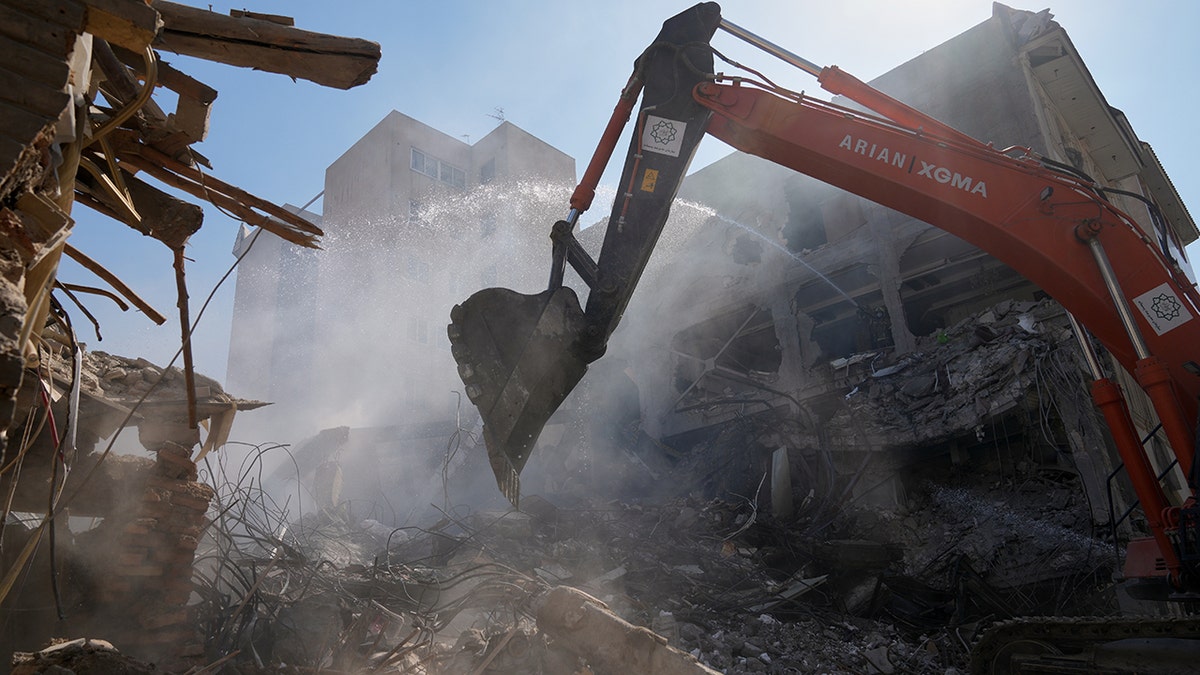
Such a mission would likely take months, and require engineers, technicians and heavy excavation equipment, in addition to thousands of U.S. operators providing continuous air coverage.
“When you start to stack that up, that becomes resource intensive and high risk — not even high, extreme risk,” said Krummrich.
Read the full article here