


An Australian influencer’s seemingly snatched selfie is now getting stretched online.
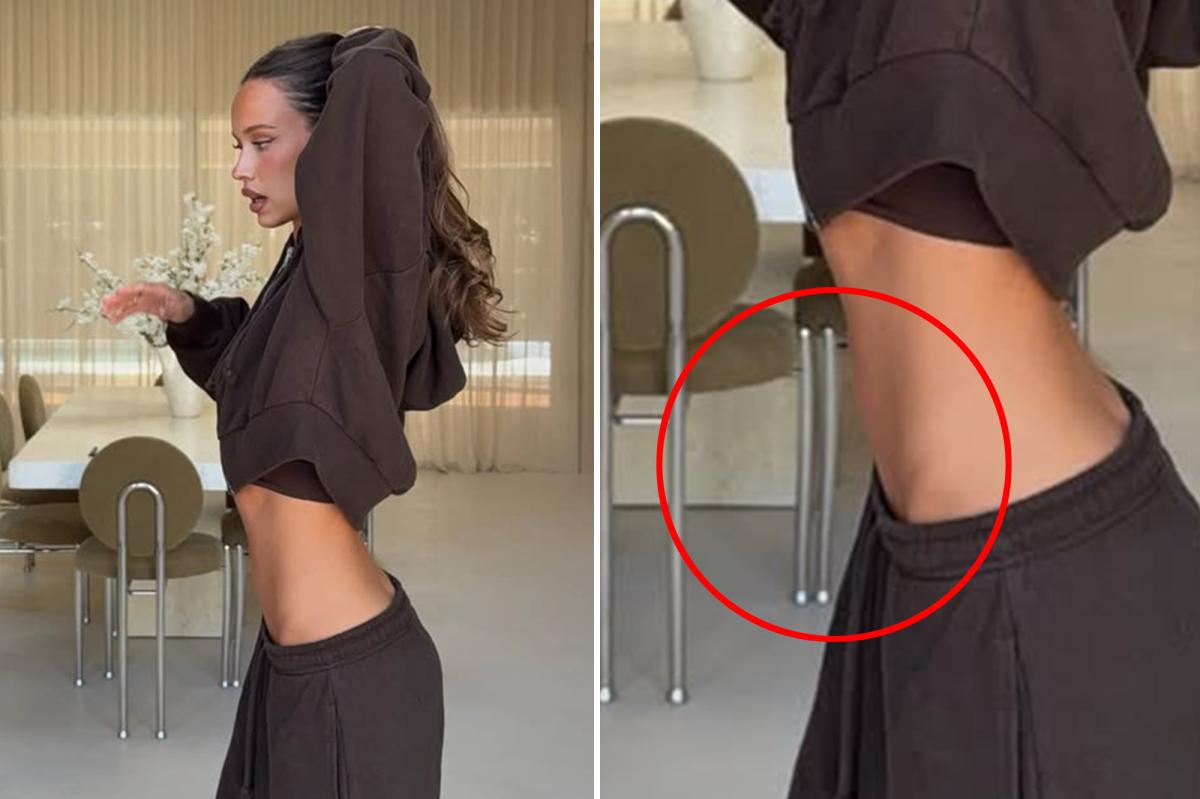
Isabelle Mathers found herself at the center of an internet pile-on this week after fans accused the Zoomer of digitally flattening her stomach in a glam activewear post — with eagle-eyed critics pointing to what appeared to be distorted furniture in the background as the giveaway.
The social media queen, who boasts more than 2.1 million Instagram followers, set the internet ablaze in a May 21 post promoting activewear brand Crop Shop Boutique.
In the 16-photo upload, the 27-year-old posed in a deep brown cropped sweatshirt and matching sweatpants layered over a coordinating bra, showing off her sculpted abs in a series of sultry snaps.
But one image in particular had followers zooming in harder than the FBI on a blurry security video.
“People are saying you edited your photos in a deceptive way,” one user commented beneath the post.
Meanwhile, over on Reddit’s r/LAinfluencersnark forum, amateur detectives were already dissecting the image pixel by pixel.
“I really like her but whyyyyy girl why ?? Is it mental? Why do they photoshop their bodies when they have it perfect. Also so weird how they never take pictures with stomach covered,” one Redditor wrote alongside a repost of the photo.
Soon, commenters began accusing Mathers of looking “ingenuine” and “unnatural,” with several claiming the dining chairs behind her appeared bent and warped — a classic internet clue that some digital tummy-tucking may have been at play.
And for some viewers, the alleged edits hit a nerve far deeper than just bad Photoshop.
One commenter admitted the photos had made her feel insecure about her “waist/stomach not being quite as flat” before spotting what she believed were edits in the image.
“Omg this is insane,” the user wrote, adding that “these little tweaks to edit are so much more harmful to onlookers” than obvious FaceApp-style filters.
Others argued the influencer likely already had the physique many followers aspire to — making the alleged edits feel even more unnecessary.
“I guarantee you this girl is athletic and has a good figure without these crazy edits,” one sounded off.
They continued, “She doesn’t need to do this to her pics. I feel bad for Gen Alpha growing up in this culture while they are just in their teenage years. Gen Z didn’t have to deal with this.”
Not everyone was fully convinced the image had been dramatically altered, though.
“Her stomach does actually look this way, not too sure why she edited this specific image, only thing I can think of would be she was bloated, idk,” an additional person noted.
But someone else quickly fired back with a reality check many social media users seemed to agree with: “Not too sure why she needed to hide that, literally happens to most people, if not everyone.”
The bizarre body-editing drama is just the latest example of social media’s increasingly twisted relationship with reality.
As previously reported by The Post, influencer Lauren Blake Boultier sparked outrage after admitting she edited her face onto another woman’s body — then blamed an AI agency for the shocking mix-up.
The controversy exploded after Boultier, who has more than 1.6 million followers, posted a photo appearing to show her courtside at the Miami Open.
Internet sleuths quickly realized the image actually belonged to black model Tatiana Elizabeth, who had originally shared the snap from the US Open in New York last year.
The giveaway? Nearly everything besides the face.
The two photos featured the same pose, identical outfit, matching wrist tattoo, and the same courtside backdrop inside Arthur Ashe Stadium in Queens — with the face of Boultier, who is white, seemingly pasted over Elizabeth’s body.
After the backlash erupted, Boultier claimed the altered image had been created by a third-party AI content agency she worked with.
The strange scandal also underscored a growing trend across Instagram and TikTok, where AI tools and editing apps are increasingly being used to create hyper-curated — and sometimes completely fabricated — influencer content.
Read the full article here