



Suppose that you purchase a home or condo for $1M. You discover defects, sue and eventually recover $500k from the seller or builder. Are you stuck with a tax bill on the $500k? Paying tax on a recovery when you are just trying to recover what you lost seems unfair. Whether it seems fair or not, you might be stuck with taxes, particularly if you receive a Form 1099 for the $500k.
However, if you play your cards right, you may be able to treat the $500k as a reduction in your tax basis rather than as taxable income. That is, your basis started at $1M when you bought it, and now it is $500k, post recovery. You may have to pay taxes later if and when you sell it. But for now, you should not have to pay tax on your recovery.
Delaying Taxes
The idea, of course, is to put off paying taxes when you can, to maximize your recovery. If a recovery compensates a plaintiff for injuries to a capital asset, the recovery should constitute a tax-free return of capital to the extent of the taxpayer’s basis in the injured asset. The rationale is that no economic gain results from a basis recovery. Only amounts received that exceed the taxpayer’s basis constitute income. Most legal settlements are taxable, but some are capital gain.
Of course, basis recovery only goes so far. What happens if you bought your property for $500k, it is now worth $2M, and you collect $1M from your contractor? You do not have enough basis to absorb the full million-dollar settlement. So (ignoring legal fees), you have a $500k gain. Do you have to pay tax on that?
It depends. First, let’s note that this should be capital gain, although the IRS often defaults to treating settlements as ordinary income. Ordinary income is taxed at 37%. Capital gain (depending on income level and the size of the gain) can be taxed as low as 0% and as high as 23.8%. Even if you are in the highest tax bracket, paying 23.8% is better than paying 37%.
Basis Recovery, Then Capital Gain
But capital gain reporting can involve recouping basis too. And that is where legal fees come in. If you are able to treat your settlement as capital gain rather than as ordinary income, you should also be able to offset your legal fees on your taxes. In effect, if you spent 40% of your settlement in legal fees to collect the other 60%, you can offset the 40%, treating it as your basis.
However, even if you have gain, do you have to pay tax on it? If the home is your principal residence, you can consider excluding some of the resulting gain under the principal residence gain exclusion rules of Section 121. Regardless of whether the home is your principal residence, you may also be able to elect to defer taxes on the gain under Section 1033 of the tax code.
Deferring Taxes Under Section 1033
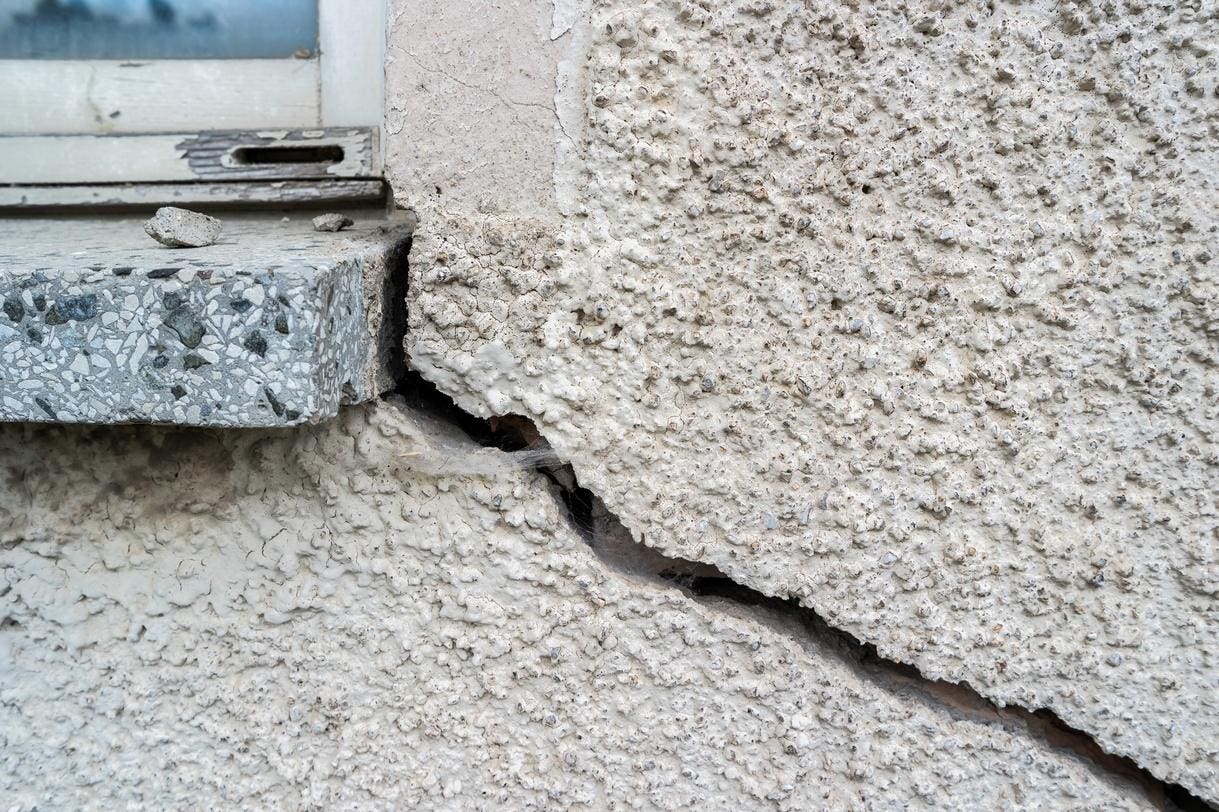
Section 1033 applies to involuntary conversions, such as where your property is condemned by the government or damaged or destroyed by a fire, storm or defendant. But Section 1033 can also apply to damage or destruction from defective construction. It is also used frequently by victims of natural disasters who collect insurance or lawsuit money. Section 1033 allows you to put your gain into repairing or replacing the damaged or destroyed property. There are time limits and requirements, but it is used frequently in property damage and construction defect cases.
Injury Claims
Of course, not all construction defect cases are solely about harm to the property. In some cases, the plaintiff is claiming the property is uninhabitable, so they need damages for alternative living arrangements. The plaintiff may also be claiming that the damage or defects caused the owner or inhabitants to become sick. Damages for sickness are tax free, while most most emotional distress damages are taxed. The claim may be that the building materials have toxins, or that mold, water damage, sewage, etc., made inhabitants sick or even caused or exacerbated an illness.
In cases like that, do you do the same basis, gain and section 1033 analysis? For the property damage claims yes, but a different tax treatment should apply to the sickness damages. Where there are bona fide physical injury or physical sickness claims, it is appropriate to allocate some of the settlement proceeds to those claims. Section 104 of the tax code treats such damages as tax free. But it is best to have a specific dollar amount allocated in the settlement agreement for physical injuries or physical sickness, and to make sure that the settlement agreement language is clear.
Read the full article here