



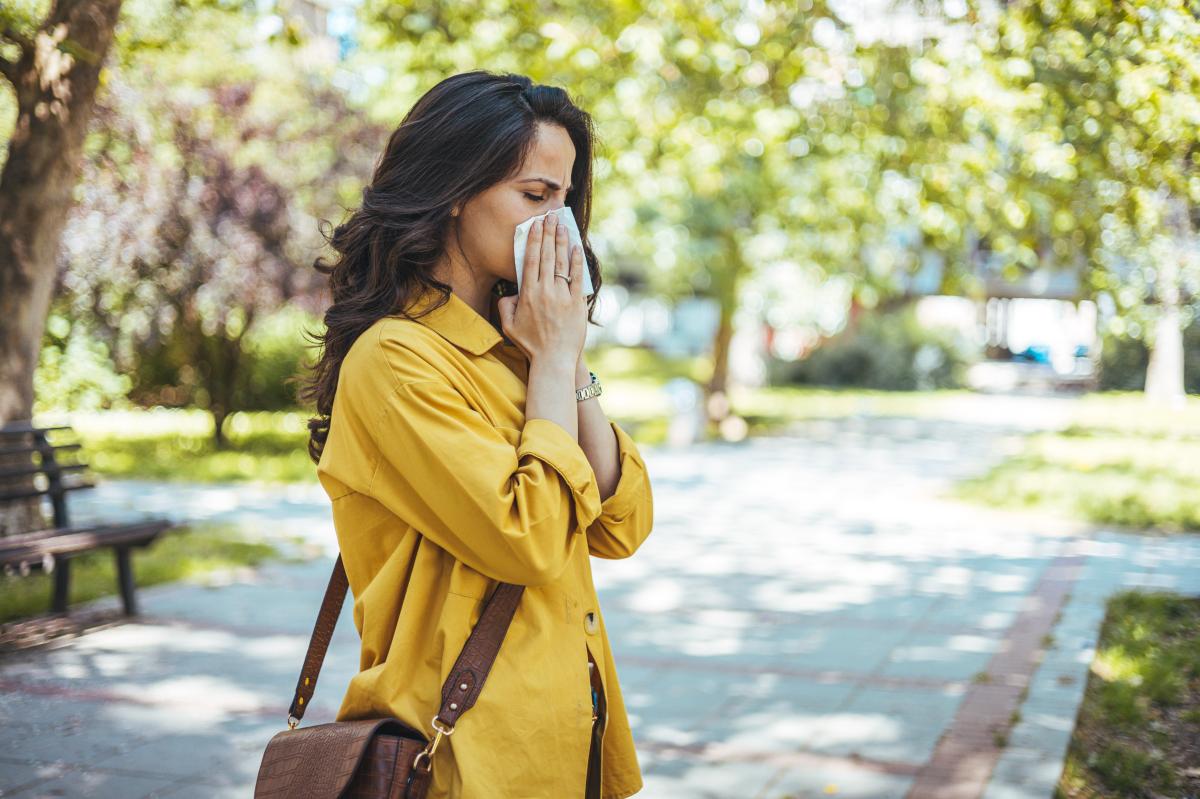
Have sneezing fits finally met their matcha?
With a particularly spicy allergy season brewing, people are looking for effective ways to control their symptoms. They might soon be swapping their visits to the pharmacist for stops at the neighborhood cafe.
Matcha, the thousand-year-old grass-hued Japanese tea beloved by wellness influencers, could hold the secret to sneezing less.
While the findings are preliminary, researchers in Japan were pleased to see that high doses of matcha extract suppressed sneezing in a set of mice engineered to exhibit the symptoms of seasonal allergies in humans.
Three doses of the green powder per week over five weeks, plus an extra helping in the minutes before an allergen exposure, had a significant impact on the hay fever symptoms of the mice.
The reason, though, is a real head-scratcher.
Typical allergy medicines suppress the body’s natural immune response in an attempt to limit its reaction to allergens like dust and pollen.
The researchers suspected that some component of matcha was triggering a similar process in the mice. But it was something else entirely.
Instead of nipping the allergic reaction in the bud via the immune system, matcha had the greatest effect on the nervous system — in particular, the part of the brainstem that houses the sneezing reflex.
The extract interfered with the receptors that kick off the involuntary response to a sneeze, helping the body react to allergens in a much more zenlike manner.
It wasn’t immediately clear what was behind this pattern, but it could have something to do with the bioactive compounds in matcha — including catechins and amino acids like L-theanine — that have made it so famous around the world for its anti-inflammatory properties.
And while the idea of a sneezing mouse is utterly adorable, additional extensive research is needed to understand how matcha might affect the sneezing mechanisms in humans.
Plus, the mice were given about 10 times the amount of matcha extract than what you’d find in a standard cup.
Ultimately, these findings don’t offer a cure for seasonal allergies, so don’t go clearing out your medicine cabinet just yet. But they could point toward a new way of studying them.
Osamu Kaminuma, study co-author and professor at the Research Institute for Radiation Biology and Medicine at Hiroshima University, spoke about the study with Food & Wine.
“We do not expect matcha to have a substantial therapeutic effect on allergy itself, although it may provide some symptomatic benefit by alleviating allergy-associated sneezing,” he said.
Also speaking to Food & Wine, several allergists were energized by these findings — while emphasizing that there’s much more to learn on the subject.
Dr. Sebastian Lighvani, an allergist at Northwell’s Lenox Hill Hospital, found it “fascinating” that matcha, “or one of its components, is directly affecting neurotransmitters” and appears to “abolish signaling related to sneezing.”
Dr. David Corry, professor of immunology, allergy and rheumatology at Baylor College of Medicine, added that he sees no harm in trying the matcha method.
“I, personally, have no concerns with folks drinking green tea,” he told Food & Wine — with one caveat: Don’t “get too crazy with it and start drinking eight to 10 cups per day.”
Two or three cups max is a good gauge. So next time the greenery starts giving you grief, think greener.
Read the full article here