




Houston, we may have a problem!
A rare, colossal-sized asteroid is on course to fly by Earth — and will come closer to our planet than any other rocks of its size in human history.
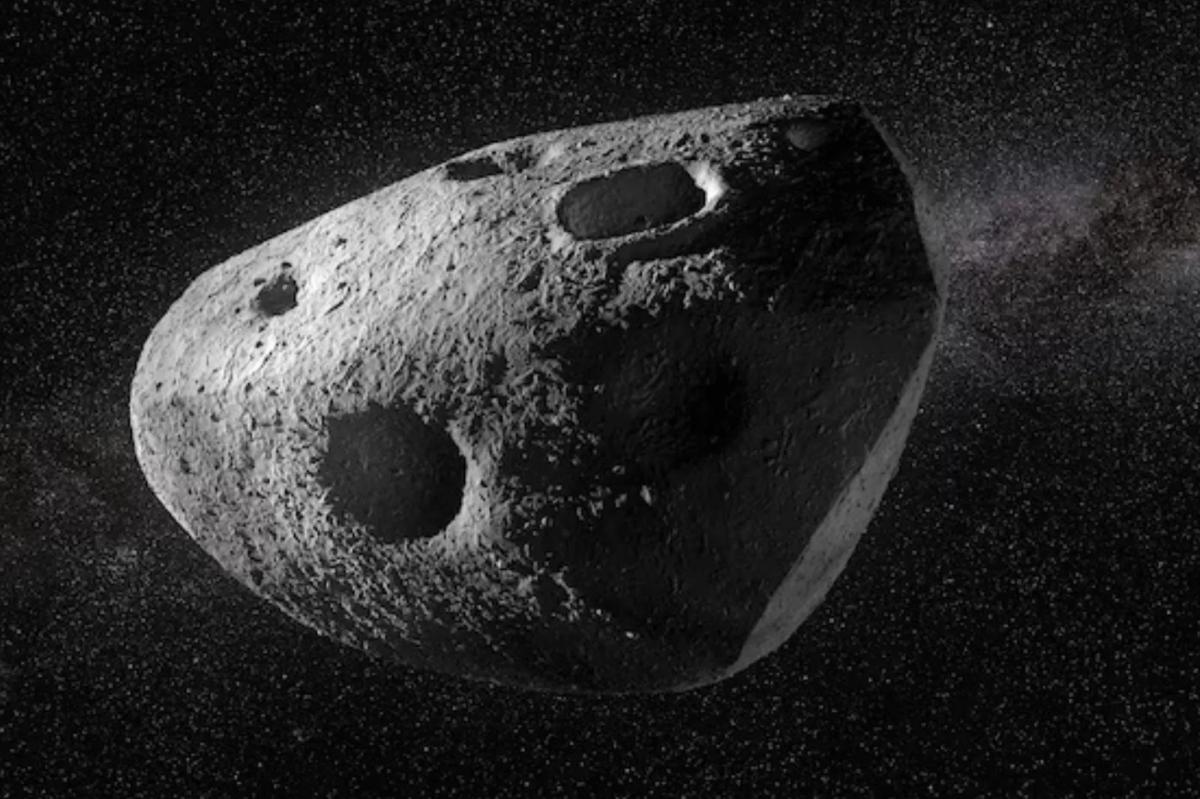
The asteroid, named Apophis after the ancient Egyptian God of evil and destruction, is believed to span about 1,230 feet — even longer than the Eiffel Tower’s whopping 1,083-foot height.
Dubbed the “God of chaos,” the asteroid is on track to safely pass by Earth in a once-in-a-lifetime fly-by, lighting up the night sky visible to the naked eye on unlucky Friday, April 13, 2029, according to the National Aeronautics and Space Administration.
It is predicted that Apophis will come approximately 20,000 miles from the Earth’s surface, closer than many satellites floating in space — nearly 12 times closer than the moon’s average distance from Earth.
Asteroids of this size fly by Earth “only every few thousand years on average, so it’s likely that an event like this has not happened at any time in recorded human history,” NASA said.
“Without a doubt, this is the first time it’s happened when humans have had the technology to observe it,” the agency said.
Depending on the weather, space fanatics and eagle-eyed observers on Earth will be able to observe the asteroid’s approach from the ground in the Eastern Hemisphere without a telescope or binoculars, according to NASA.
The space agency reassures that there is no danger to anyone living on Earth, or to the astronauts and satellites in space, “but the event is an amazing and totally unprecedented opportunity to learn much more about Apophis and similar near-Earth asteroids.”
NASA has been studying the asteroid closely for years; it initially sparked global concern when scientists calculated it could potentially impact Earth in 2029, 2036 or 2068 — hence the destructive name of Apophis.
The “God of chaos” asteroid was first discovered by astronomers in 2004, and briefly reached level 4 on NASA’s Torino Impact Hazard Scale, which assesses possible space dangers.
Today, Apophis is classified as “potentially hazardous” — not because it poses any danger to life on Earth, but due to its large size and proximity to Earth, according to Space.com.
NASA originally put the astronomically sized rock at a 2.7% chance of devastation, but all danger was ruled out after new radar observations in 2021, leaving Earth safe from harm for at least 100 years.
The European Space Agency (ESA) is planning to send its Rapid Apophis Mission for Space Safety (Rames) team to follow the asteroid on its journey close to Earth and will observe how it is warped and changed by Earth’s gravity.
After the 2029 fly-by, the colossal rock will be back again in 2036, but this time nowhere near as close to Earth.
Read the full article here