



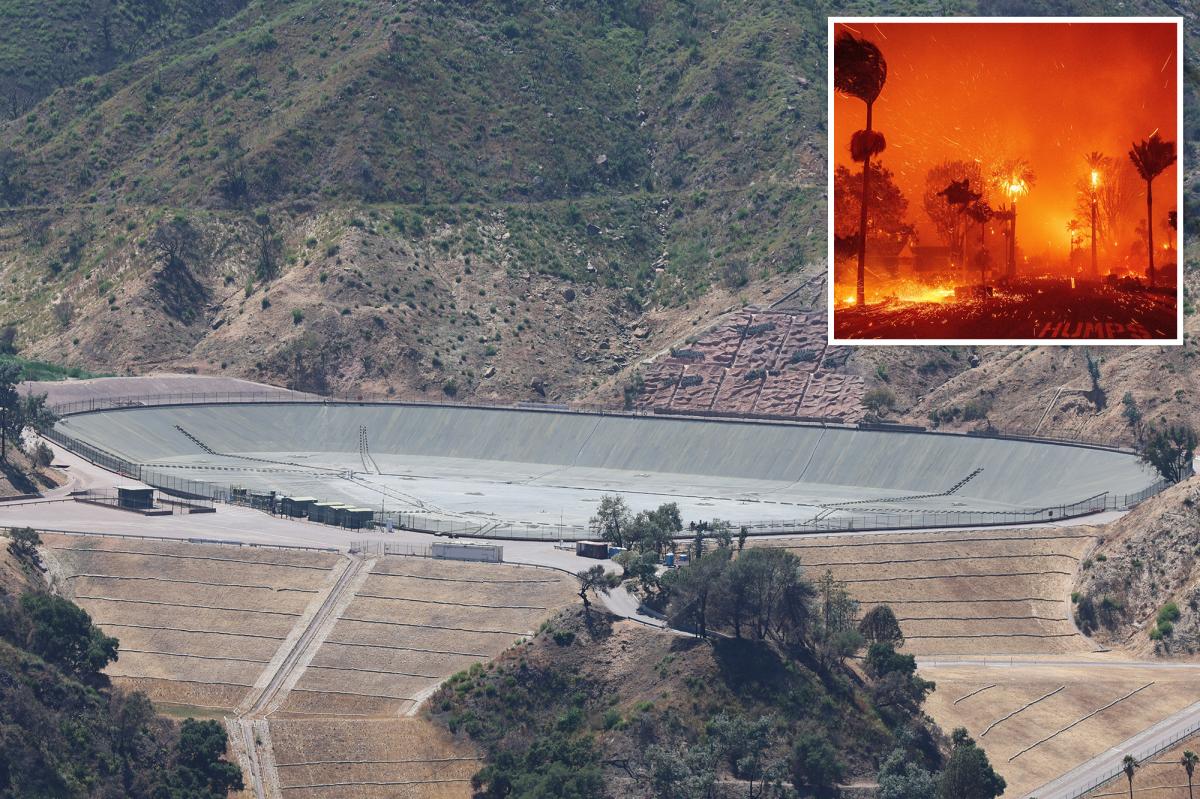
Angelenos have erupted after the Pacific Palisades reservoir that was empty during the deadly wildfires is once again empty for maintenance.
The Santa Ynez Reservoir, a key water source perched above the coastal neighborhood, has been drained as part of a $19.5 million project to replace its aging floating cover, the LA Times reported.
While officials say the work is necessary to maintain drinking water safety, residents argue the timing could not be worse.
The absence is especially concerning because it was also empty during the January 2025 Palisades Fire, when flames destroyed nearly 7,000 buildings and killed 12 people.
Firefighters struggled as water pressure dropped in hillside hydrants.
High demand quickly drained three one million gallon tanks faster than they could be refilled, leaving crews without enough water.
The 117-million-gallon reservoir — a key backup source — was also empty for repairs, worsening the problem. Now, with temperatures rising, the community fears history is repeating itself.
“It’s a failure to recognize that there is value to this community to have the reservoir full,” Maryam Zar, head of the Palisades Recovery Coalition said.
“It’s incredible to me that after the experience we went through [with the Palisades fire] there is still no recognition that this reservoir should be filled to the gills, whether or not it’s potable.”
City officials have defended the decision, emphasizing the reservoir must be empty to install the new cover, which spans about 10 acres and is required to meet state and federal water quality standards.
The LADWP — which recently saw a leadership shake-up after its $750,000-a-year head stepped down — announced the project earlier this year, saying the more than decade-old cover had deteriorated and was damaged, including pinhole tears caused by embers during the fire.
DWP Chief Operating Officer Anselmo Collins said the agency was working to minimize risk, pointing to alternative water sources and infrastructure upgrades.
“We recognize the cover is not in the best shape possible,” he said, calling the replacement project a short to midterm fix.
He noted that aerial firefighting resources can draw from other open-air reservoirs, including those in Encino and Stone Canyon, and added that new pipelines are being installed to bolster supply.
Still, many residents remain unconvinced, arguing that even non-potable water in the reservoir could provide a critical buffer during an emergency.
A state report released last year concluded that even if the reservoir had been full during the 2025 fire, it would not have prevented the loss of water pressure under extreme demand. But some in the community dispute that conclusion.
“Across the Palisades, people whose homes are standing will tell you that a little bit of water and a little bit of brush clearance did indeed make a difference,” Zar said.
For residents like Peter Friedman, who lost his home in the fire, the situation raises deeper concerns about long-term planning.
“You know the old adage, ‘Putting good money after bad?’ That’s what’s happening here,” Friedman said.
With the reservoir expected to remain offline until fall, frustration continues to build over whether lessons from one of Los Angeles’ most destructive fires are truly being applied.
Download The California Post App, follow us on social, and subscribe to our newsletters
California Post News: Facebook, Instagram, TikTok, X, YouTube, WhatsApp, LinkedIn
California Post Sports Facebook, Instagram, TikTok, YouTube, X
California Post Opinion
California Post Newsletters: Sign up here!
California Post App: Download here!
Home delivery: Sign up here!
Page Six Hollywood: Sign up here!
Read the full article here