


America: the land of the free (and the home of the brave). The land of opportunity. A nation of immigrants. A country built on life, liberty and the pursuit of happiness. A country built on slavery. Democratic. Republican. Once great. Still great. Great again. Never great. United. Divided. Under threat. Stronger than ever. An ideal. A dream. A scam.
What is America? The United States celebrated its 250th birthday this year, and politicians and pundits have endlessly opined on the significance and meaning of this great experiment and its position today.
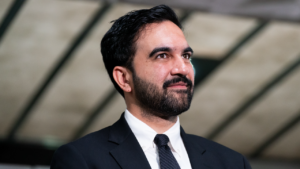
Peter Santenello, however, is not interested in such grand (and often simplistic) proclamations. He’s interested in Americans — the individual people who live in this vast, diverse, confounding, contradictory place we call home.
“I look at a map of the United States, and it’s like, ‘Whoa, there’s so many more areas to check out!’ ” the 48-year-old independent journalist told The Post.
And he’s been to a lot of them: For the past six years, Santenello has zigzagged across the nation interviewing everyday people for his massively popular YouTube channel, which boasts 4.2 million subscribers. His most watched video, on Appalachia, titled “Poorest Region in America: What It Really Looks Like,” has more than 37 million views.
“That’s such a blessing to live in a country like that,” he added. “It’s not all homogeneous and one-dimensional. It’s multidimensional.”
Now, Santenello has turned some of his most surprising, compelling findings into a book. “Your Fellow Americans: Dispatches from Across the Country We Call Home” (Simon & Schuster, Aug. 4) focuses on 10 regions Santenello has visited in his six years filming the United States, from Deep Appalachia to the Hamptons, the redwood forests to the Chesapeake Bay.
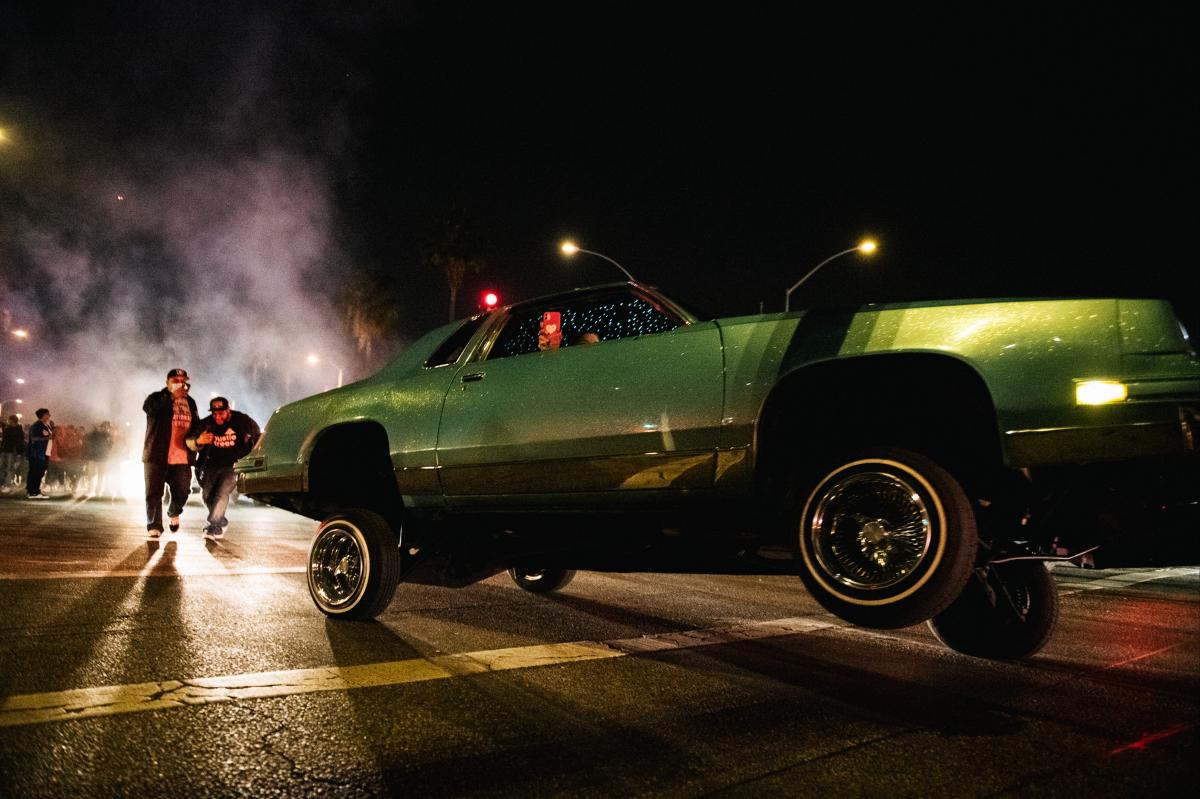
He jumped in a horse-drawn buggy in Amish country and a lowrider in East LA. He dined on raccoon in the Mississippi Delta (“it was almost like the Thanksgiving turkey, except it was the carcass of a raccoon”) and freshly killed nutria rat in the Louisiana Bayou (“not bad”). He hunted reindeer off the coast of Alaska, and heard Elizabethan English spoken in a tiny town off the coast of Maryland, Smith Island.
And he found that while there are myriad different ways of living in this country, that the people he spoke with — across race, gender and class — had more in common than appeared on the surface.
“There’s the online reality, and there’s the on-the-ground reality, right?” Santenello said. “The online is highly polarizing, engagement-driven, divisive. And then the on-the-ground reality is most people are great. What I try to do in my content is bring that on-the-ground reality into the online.”
His book continues that mission.
As he tells it, Santenello grew up in Vermont, but he always had an instinct to wander. When he was 8 years old, in the mid-1980s, he asked for a book about the Soviet Union for Christmas. He was amazed at the photos inside, of a couple on their wedding day, of people doing normal, wholesome things — not at all what an American boy thought happened behind the Iron Curtain.
“Looking back now, I think that’s the moment I became obsessed with one day seeing the world through my own eyes,” he writes in “Your Fellow Americans.”
He went on his first cross-country road trip after high school, and his first international tour when he was 24. Instead of going to France and Italy, he spent two years exploring, as he put it, “misunderstood countries: Tajikistan, the Republic of Georgia, Syria. … When I got back to the US, it clicked on me: Wouldn’t it be cool to show videos of these places?”
Santenello launched a YouTube channel in 2009, but turned to vlogging full time in 2017, while living in Ukraine (where he met his wife and video editor, Natalia). He spent years interviewing people there, as well as in Iran and Pakistan, before moving back to the US during the pandemic. That’s when he and Natalia decided to turn their lens on Santenello’s home country.
“It was almost out of, you know, no [other] options,” Santenello recalled. “[I thought], ‘What’s here to show? I already know my country.’
“Boy, was I wrong,” he added.
Santello structures his book in four parts: “neither here nor there” (strong communities rooted in identity and intent on preserving cultural heritage, like the Chicano in LA or the Siberian Yupik in Alaska); “the underdogs” (places hanging on against all odds, like Appalachia and the Mississippi Delta); “the long game” (places that have endured across generations); and “pioneering spirit” (people living a ruggedly individual life in the Louisiana Bayou). Taken together they paint a diverse portrait of America today.
Santenello chooses each subject differently. Sometimes he will simply pick a region and wander around, looking for people to interview, as he did in East New York, or in Deep Appalachia — a risky but rewarding approach.
“You start tapping into that part of the country, [and] it’s fascinating because there are a fair amount of stereotypes,” Santenello said about his viral video showing the “real” Appalachia. “And [the people] know that, right? So they’re like, ‘What’s this guy doing here with the camera? Is he going to put us under the bus like everyone else?’
“It’s a part of the country that’s so important, that has been so important for our development, but then feels so left behind at the same time. And what that does [to the people there] is that it just rips away any facade.”
He interviewed a sixth generation coal miner who spoke candidly about his addiction to OxyContin, and why he doesn’t want his young son in the mines; a young woman working at Pizza Hut pursuing a degree in criminal justice; and a group of college kids fishing in Harlan County, Ky., who decided to stay in the region despite its problems. They want to show that there’s more to it, as one teen told Santenello, than “drugs and mining.”
Often, fans will reach out to Santenello, offering themselves as a tour guide, or introducing him to a local character, like the old surfer who showed Santenello around the Hamptons, taking him to the dump where he rifled through rich people’s trash. “That was right up my alley,” Santenello said.
Once in a while, Santenello goes into a community with little more than a hope and a prayer. When he went to St. Lawrence Island, a giant mass of land in the Bering Sea, he found no cafes, no hotels and no Airbnbs. “I found it by looking at Google Maps late one night,” Santenello said. “Like, ‘What’s this big island right off the coast of Russia?’ ”
It took 21 ½ hours and three layovers to get there from Santenello’s home in Florida. He brought a sleeping pad and a blow-up pillow in case he had to sleep on somebody’s floor. “It was unclear where I was staying, and there was a lot of unknowns,” he said. He ended up bunking in a haunted clinic — his local guide advised him to put some small flowers from the tundra at the base of the bedroom door to defend against “negative spirits” after Santenello’s first sleepless night. “It ended up being one of my favorite places,” he said.
There he met the Siberian Yupik, who have inhabited the island for thousands of years and have their own language and culture, one they share with their Russian counterparts on the other side of the strait.
And yet, they are American, too. Santenello saw this in many communities throughout the US, whether the Chicano people in Los Angeles — who are considered “Mexican” in the US and “American” in Mexico — or the Amish in Holmes County, Ohio. People, Santenello observed in his book, who are “proud to be American, but also proud to have been born and raised with other overlapping identities.”
“Which, I suppose, is how we all live,” he added. “As citizens, but also as ourselves.”
Five years after his first video in Borough Park, Brooklyn, he has filmed some 250 in the US. And though he’s written a book, he’s not done exploring.
“I would say I leave [every place] more fired up [about] the country than when I started,” he said. “I just got back from Maine, and that was fantastic. It’s a different world up there. So it’s always a discovery. I always meet great people. We have so much going for us that gets forgotten.”
Read the full article here