




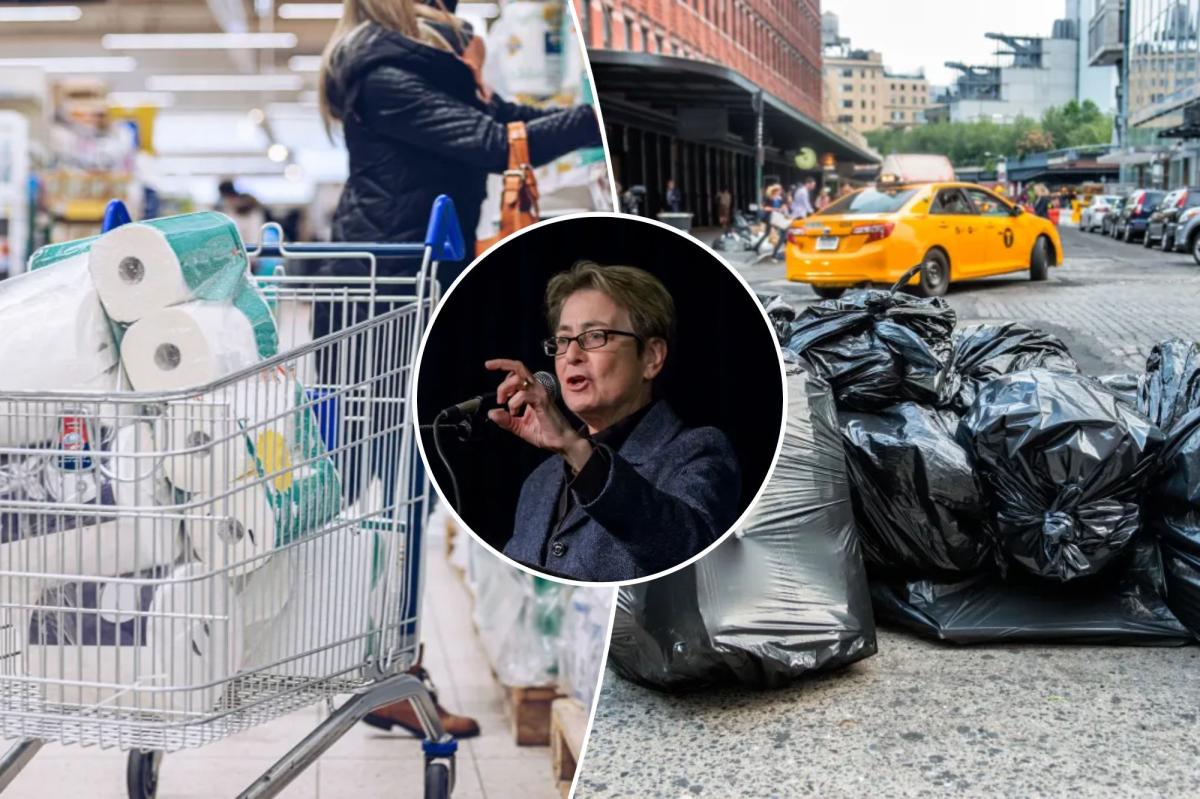
TP is going green… and potentially at top dollar.
New state legislation in New York could soon require manufacturers to reduce plastic packaging for toilet paper, paper towels, and diapers … but critics say consumers could end up paying the price.
The proposed Packaging Reduction and Recycling Infrastructure Act would require companies with net income exceeding $5 million to reduce and phase out toxic or non-reusable packaging, replacing it with reusable and environmentally friendly alternatives.
Manufacturers would be required to reduce their non-green packaging by 10% within 3 years and by 30% within 12 years.
Meanwhile, at least 25% of packaging would have to be recyclable by 2032, with increases to
50% and 75% by 2040 and 2055, respectively.
While the bill is ostensibly good for the environment, critics say the changes could translate to higher costs for consumers.
“For independent supermarkets serving New York City’s working-class and minority communities, even modest shifts in packaging policy can quickly translate into higher costs for families,” said Nelson Eusebio, the National Supermarkets Association’s director of government affairs.
“When changes move forward without scalable, commercially viable alternatives, those costs ripple through the supply chain and affect prices at the register,” he added.
Others are concerned that reducing certain packaging could compromise the products themselves.
“It will eliminate the plastic film packaging that keeps essential products like toilet paper, paper towels, and diapers dry and sanitary,” said Dan Felton, president and CEO of the Flexible Packaging Association
“Without it, retailers and consumers face increased product damage, higher replacement costs, and less reliable shelf availability.”
The bill is part of ongoing efforts to address the state’s solid waste and pollution crisis and mitigate the effects of the nearly 5 pounds of trash each New Yorker generates per day.
Proponents of the bill note that local taxpayers are left paying the price for disposal and recycling, suggesting that the legislation could lighten the financial and environmental load.
Unsurprisingly, the bill has the backing of more than half a dozen environmental groups.
“New Yorkers are drowning in plastic waste, and for too long, taxpayers have been stuck with the bill while multi-billion-dollar companies pump toxic chemicals into our communities,” said Judith Enck, founder of the group Beyond Plastics and a former regional administrator for the US Environmental Protection Agency.
In its present form, the bill has been dramatically revised, with 150 separate changes, including the pushback of compliance deadlines for the proposed recycling and toxic-substance bans.
“We have forged a middle ground with these amendments to our bill, and now we are working to finally gain the necessary legislative and executive approvals that will save New Yorkers millions of dollars each year while helping to protect our environment,” said state Sen. Peter Harckham (D-Peekskill), who sponsored the bill alongside state Assemblywoman Deborah Glick (D-Manhattan)
Still, even with these amendments, the Business Council of New York State, the American Institute for Packaging and the Environment, and others said in a joint statement that the bill would negatively impact businesses and consumers.
“This proposal includes requirements – such as stringent source reduction targets, material restrictions, and limited flexibility – that go well beyond those in EPR laws adopted by other states,” the statement said.
“If adopted, this bill would impose significant operational challenges on business and result in significant impacts on consumer costs and product availability.”
If passed, New York will join the ranks of other states valiantly trying to eliminate waste and protect our increasingly fragile environment.
In 2021, Maine passed the Extended Producer Responsibility (EPR) law, which requires companies to pay a packaging materials fee to help fund recycling programs.
California continues to lead the charge against excess plastic, passing a 2022 bill that aims to eliminate 25 percent of single-use plastic by 2032.
Read the full article here