


It takes guts to make a fashionable impact in New York City.
And Renata Buzzo’s got ‘em.
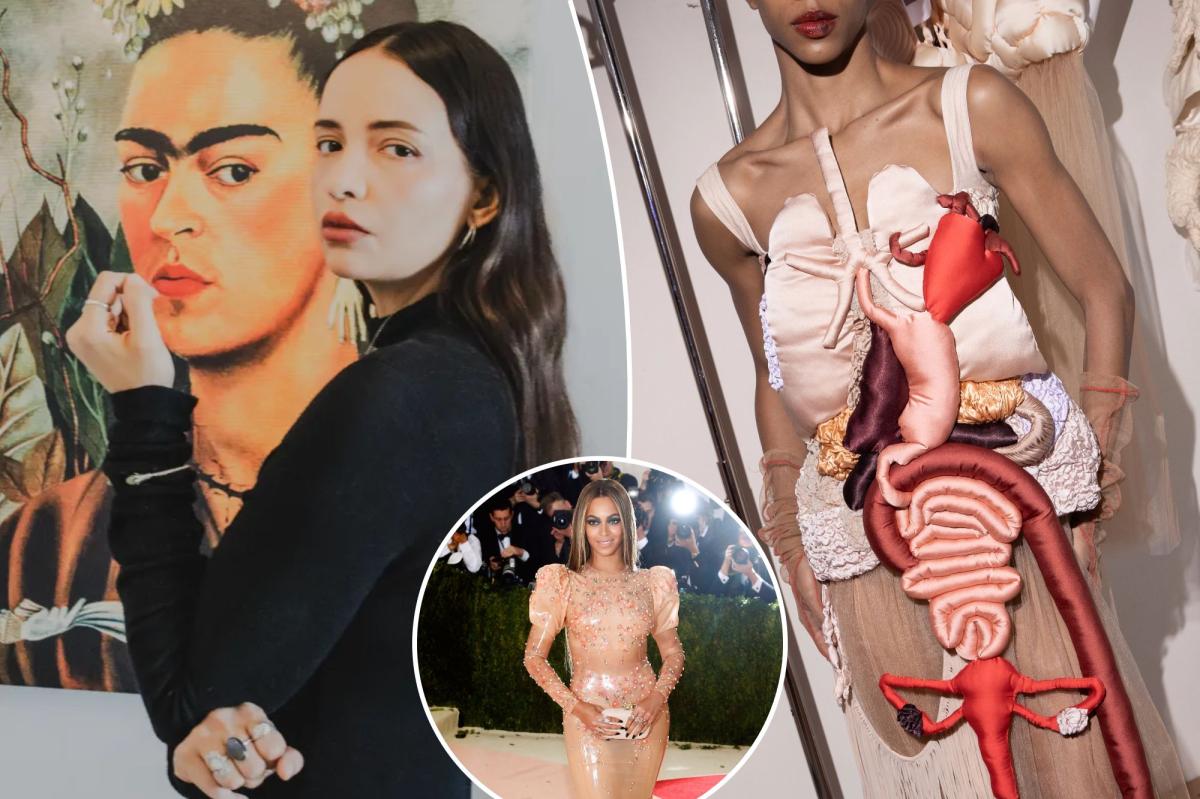
In fact, her guts, lungs and uterus — all hand-stitched to third-dimensional perfection in a dress she calls “Corset Anatomia,” or “The Anatomy Corset” — will be on full display at The Metropolitan Museum of Art for the Costume Institute’s spring 2026 exhibition, “Costume Art,” debuting May 10.
Its opening will be preceded by the annual cortège élégant that is The Met Gala on Monday, May 4.
“Costume Art” promises to be a lavish celebration of the dressed body in all of its forms, including nude, pregnant, plus-size, disabled, aging — and even disturbingly internal. It explores the unique relationship between fashion and the over 5,000 years of art represented throughout The Met.
Buzzo’s eye-popping piece, alongside creations of similar ilk, will be housed in the new Condé M. Nast Galleries. Formerly The Met’s gift shop, it’s an 11,500-square-foot space, where fashion galleries will now be front and center as the first thing visitors see upon entering the Great Hall.
To be featured in the festivities is an honor for which Buzzo, a womenswear designer from São Paulo, Brazil, received a direct request from the Costume Institute’s curator-in-charge himself, Andrew Bolton.
He tapped the visionary for select garments from her 2024 collection, “The Body,” a line that represents the cyclical death and rebirth of a woman while enduring the discomforts of life.
“They initially wanted to purchase the pieces, but I chose to donate them,” Buzzo, 39, exclusively told The Post. “A few days later, [Bolton] personally replied, thanking me and selecting specific pieces from the collection.”
It was a flattering acknowledgment that Buzzo says “changed me.”
“He described my work as ‘sublime’. I felt seen and respected,” continued the couturier.
Breaking the mold appears to be the modish mission of both “Costume Art,” on view through Jan. 10, 2027, as well as this year’s Met Gala.
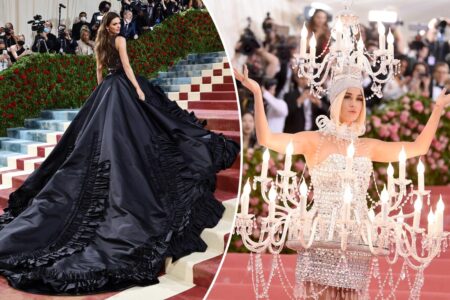
The elite extravaganza, a perennial fundraising benefit that amassed a record-smashing $31 million in 2025, will be co-chaired by Beyoncé, Nicole Kidman, Venus Williams and Anna Wintour.
Voguish voluptuaries, such as Queen Bey, 44, who’s making her hotly-anticipated return to the fête after being noticeably absent since 2016, are set to grace the museum’s heralded staircase in choice couture befitting the dress code, “Fashion is Art.”
It’s a rule-of-wear that encourages guests — invitees reportedly paying $100,000 per ticket, and $350,000 to host a table — to metamorphose from mere mortals into haute masterworks of art.
With their bodies as living canvases, the glitterati will reflect Bolton’s commitment to revering fashion as the enduring thread that weaves together The Met’s illustrious collection of historic paintings, sculptures and artifacts.
“For The Costume Institute’s inaugural exhibition in the Condé M. Nast Galleries, I wanted to focus on the centrality of the dressed body within the museum, connecting artistic representations of the body with fashion as an embodied art form,” Bolton said in a statement.
The vanguard’s installment will juxtapose apparel, like Buzzo’s “Corset Anatomia,” against nearly 400 objects from the museum. The pairings will be organized into a series of thematic body types, such as the “Naked Body,” the “Classical Body,” the “Mortal Body” and more.
Featured items will be set atop pedestals and platforms to underscore the equivalence between types of artworks and types of bodies. The mannequins, notably ranging in shapes and sizes, will boast heads with polished steel surfaces, designed by artist Samar Hejazi, inviting visitors to see themselves reflected in the display.
A Comme des Garçons dress by designer Rei Kawakubo, and the “Figure in Rotation,” a sculpture by Max Weber, will sit side-by-side in a section called “The Reclaimed Body.”
Buzzo’s “Corset Anatomia” will fittingly star in the “Anatomical Body” section, an area that explores universal bodily experiences.
Her work will stand next to a drawing of human entrails by Gérard de Lairesse, a 17th-century Dutch artist, found in the 1690 anatomical atlas “Ontleading des menschlyken Lichaems” by Govard Bidloo.
Buzzo told The Post she spent roughly 10 days sewing scraps of satin, crepe, tulle and chiffon into organs for her frock. But of all the innards, her favorite to replicate was the uterus “because of its symbolic creative power.”
“It’s a statement,” Buzzo said of the dress, meant to mimic the autopsy of a fictitious female murder victim. “This woman is made of whatever she chooses — creation, truths, lies, construction and deconstruction. She creates herself.”
“We’re entering this woman’s psyche,“ she added. “We dissect her, trying to understand what she is made of, why she died, what she endured, who hurt her, which parts remain intact, and which were violated.”
A nuanced nonconformist, Buzzo originally handcrafted the avant-garde number to walk the runway during last year’s São Paulo Fashion Week. However, the event’s organizers deemed the look “uncomfortable” and dismissed her from the show, she claimed.
It was a devastating letdown, but it was one that ultimately set her up for international acclaim: she received the bid from the Costume Institute shortly thereafter.
“One door closed, and another opened,” said Buzzo. “I’d been questioning my value when the invitation arrived — it felt almost like a symbolic, divine answer.”
And she looks forward to seeing her answered prayer take the city’s spotlight next week.
“I love New York. What inspires me most is its plurality and the way it respects individuality,” Buzzo raved in anticipation of her Big Apple premiere.
“You can be whoever you want in New York City,” she said. “No one cares. No one judges.”
Read the full article here