



Published on •Updated
Getting between Dublin and Belfast is set to get much quicker.
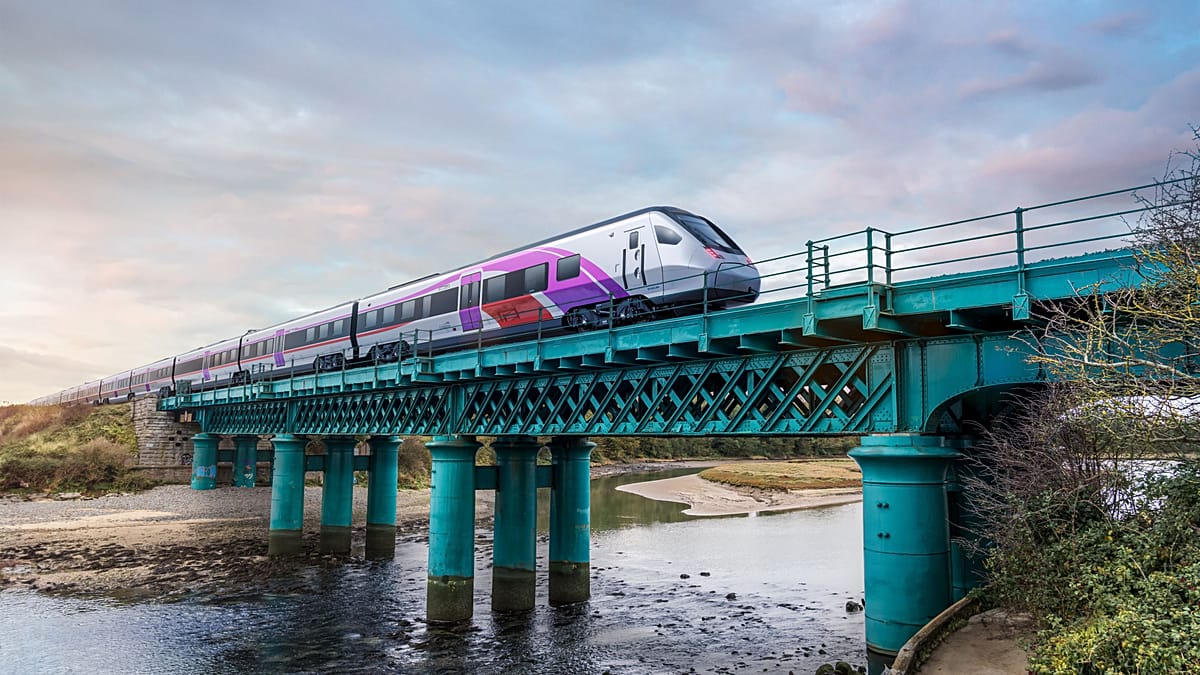
A major investment of nearly €700 million will cut rain journey times on the cross-border Enterprise service to under two hours, with brand-new trains, more frequent departures and upgraded onboard facilities all planned by 2028.
By the end of that year, there will be eight new intercity Stadler trains on the route, which will assist the existing fleet in running up to 16 daily services between Ireland’s two capital cities.
The plans were unveiled this week during a ceremony at Belfast Grand Central station, attended by Ireland’s Taoiseach Micheál Martin and Northern Ireland’s First Minister Michelle O’Neill.
A fresh start for cross-border rail
At present, the journey between Dublin and Belfast covers 180km and takes up to two and a quarter hours with stops in Drogheda, Dundalk, Newry and Portadown.
The new goal is to cut the time down to under two hours, thanks to increased performance and acceleration of the trains.
Launched in 1947 as a steam route, the Enterprise service has seen its passenger numbers expand by some 40% since it introduced an hourly service at the end of 2024.
Operated jointly by Translink and Iarnród Éireann, the new trains will operate on a tri-mode system, capable of utilising electric, diesel and battery power.
The companies say this will enable quieter journeys, reduce emissions, and help the transition on the line towards “full electrification”.
The new trains will also have around 400 seats, USB charging points, a dining and bar area, and will be launched with step-free interiors to improve accessibility.
The Irish Government and the Northern Ireland Executive are jointly funding the €698 million investment, with €165 million of that figure funded through PeacePlus, an initiative which also involves the UK government and European Union.
Speaking at the launch event, Taoiseach Micheál Martin said that the new deal “heralds a significant new chapter for cross-border rail connectivity on the island of Ireland”, and will create jobs as well as easier journeys between the two cities.
Martin also confirmed there will soon be more investment announced in Northern Ireland’s rail network, via the Shared Island Fund, “to be announced shortly”.
Read the full article here