


NEWYou can now listen to Fox News articles!
Archaeologists have uncovered a previously unknown remnant of Thomas Jefferson’s era at Monticello: a brick kiln used to build his home.
The kiln was recently found on the east side of the Founding Father’s home amid an excavation that began in March, officials said.
Monticello historians believe it dates back to the early 1770s — some time before Jefferson wrote the Declaration of Independence in 1776.
MASSIVE INDUSTRIAL SITE UNCOVERED IN UNLIKELY LOCATION AS ARCHAEOLOGISTS CITE ‘ENORMOUS’ POTENTIAL
It was part of the construction of Monticello I, the first version of Jefferson’s home.
The current structure reflects a later rebuild and expansion completed after his time in France, after 1789.
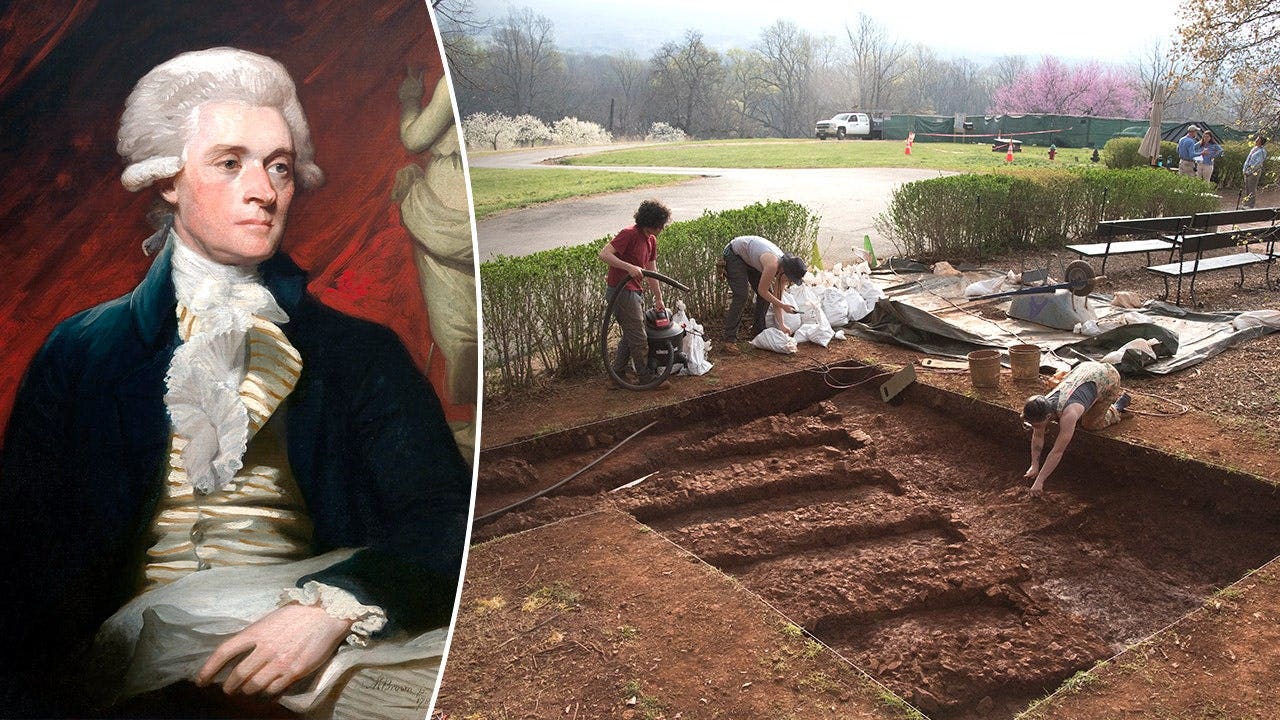
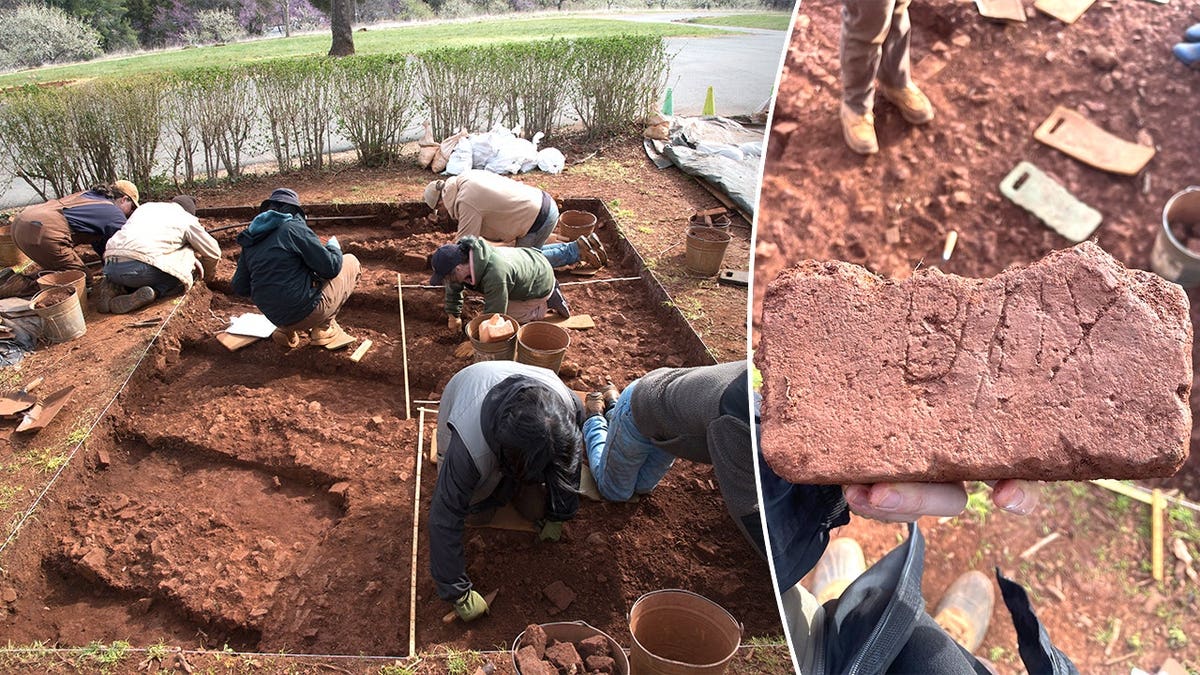
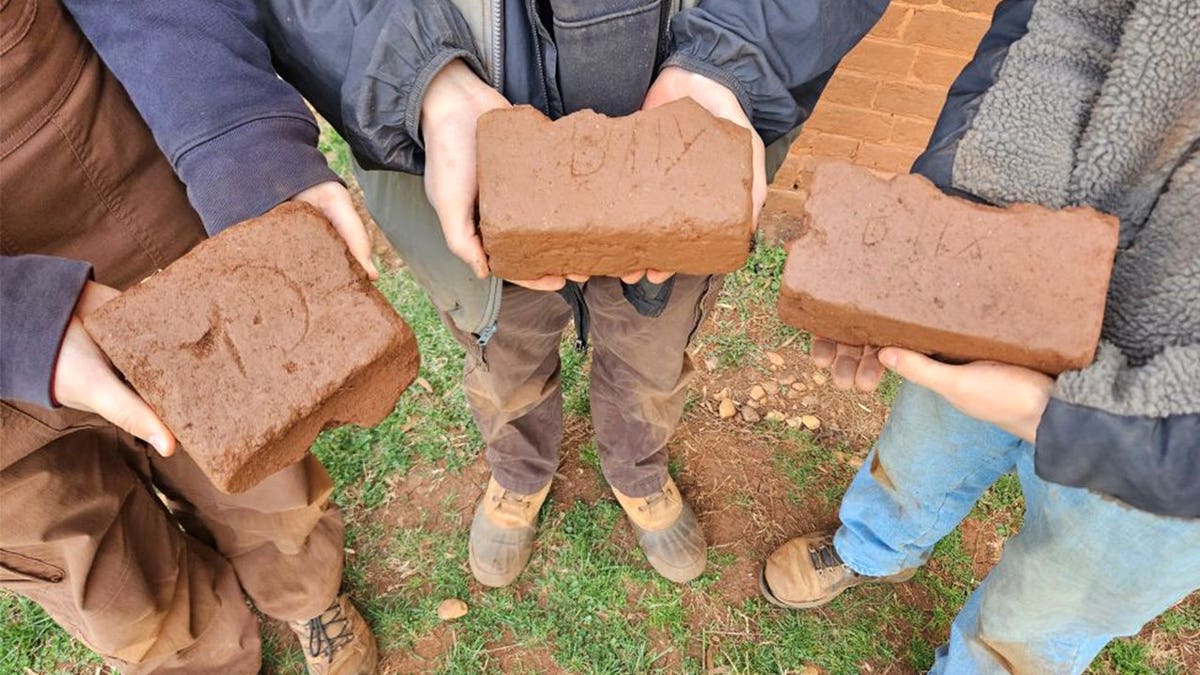
Photos from the site show researchers working around a rectangular dig at Monticello, exposing evenly spaced brick channels and revealing several bricks stamped with initials.
The kiln was a large, temporary oven used to harden bricks, said Crystal O’Connor, manager of archaeological field research at Monticello.
LEGENDARY CAPTAIN WHO INSPIRED ‘THE THREE MUSKETEERS’ MAY HAVE BEEN FOUND UNDER CHURCH ALTAR
O’Connor told Fox News Digital that archaeologists found brick channels “filled with overcooked brick rubble, and the soil beneath them had been baked hard by intense heat.”
Archaeologists “immediately started hitting brick, and uncovered a series of low parallel brick walls, evenly spaced about a foot and a half apart, with channels running between them,” she said.
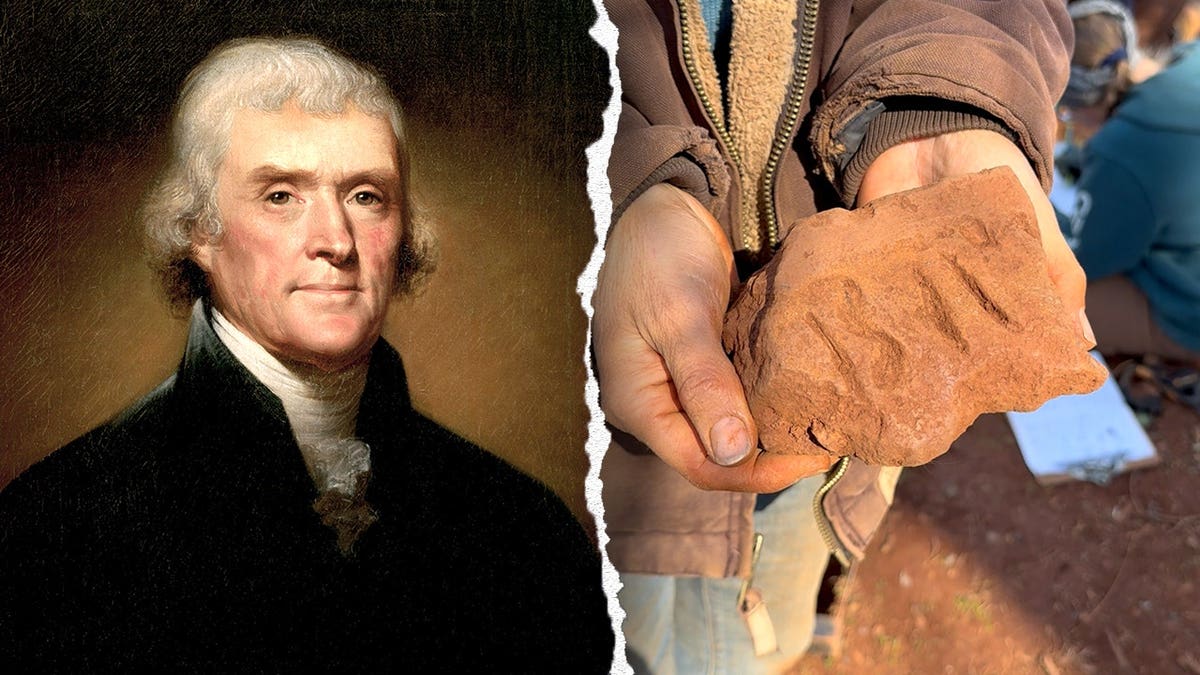
“While the team and I weren’t sure of what we were looking at initially, that pattern is a telltale sign of a brick kiln,” O’Connor added.
Workers once stacked thousands of unfired bricks atop the kiln and kept fires burning for several days until the bricks, eventually used to build Monticello, hardened.
“Even at one of the best-documented historic sites in America, archaeology keeps revealing what the written record does not.”
“When the firing was done, workers took the kiln apart and carried the finished bricks to the house,” said O’Connor.
She added, “This kiln was crucial to building the home of the author of the Declaration of Independence.”
TEST YOURSELF WITH OUR LATEST LIFESTYLE QUIZ
O’Connor noted that it was likely run by George Dudley or William Bishop, two White workmen who were hired by Jefferson — and that it relied heavily on slave labor.
Though Jefferson wasn’t making the bricks by hand, the Virginia statesman was certainly aware of the kiln’s existence.
“Jefferson knew about this work because he contracted with his brickmakers for a set number of bricks before each major building campaign,” O’Connor said.
“He would not have overseen the firings himself. Dudley or Bishop would have managed that process.”
O’Connor said records show Jefferson calculated whether hauling finished bricks uphill or producing them on site was more efficient in late 1774.
“We wonder if the brickmakers themselves pointed out the problem of dragging barrels of water and loads of firewood uphill, and if that helped push Jefferson to do the math and move the work downhill, closer to the raw materials,” she added.
“The discovery has already changed how we understand the building of Monticello.”
O’Connor noted that “very few” artifacts were found at the site, other than bricks — but 18th-century remnants were interesting nonetheless.
These included “several bricks shaped in special molds to match the design of the house.”
CLICK HERE FOR MORE LIFESTYLE STORIES
“These are decorative bricks with curved and S-shaped profiles,” said O’Connor. “Jefferson used them in the exterior brickwork of the dining room wall, which dates to around 1772.”
She added, “They don’t appear anywhere else on the house and represent a crazy amount of customization. Finding them in the rubble next to the kiln is what tells us it dates to the early 1770s.”
The official stressed the importance of archaeology at Monticello, especially because the kiln was entirely unrecorded in Jefferson’s maps, drawings, notes and letters.
“The discovery has already changed how we understand the building of Monticello,” she said.
“Even at one of the best-documented historic sites in America, archaeology keeps revealing what the written record does not.”
Read the full article here