


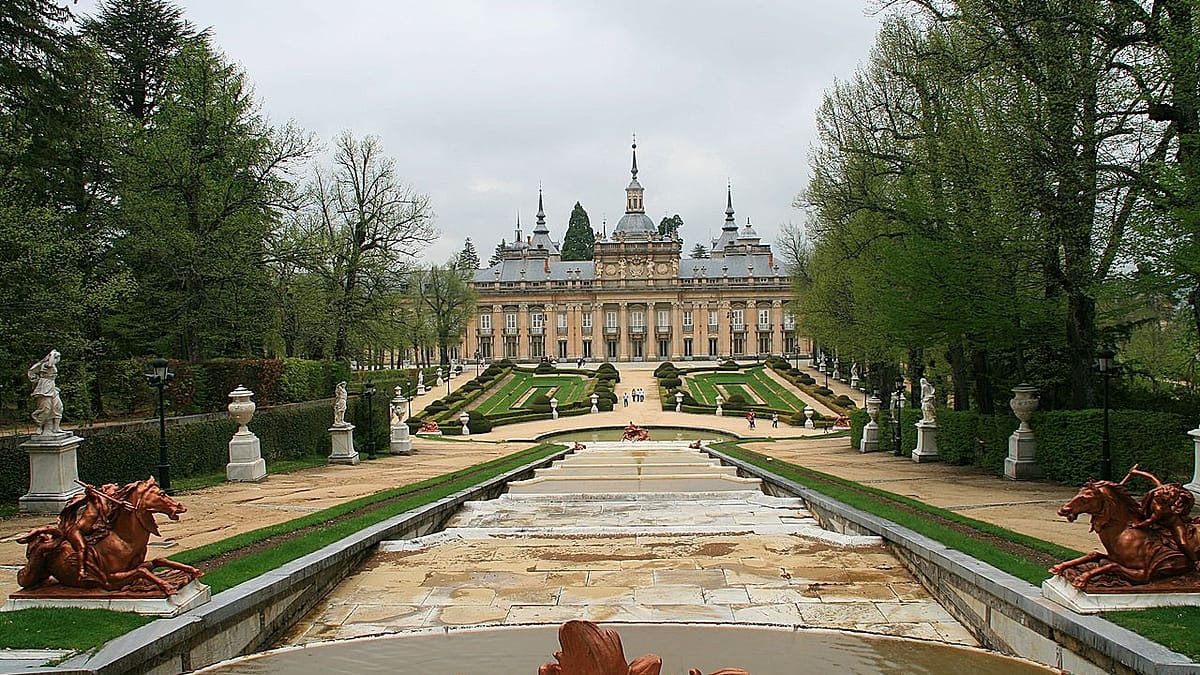
Forget ticking off humdrum attractions and landmarks. For travellers with a soft spot for towers, battlements and drawbridges, there’s a handy tool that brings the world’s castles in one place.
Across 141 countries and currently featuring 7,738 landmarks, Castlemap presents the world’s castles, fortresses, palaces and ruins on a free, interactive map. The platform utilises open source data from Wikidata, with coordinates and founding dates for each landmark. Each is pinned on the map with a photograph and bitesize story about its history.
Castlemap’s atlas is divided into four overarching categories: castles and châteaux, fortresses and forts, palaces and residences, as well as ruins, which covers any of the three aforementioned that no longer stand in the former glory, or may have even vanished completely.
The platform’s founder, @Flightmussy on X, described the atlas as being a curated, rather than exhaustive list, with each entry requiring a photograph, exact coordinates and Wikipedia article.
This includes a sweep of at least 25 languages of Wikipedia articles, which means the map features a diverse range of structures – from German burgs, to French châteaux and Italian castellos.
For those dreaming of a castle-filled holiday, the fun doesn’t have to stop after mapping out an itinerary of where to go.
The platform’s CastleGuessr tool presents users with a random photograph of a castle, testing their ability to pinpoint its location on the map. Guesses are scored according to distance, with the goal of reaching a score as close as possible to 5,000. Players are also invited to read about the landmark’s story, including the century it was established, its heritage status and a handy info bar with other castles near it.
Which country has the greatest number of castles and which are the world’s most famous?
If you’re looking for castles, Europe is the place to start. Nine out of the 10 countries with the most landmarks on Castlemap are on the continent. Japan, with 297 entries, is the only exception in seventh place.
While countries like the UK, France and Germany may spring to mind when you think of castle countries, which country actually wears the crown?
With 600 entries, Spain comes out on top by a landslide with the most historic landmarks on the platform. This includes 383 castles, 77 fortresses, 65 palaces and châteaux, and 75 ruins, spanning more than 37 centuries.
Valencia has the country’s greatest cluster of landmarks, with 73 within a 100 kilometre radius, followed by Madrid (59) and Alicante (57).
Despite having the greatest number of landmarks overall, Spain doesn’t take the top spot in Castlemap’s ranking of the top 10 most famous castles. The ranking combines the number of Wikipedia editions and sister projects it has, as well as data on the article’s readership from Wiki’s pageview data.
The Alhambra of Granada, a royal residence established in the 13th century, comes in fourth place – outranked by China’s Forbidden City imperial palace complex in third place and Greece’s fifth-century BC Acropolis of Athens fortress in second, with the crowning position going to France’s lofty Palace of Versailles.
Castlemap’s ranking of the top 10 most famous castles, fortresses, palaces and ruins
- 1. Palace of Versailles, France
- 2. Acropolis of Athens, Greece
- 3. Forbidden City, China
- 4. Alhambra, Spain
- 5. Neuschwanstein Castle, Germany
- 6. Buckingham Palace, England
- 7. Tower of London, England
- 8. Windsor Castle, England
- 9. Hadrian’s Wall, England
- 10. Bastille, France
Read the full article here