

NEWYou can now listen to Fox News articles!
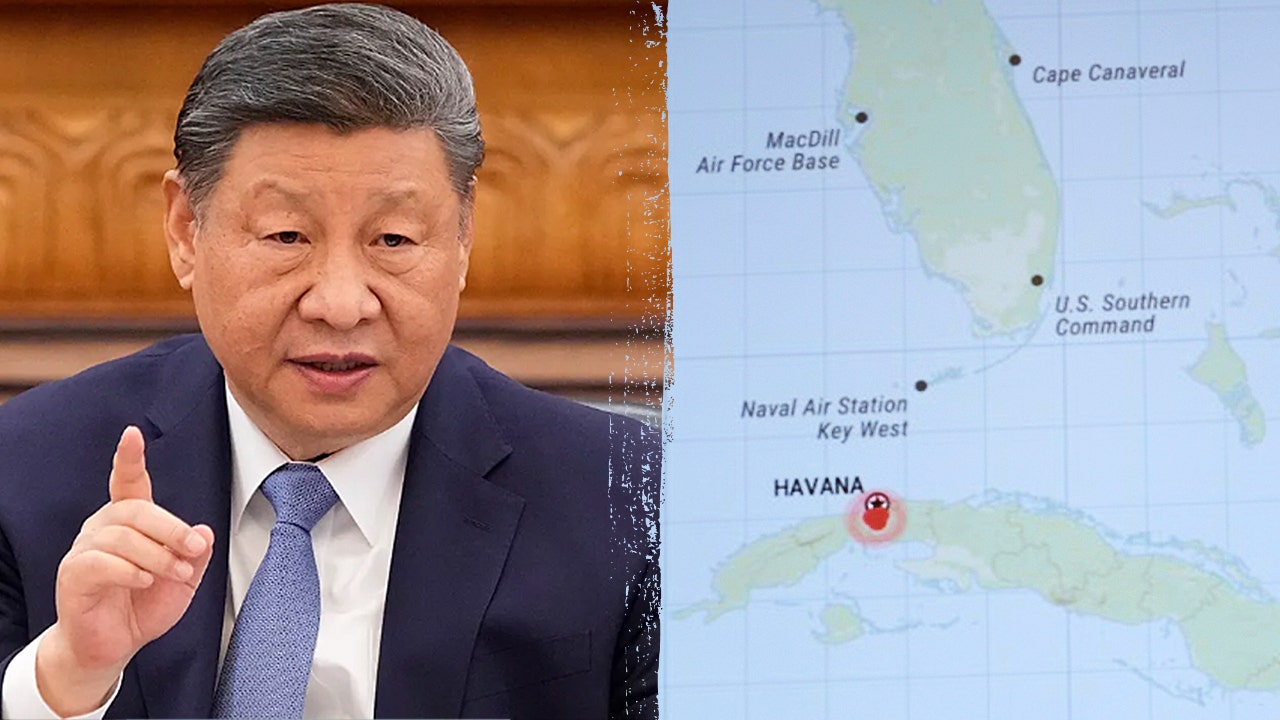
As the Trump administration ramps up pressure on Cuba, renewed scrutiny is falling on expanding intelligence infrastructure on the island that analysts say could help China and Russia monitor sensitive U.S. military activity near Florida.
New reporting and satellite analysis of a major Cuban signals intelligence facility outside Havana have intensified concerns about foreign surveillance capabilities positioned near Key West naval operations, Homestead Air Reserve Base and launches from Cape Canaveral.
Recent reporting, including a Wall Street Journal report citing U.S. officials who believe Chinese and Russian intelligence personnel and capabilities in Cuba have significantly expanded in recent years, has renewed focus on the island’s role in foreign intelligence gathering against the United States.
CHINA’S SPYING IN CUBA SPARKS ALARM ON CAPITOL HILL AFTER FRESH SATELLITE IMAGES SHOW SURVEILLANCE BUILDUP
Secretary of State Marco Rubio recently acknowledged that Cuba hosts Russian and Chinese intelligence presence near Florida, while Sen. Rick Scott, R-Fla., warned the facilities pose “a big threat” to nearby military operations.
“They’re 90 miles from our coast. They’re friends with our enemies,” Scott told Fox News Digital. “It’s a big threat. … It’s very significant risk to us.”
Analysts caution that highly sensitive U.S. military communications likely are encrypted and difficult to intercept directly. But facilities like Bejucal, Cuba, can still help adversaries track how U.S. military assets move, communicate and operate over time by monitoring electronic signatures and communications patterns.
“You might not know what one system talking to another system is saying, but you know that they talk to each other,” CSIS fellow Matthew Funaiole told Fox News Digital. “Over time that helps reveal operational patterns.”
Funaiole said the facilities likely are more useful for mapping military activity and identifying electronic signatures than directly intercepting sensitive communications.
“That helps you understand where assets are operating, how systems communicate and whether there’s unusual activity taking place,” he said.
The renewed focus comes as the Trump administration sharpens its crackdown on Havana through expanded sanctions, criminal charges against former Cuban leader Raúl Castro and tougher warnings about Chinese and Russian influence operating near the U.S. mainland.
Scott pointed specifically to military operations at Naval Air Station Key West, which supports military aviation training and testing, and Homestead Air Reserve Base, which hosts fighter aircraft and homeland defense missions, and testing ranges in the Gulf of America.
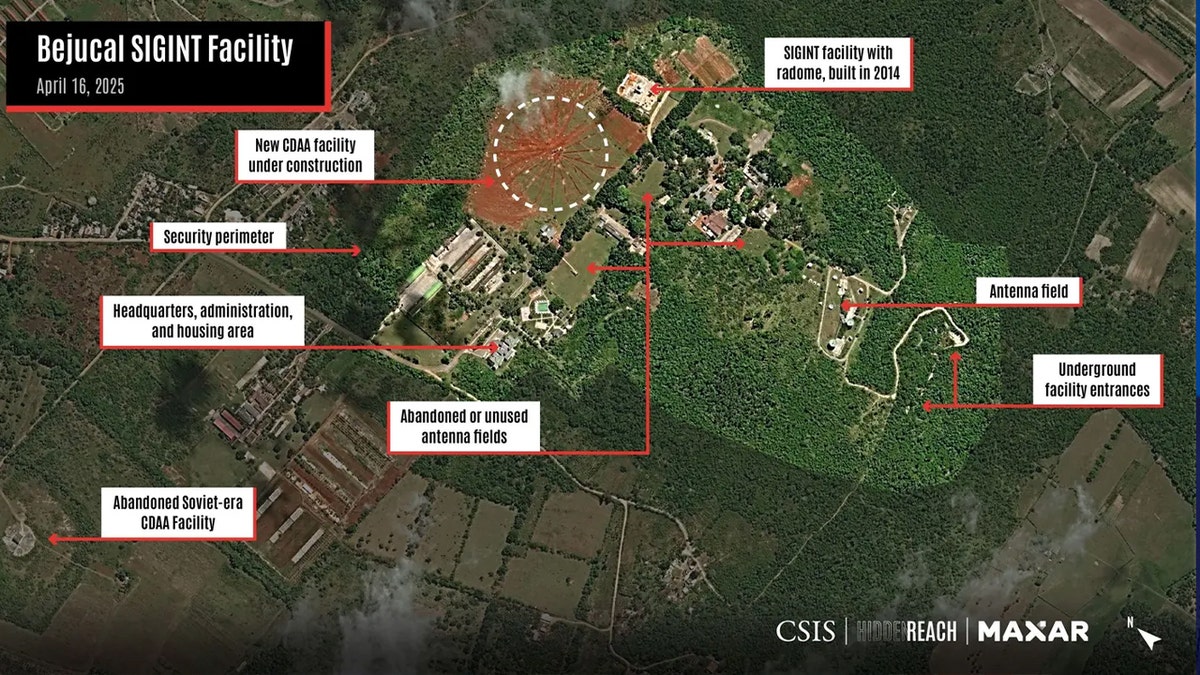
The renewed attention also follows a May 2025 analysis from the Center for Strategic and International Studies identifying new construction at the Bejucal, Cuba, signals intelligence site outside Havana, including a significantly larger circularly disposed antenna array, or CDAA, which analysts say could improve the facility’s ability to monitor air and maritime activity across the region.
CHINA EXPANDS SPACE FOOTPRINT IN LATIN AMERICA, RAISING MILITARY ALARMS IN AMERICA’S BACKYARD
The Bejucal, Cuba, site has undergone visible changes in recent years. In its May 2025 report, CSIS identified a new circularly disposed antenna array under construction at the facility replacing an older and smaller array previously located nearby.
Circularly disposed antenna arrays are used for high-frequency direction finding, allowing operators to identify the origin of radio signals across long distances. CSIS said the systems can potentially track signals from thousands of miles away.
Funaiole noted the technology dates back to the Cold War, when the Soviet Union operated extensive intelligence infrastructure in Cuba aimed at monitoring the United States.
“CDAAs are old technology,” he said. “But China clearly sees a value” in them.
CSIS previously identified similar Chinese-built CDAA facilities at military outposts in the South China Sea, including on Mischief Reef and Subi Reef.
Analysts and U.S. officials have long suggested China has access to or involvement with Cuban intelligence facilities, though publicly available evidence has not definitively established direct Chinese control of the sites.
Rubio recently said Cuba hosts “Russian and Chinese intelligence presence” near the United States, while the Biden administration acknowledged in 2023 that Chinese intelligence collection activity tied to Cuba was an “ongoing issue” and said Beijing had upgraded intelligence collection facilities on the island in 2019.
“I’m not going to comment on military matters or national security threats directly linked to the United States with specificity,” Rubio told reporters May 21. “Here’s what I can tell you. Cuba not only has weapons that they’ve acquired from Russia and China over the years, but they also host Russian and Chinese intelligence presence in their country not far from where we’re standing right now.”
“So Cuba’s always posed a national security threat to the United States.”
The White House referred to Rubio’s comments when asked for comment. The Pentagon, Cuban embassy and Chinese embassy did not return a request for comment.
China repeatedly has denied involvement in surveillance facilities in Cuba, while Cuban officials have dismissed allegations of Chinese spy operations on the island as “totally untrue” and politically motivated.
Funaiole cautioned that expanding infrastructure does not necessarily mean large numbers of foreign personnel are physically operating at the facilities full-time.
“There’s certainly more capabilities, and you’re going to need personnel to support that in one way or the other,” he said. “But you don’t physically have to be on the ground to benefit from these facilities.”
Cuba has long played a role in foreign intelligence gathering against the United States. During the Cold War, the Soviet Union operated the Lourdes signals intelligence complex near Havana, which monitored U.S. military and communications activity for decades.
Analysts say the same geographic advantages that once made Cuba valuable to Soviet intelligence continue to make it attractive to U.S. adversaries today.
“Physical distance matters,” Funaiole said. “If you’re trying to monitor the U.S. as an adversary, it makes sense to try and have access to facilities in Cuba.”
That proximity places Cuban intelligence infrastructure near a dense concentration of sensitive U.S. military and aerospace activity, including U.S. Southern Command in Doral, Florida — the military command responsible for operations in Central and South America and the Caribbean.
Funaiole said facilities like Bejucal, Cuba, may be especially useful for identifying shifts in military activity over time.
“If there’s an anomaly, if there’s more activity and systems are talking to each other that haven’t before, what could that potentially signal?” he said.
Still, analysts caution against overstating the capabilities of the Cuban facilities or drawing firm conclusions about Chinese control of the sites.
CLICK HERE TO DOWNLOAD THE FOX NEWS APP
In its May 2025 report, CSIS noted there is “no smoking gun” in the unclassified space directly linking China to the facilities, even as U.S. officials have repeatedly suggested Beijing has access to intelligence infrastructure on the island.
Experts also emphasize that the value of facilities like Bejucal, Cuba, may lie less in directly reading encrypted communications and more in understanding how U.S. military systems operate, identifying electronic signatures and monitoring operational patterns over time.
The intelligence concerns likely are to strengthen calls from some Cuba hawks for a more aggressive U.S. posture toward Havana, which they argue has become an increasingly important platform for Chinese and Russian influence near the U.S. mainland.
Scott told Fox News Digital that indicted former Cuban leader and de facto power broker Castro should either flee the island or face what he described as a “Maduro-style operation” to bring him to justice.
Read the full article here