



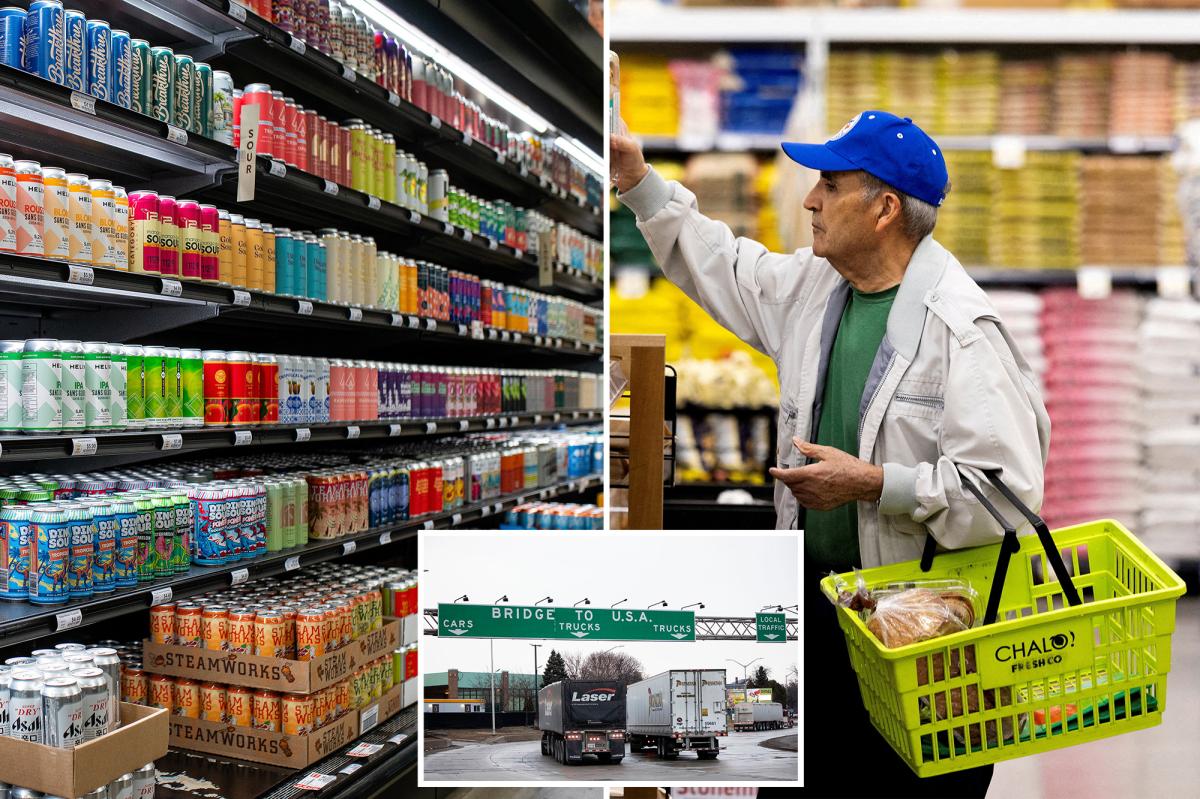
Hours after the US slapped 50% tariffs on Canadian products, Prime Minster Mark Carney said Saturday that new retaliatory tariffs will take effect on Sept. 8.
Speaking from Ottawa a day after threatening to impose “dollar for dollar” tariffs on the United States, Carney said, “in the coming days, we will release the details of these new tariff measures, which will come into force the Tuesday after Labor Day.”
The threat comes after new 50% US tariffs on Canadian imports — including beer, cheese and electronics — went into effect at 12:01 a.m., Saturday morning, after the Trump administration slapped them on the Great White North following the collapse of trade talks Friday night.
Carney claimed the US “asked too much and offered to little.”
“We cannot accept what they’ve offered and we will not give what they’ve asked,” he added.
The US is imposing duties on $28 billion worth of Canadian imports, which are set to immediately raise costs of beer, liquor, cheese and other dairy products for Americans. The tariffs will also raise the prices Americans pay for Canadian lumber and building materials, as well as auto parts that are critical to US manufacturing.
The trade war could also have an outsized impact in Michigan, whose top export market is Canada. The battleground state also features a key toss-up Senate race between Democratic socialist Abdul El-Sayed and former Republican congressman Mike Rogers that could determine party control of the upper chamber.
Canadian provinces had already yanked US liquor products from their shelves in March 2025 — after the US imposed tariffs on Canadian exports.
“It is unfortunate that the Canadian provinces’ continued refusal to return U.S. spirits products to store shelves has led to this outcome,” said Chris Swonger, president of the Distilled Spirits Council in a statement overnight.
“We encourage policymakers on both sides of the border to pursue a negotiated solution that restores market access for U.S. spirits throughout Canada and returns spirits trade to a zero-for-zero tariff framework.”
The Trump administration said it had given Canada every chance to cut a deal.
“For decades, Canada has enjoyed the most favorable access to the U.S. market of any country. And from the beginning of President Trump’s trade program, Canada has continued to enjoy the best treatment in the world,” said US Trade Representative Jamieson Greer in a statement Friday night announcing the tariffs.
Greer told Fox News Saturday that there were no further talks planned.
Carney said his government would introduce “additional measures” to support Canadian businesses in addition to $25 billion in support already out the door.
He said “last-minute changes” proposed by the US led to the breakdown, although Greer blamed Canada for “new demands and walk backs” — and for failing to finalize a “forward looking” deal with new “supply chain coordination” on aerospace and critical minerals.
Other Canadian exports getting hit by the new tariffs will include cement, electronic equipment, plastic flooring, wood, paper, wine — and even hockey sticks.
The tariffs are a result of the US implementing Section 338 of the Tariff Act of 1930, which allows the president to “impose duties of up to 50 percent on imports of a foreign country to offset the burden or disadvantage from a foreign country’s unequal imposition on or discrimination against the commerce of the United States.”
Read the full article here