



The policies and actions driving up California’s highest-in-the-nation gas prices don’t just hurt Californians — but also residents of nearby states, according to a new report by the Institute for Energy Research.
The entire country has seen gas prices rise this year due to the ongoing Iran war, which has constrained the global oil supply.
But over the past five years, prices rose higher by 86 cents per gallon in Democratic states, while GOP states only saw a 62-cent rise, according to the report. This year, gas costs 55 cents per gallon more in blue states than red ones.
That gap can be traced to California policies, the authors claimed.
“People in those states, they haven’t voted on any of these policies, and obviously they’re being impacted. They’re paying more for gas because of them,” said Alex Stevens, who helped work on the report, in an interview.
Much of the red state-blue state price gap specifically come from four states: California, Oregon, Washington and Hawaii. The extra gas cost for West Coast states specifically really only amplified in 2022 and reached 91 cents per gallon this year, the report said.
That timing matches two things that California led on: carbon-pricing programs, in which the government sets a limit on emissions and issues tradable permits for every ton of emission, and oil refineries leaving the region.
Washington state followed after California’s first-in-the-nation cap-and-trade program that year to enact a similar regime, and at the same time, cap-and-trade allowance prices in California roughly doubled between 2021 and 2023.
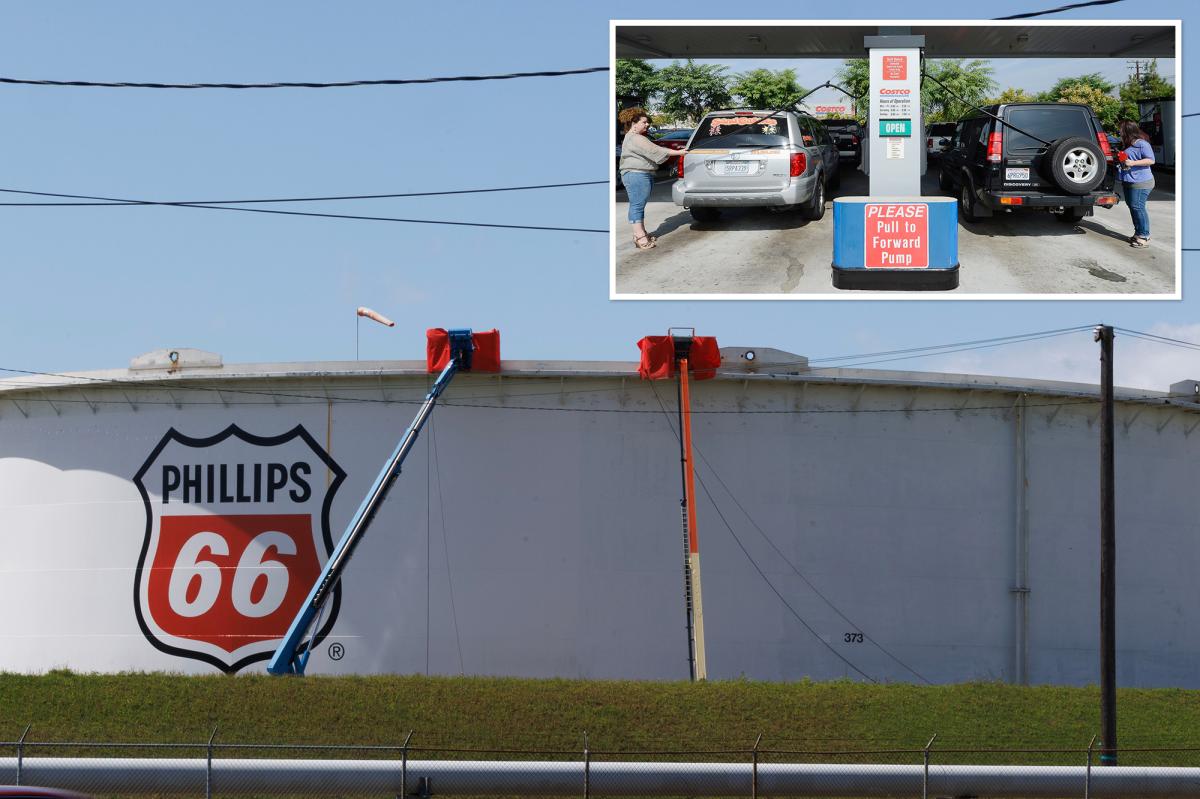
Additionally, the West Coast and specifically California was hit with a wave of oil refinery shutdowns, some of which cited California’s hostile policies against fossil fuels as a reason. The Phillips 66 refinery in Los Angeles and the Valero refinery in Benicia both shut down in the past few years, tightening the fuel supply and raising prices.
California’s policies don’t just influence the other West Coast states but even neighboring ones like Nevada and Arizona, the report said. Those two states alone see a 52-cent-per-gallon premium on their gas.
“The West Coast is sort of isolated in terms of infrastructure, so there aren’t major pipelines that can transport crude oil from, say, like Texas or the Gulf Coast out there,” Stevens said.
“Nevada, Arizona, in particular, are sort of dependent on the crude oil being imported into California and being refined, and so there is a spillover effect,” he said.
The other unique issues plaguing California’s gas — high taxes and strict environmental rules requiring specific gas blends — all impose upward pressure on prices across the region.
California would not even have to overhaul their entire pro-climate agenda to help lower the gas price gap between red and blue states, Stevens told The Post.
“The state is sort of a little a little bit overly aggressive in terms of the policies that they’re setting, but even if they just admitted to themselves, we have these policies, we have to accept the fact that we need refineries in the state to match the policies that we’ve set out, that would go a long way by itself to to lower gas prices,” he said.
Read the full article here