



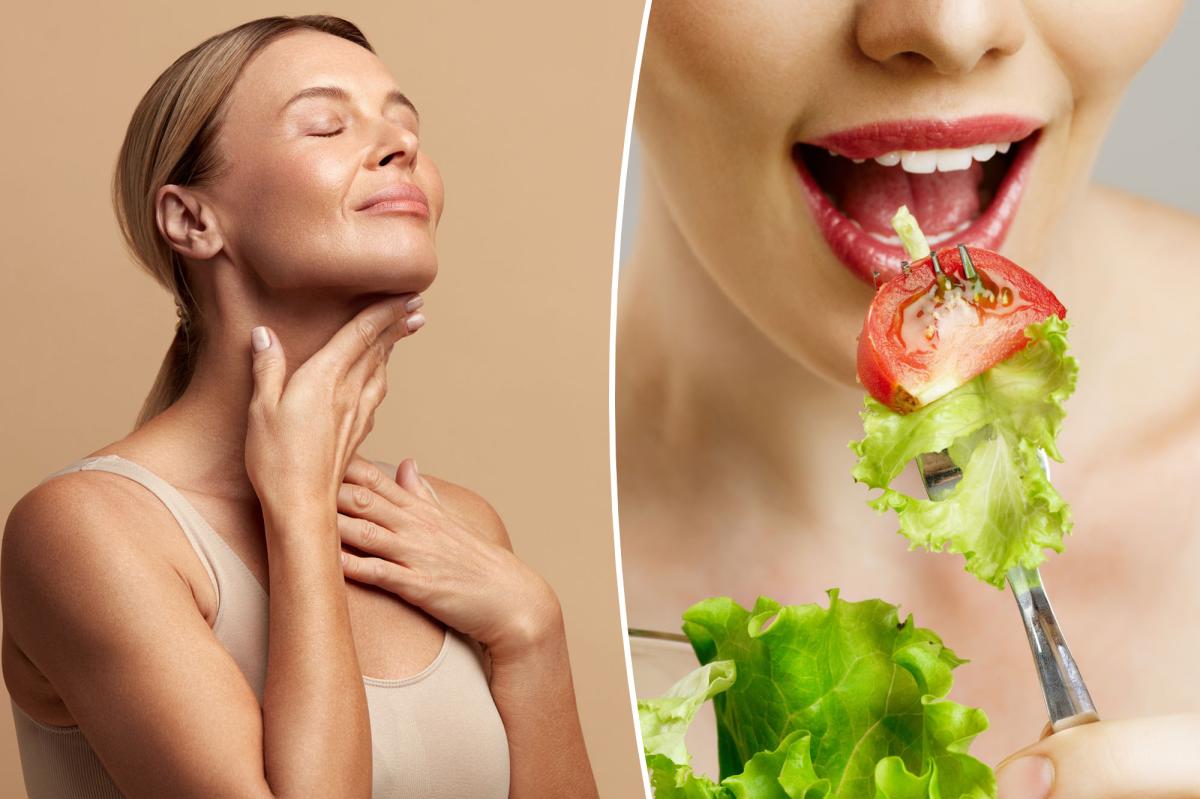
Are vegans hotter than the rest of us?
According to a new study published by the scientific journal Recent Progress in Nutrition, the answer could be yes — absolutely.
A team of researchers found that plant-based diets are good for more than just losing weight and increasing long-term health, as has been repeatedly suggested — and that gobbling up your garden can actually boost one’s personal curb appeal.
Nutritionist David Goldman of the University of Helsinki and co-author Matthew Nagra, a nutrition researcher from the University of British Columbia, said the findings could offer a new way to hook people on the idea of giving up meat — by appealing to their vanity.
“Traditional public health messaging emphasizes disease prevention and longevity, yet personal motivations for dietary change often center on appearance and social outcomes,” the pair explained.
“Framing dietary change in terms of visible and socially meaningful outcomes, such as attractiveness, may therefore complement traditional health messaging by aligning personal motivations with public health aims,” they continued.
Feeding on flora can improve one’s attractiveness to others in three key ways, they said — by boosting facial appearance, smell and body composition.
For a pretty face, ingesting carotenoids — yellow, orange and red pigments found in fruits and veggies like cantaloupe, mangoes, bell peppers and carrots — can promote a healthier, more attractive coloring, according to various scientific studies.
In one experiment cited in the paper originally published by APA PsycNet, a group of people who saw a visualization of this color-boosting phenomenon ate more fruits and vegetables over a period of ten weeks, compared to a group who had not seen the visualization.
That said, while eating more carotenoids may help one look robust and well, it doesn’t always translate to significantly improved health on the inside.
“Carotenoid coloration functions primarily as a perceptual cue to health status rather than a direct index of verified physiological health,” Goldman and Nagra wrote.
Improving one’s odor is another component of the attractiveness-uptick you can get from a plant-heavy diet, the science showed.
In the paper, Godman and Nagra cited evidence that for men, flora-forward eating is linked to better sweat smell (as opposed to more meat-heavy diets).
Additionally, garlic — while not exactly known for making one’s breath smell fresh — can actually help optimize the attractiveness of body odor, according to another cited study.
Lastly, the researchers suggest that enhanced body composition from a plant-based diet — which are often associated with lower BMI and body fat reduction when compared to meat-heavy eating, and can be used to combat obesity — can be a concrete way to boost aesthetics.
Godman and Nagra argue that when becoming more attractive is framed as a health incentive, it “shifts the focus from distant, abstract disease risk to immediate, tangible indicators of vitality.”
“When executed with care, these approaches may increase engagement with whole-food, plant-rich dietary patterns while supporting long-term public health objectives,” they continued.
Read the full article here