




Consumer robotics companies have spent years trying to build artificial companions that feel less like toys and more like emotionally engaging household devices. From the early experiments of Atari co-founder Nolan Bushnell to today’s AI-driven robotics efforts, the category has largely struggled to move beyond novelty gadgets and awkward imitations of real companionship.
With the launch of Familiar Machines and Magic, the industry may finally be moving beyond simplistic robotic toys and toward AI-powered companions designed to feel more emotionally responsive and interactive.
The Long Road to AI Companions
To understand where robotic companionship may be heading, it helps to look at the industry’s earlier attempts. The concept of electronic companions stretches back decades, including efforts by companies like Androbot, founded by Atari co-founder Nolan Bushnell, who anticipated the home robotics market long before the technology was ready.
I owned one of those early robotic cats. By modern standards, it was primitive, but it demonstrated an important lesson about robotic companions: even relatively simple machines can create surprisingly effective emotional or behavioral responses. At the time, I also had a real cat that would constantly scratch and push against my bedroom door at night.
I placed the robotic cat in front of the door with its glowing red eyes facing outward. My real cat immediately avoided the area. It was an early lesson that robotic companions do not need to perfectly imitate a human or animal to influence behavior or provide value. It simply needs to fulfill a practical or emotional role effectively.
The Ethical and Practical Case for Robotic Companions
While scaring a cat away from a door is a funny anecdote, the broader case for robotic companions is more serious. Aging populations and rising social isolation are creating demand for companionship tools that can provide interaction and comfort without the physical demands of caring for a living animal.
A robotic pet could provide some of the tactile comfort and routine interaction associated with a living animal, without the risks and responsibilities of feeding, walking, grooming, or cleaning up after one. For someone with restricted mobility, that kind of companion could offer a safer way to maintain a sense of connection and routine.
Robotic companion developers envision emotionally responsive AI systems becoming part of everyday household routines and interactions. (Image Credit: Familiar Machines & Magic)
There is also a case to be made for robotic pets as training tools for children. Young children do not always understand consequences, and even well-meaning curiosity can unintentionally put living animals at risk. An AI-powered pet could provide a safer environment for teaching empathy, boundaries, and responsibility before introducing a biological pet into the household.
Unlike a living animal, a robotic companion cannot be traumatized or injured by a child’s mistake. That makes it potentially useful as a first step for families that want to teach care and responsibility without putting an actual pet in harm’s way.
Imagineering Meets Engineering
This brings us to Familiar Machines and Magic, a company that combines robotics expertise with entertainment-driven design principles. On one side is Colin Angle, the co-founder of iRobot and a key figure in bringing consumer robots into mainstream homes through the Roomba. On the other is a team that includes former Disney Imagineers focused on character design and emotional engagement.
That distinction matters because building a successful robotic companion requires more than functional engineering. It also requires personality, emotional design, and behavioral realism.
In this context, the “magic” refers less to fantasy and more to suspension of disbelief. For robotic companionship to work, the interaction has to feel emotionally believable rather than purely mechanical.
By leveraging storytelling and animation principles commonly used in entertainment design, Familiar Machines is attempting to reduce the “uncanny valley” effect that often makes robots feel unsettling or artificial. Rather than trying to perfectly imitate a real animal, the company appears focused on creating a distinct robotic companion category with its own personality and behavioral identity.
When Robotic Pet Companions Go Mainstream
Right now, the market still resembles the early adopter phase of personal computing, where the technology is improving rapidly but has not yet reached mass-market adoption. Hardware costs are falling, and agentic AI systems are becoming more capable of anticipating routines and responding contextually instead of simply reacting to commands.
The category could move significantly closer to mainstream adoption within the next three to five years. By the end of the decade, improvements in battery technology and edge-based AI processing could make robotic companions more practical, responsive, and privacy-conscious for everyday household use. If the technology matures as expected, robotic companions could eventually influence several aspects of daily life:
Persistent Personalities: Future robotic companions could potentially preserve learned behaviors, voice patterns, and interaction histories through cloud backups, allowing users to transfer aspects of a companion’s personality to newer hardware over time.
Health and Safety Monitoring: Robotic companions could eventually incorporate wellness and safety features, such as fall detection, environmental monitoring, medication reminders, and basic health tracking, for older adults and people with limited mobility.
Personal Identity and Customization: As these devices become more personalized, users may eventually customize their companions’ personalities, behaviors, and interaction styles in ways that reflect individual preferences and identity.
Wrapping Up
The evolution from early robotic novelty pets to more sophisticated AI-driven companions represents a broader shift in how people may eventually interact with consumer technology. Companies like Familiar Machines and Magic are exploring whether robots can move beyond utility devices and become more emotionally engaging household companions.
By combining robotics engineering with entertainment-focused character design, companies in this space are attempting to create machines that feel more responsive, expressive, and emotionally approachable than earlier generations of consumer robots.
Whether the goal is simple behavioral interaction or companionship for someone who may no longer be able to care for a living pet, robotic companions are moving closer to practical reality. The remaining challenge will be balancing emotional engagement with responsible design, privacy safeguards, and realistic expectations about what these systems can actually do.


The Verge TS Ultra Electric Motorcycle
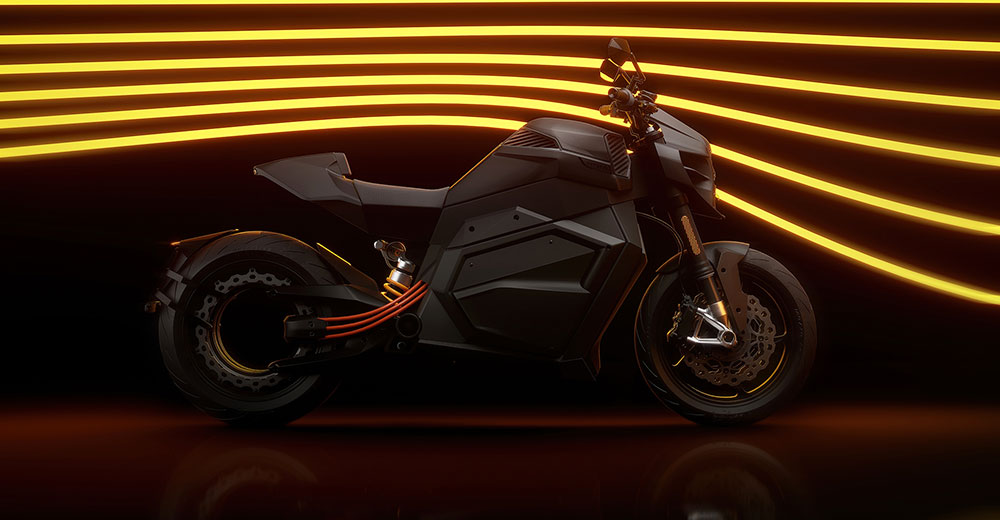

Image Credit: Verge Motorcycles
My journey with two-wheeled machines began with a humble Suzuki 120 motorcycle. It was a simple, honest machine that taught me the basics of balance and throttle control.
Decades later, my riding career culminated with the Yamaha GTS-1000, a motorcycle that was light-years ahead of its time.
The GTS-1000 featured a unique RADD-designed front swing-arm instead of traditional telescopic forks and was equipped with early anti-lock brakes. Those brakes were so effective that, during one particularly aggressive stop, the bike stayed so composed and gripped so hard that it actually launched me over the handlebars. It was a painful reminder that when engineering outpaces expectations, you’d better be paying attention.
Since then, I’ve watched the evolution of electric motorcycles with a critical eye. We’ve moved from converted dirt bikes with lead-acid batteries to sophisticated machines that finally rival their internal combustion counterparts.
High Performance Meets Smart Safety
Today, the Verge TS Ultra stands as the pinnacle of this evolution, representing the most advanced electric motorcycle currently on the market. It doesn’t simply replace a combustion engine with a battery system; its hubless rear-motor design significantly changes the motorcycle’s weight distribution and drivetrain architecture.
The standout feature is the hubless rear-motor design, which places drivetrain weight at the lowest possible point and eliminates the need for chains, belts, or gearboxes. The stats are, frankly, terrifying: it produces a massive 1,200 Nm of torque and 201 horsepower, propelling the bike from 0 to 60 mph in a blistering 2.5 seconds. Despite this performance, it remains practical with a range of up to 233 miles (375 km) and a fast-charging capability that tops up the battery in just 25 minutes.
However, the “Ultra” designation comes from its Starmatter software platform, which utilizes six cameras and high-resolution radar to provide a 360-degree safety bubble, essentially giving the rider eyes in the back of their head. Starting at roughly $44,900, it is an investment in the future of mobility and far from a cheap date. Still, were I still riding, I’d be very tempted to buy it.
The Verge TS Ultra is my Product of the Week because it captures the same spirit of radical innovation I first felt on my Yamaha GTS-1000. It pushes the boundaries of what is possible with a front-and-center focus on safety and performance, proving that the next generation of motorcycling isn’t just about going green — it’s about going faster, smarter, and more safely than we ever thought possible.
Read the full article here