




The infrastructure for AI agents to spend money arrived faster than almost anyone predicted. In the space of a few weeks, both Visa and Mastercard formally opened their rails to AI, a major crypto exchange launched a marketplace where agents hire and pay each other with no human involved, and the biggest bank in America publicly questioned whether consumers are ready for any of it. Morgan Stanley has estimated that agentic shoppers could account for between 190 and 385 billion dollars of US e-commerce by 2030. The past month showed an industry racing to build for that projection while still debating its most basic assumptions.
Visa And Mastercard Opened The Rails On The Same Day
Last month, Visa announced a partnership with OpenAI to integrate its payment network directly into ChatGPT, allowing AI agents to complete purchases on behalf of users rather than simply recommending products. The integration runs on Visa’s tokenization infrastructure, with transactions operating under user-defined permissions such as spending limits and required approvals.
Later the same day, Mastercard launched Agent Pay for Machines, a service designed for transactions that AI agents execute with each other, including micropayments worth fractions of a cent. Permissions that humans grant their agents are recorded on public blockchains including Polygon, Solana and Base, and settlement runs across cards, bank accounts and regulated stablecoins. More than 30 companies signed on at launch, spanning traditional processors and crypto infrastructure providers (Fortune). Mastercard’s announcement described the service as creating the conditions for a “superbloom of AI business models.”
Two networks that process the majority of the world’s card transactions moved on the same day, without coordination, and just like that, agent payments graduated from pilot to infrastructure.
OKX Lets Agents Pay Agents
If the networks are enabling agents to buy from merchants, the crypto industry is taking it one step further. End of last month, crypto exchange OKX launched a marketplace where AI agents can hire one another, settle payments autonomously, and build portable on-chain reputations, betting that its next generation of customers will not be people at all.
OKX is exploring commerce with no human on either end of the transaction. In that model, one agent might hire another to generate a market report, clean a dataset, design an ad variation, or monitor a wallet for suspicious activity. Payment happens in stablecoins, more complex jobs can use escrow, and each successful transaction adds to an on-chain reputation record. That makes the OKX launch important not because it proves the mainstream case, but because it shows what an agent-native marketplace could look like if software becomes both the buyer and the seller.
JPMorgan Says The Consumer is Not There Yet
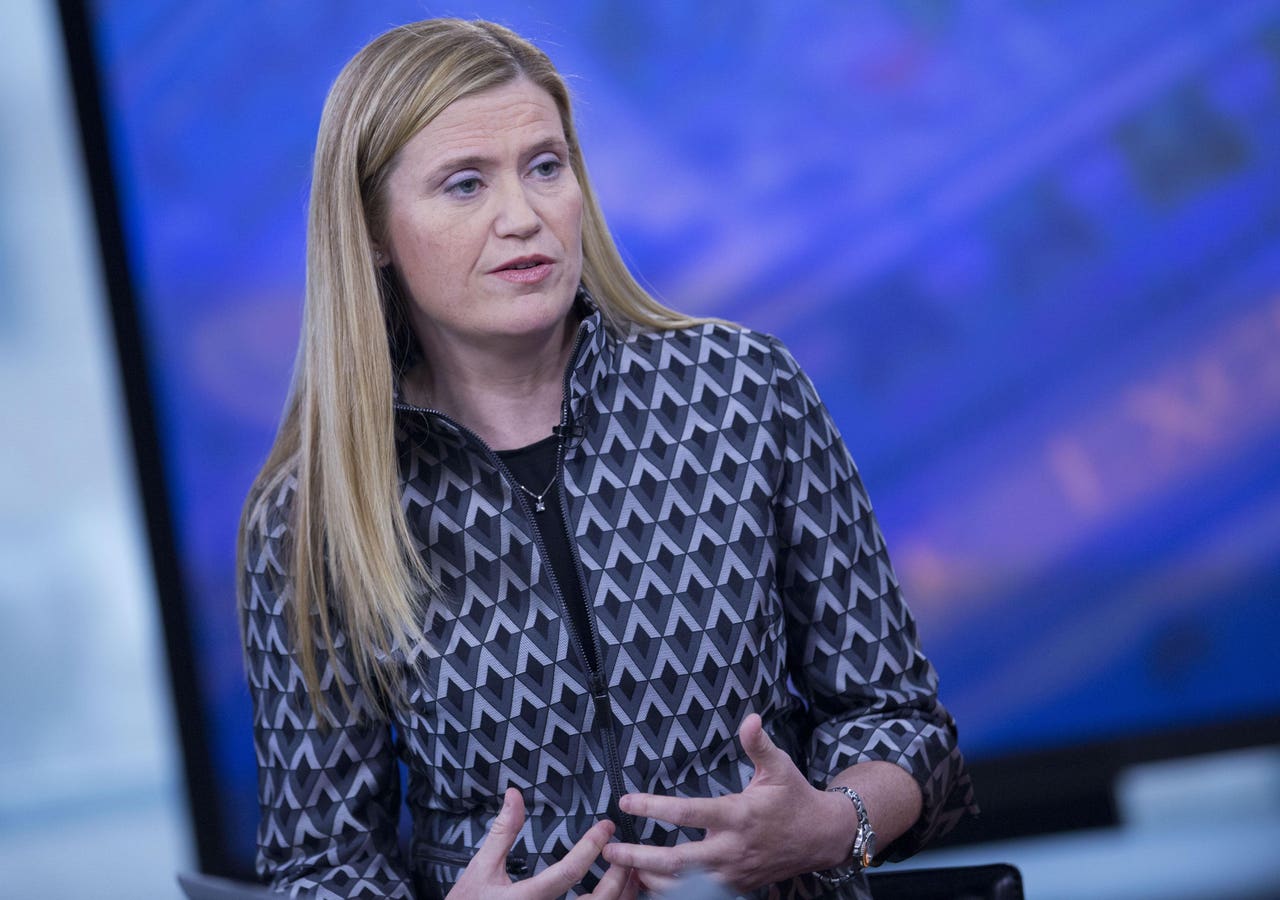
Speaking at an investor conference, Marianne Lake, former CEO of JPMorgan Chase Consumer and Community Banking business, noted that while AI has been rapidly adopted for search and discovery in online shopping, that adoption is not carrying through to the transaction itself. “I don’t think people are going to delegate their purchasing to agents just yet,” Lake said, adding that when people move money, trust and security matter even more.
Lake’s point is not that the technology will not work. It is that consumers may be comfortable using AI to search, compare, and recommend long before they are comfortable letting it move money.
That gap is easy to understand in practical terms. Most people may like an AI assistant that suggests three holiday options. Far fewer will be ready for that same assistant to spend $2,000 on flights and hotels while they are in a meeting. Even with safeguards, the emotional threshold changes the moment an agent shifts from advice to action.
If an agent books the wrong trip, buys counterfeit goods, renews the wrong subscription, or sends money to a fraudulent service provider, the defining question will not be whether the system worked as designed. It will be who eats the loss.
Lake pointed to the conditions the industry still needs to establish: humans in the loop for decisions that matter, transparency on what agents are doing, and a liability framework that works when an agent makes a mistake.
Why This Matters
The rails are now ahead of the riders. Payment networks, crypto exchanges and banks are all positioning for a future in which agents transact directly, but consumers, merchants, and regulators still have not agreed on the rules of trust.
That is why the next year matters more than last month. If the industry can prove that agent payments are bounded by clear permissions, easy audit trails, reliable dispute resolution, and obvious liability frameworks, adoption could accelerate quickly. If it cannot, the technology will remain impressive but underused, with agents assisting at the shopping cart while humans still click the final button.
The infrastructure was the easy part. The winners in agentic commerce will not be the companies that teach AI how to pay. They will be the ones that convince people it is safe to let it spend.
Disclaimer: The author is an employee at PayPal Inc. The views and opinions expressed in this article are those of the author and do not represent the views and, positions of PayPal Inc. or its affiliates.
Follow Holloman to learn more about the future of payments.
Read the full article here