


Portugal has a deep legacy of religious tourism. From the north to the south of the country, there is a range of monuments and cathedrals that are especially popular at Easter time, due to the traditional celebrations.
During Holy Week, many Portuguese towns and villages take on a unique atmosphere, with processions, masses and festivities involving the whole community.
Euronews has put together some of the most emblematic monuments of the Catholic religion in Portugal that you can visit during this time of year.
Fátima Sanctuary
Located in the centre of the country, the Sanctuary of Fátima is the most important religious destination in Portugal. It welcomes visitors from all over the world, especially at Easter, and is open 24 hours a day.
The Chapel of Apparitions, located inside the sanctuary, is, according to tradition, the exact place where the Virgin Mary manifested herself to the three shepherd children in 1917. The kneeling route, a symbol of respect and gratitude, remains one of the most striking images of the shrine.
Jerónimos Monastery
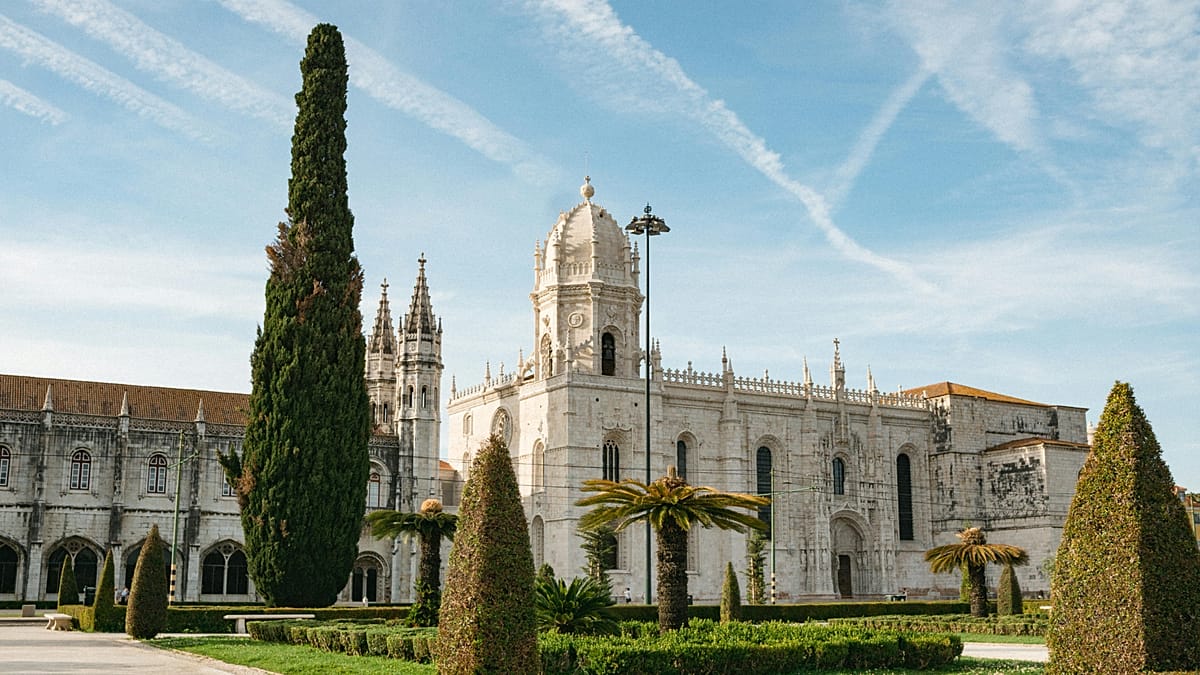
Among the religious monuments that the Portuguese capital has to offer is the Jerónimos Monastery, with its Manueline style. Inscribed on UNESCO’s World Heritage List in 1983, this monument was elected one of the seven wonders of Portugal, serving as a lasting testimony to the faith that marked Portuguese expansion.
At Easter, the Jerónimos Monastery holds solemn masses and other religious celebrations that attract locals and tourists alike.
Lisbon Cathedral
Lisbon Cathedral is the oldest church in the capital, having been founded in 1147 during the reign of King Afonso Henriques. Classified as a National Monument since 1910, it is a mixture of architectural styles.
The cathedral, built on the ruins of an Islamic mosque, synthesises centuries of history and faith. During Holy Week, it hosts special masses and processions that reinforce Catholic tradition.
Batalha Monastery
The district of Leiria is home to one of the most impressive medieval monuments on the Iberian Peninsula. The Batalha Monastery was founded by King João I and began to be built between 1387 and 1388.
Its unfinished chapels, ordered by King Manuel I, give the monument a unique touch, impressing historians and architects from all over the world. It is a UNESCO World Heritage Site and in 2007 was voted one of the Seven Wonders of Portugal. In 2016, it acquired the status of National Pantheon.
Braga Cathedral
In Portugal, Braga is known for being one of the cities that experiences Easter the most, even being known as the “city of archbishops” or the “Portuguese Rome”.
During Holy Week, the capital of Minho becomes a stage for popular devotion, attracting thousands of visitors. The city’s streets are decorated and illuminated at this time of year, creating a truly spiritual and emotional atmosphere.
Sanctuary of Bom Jesus
Another popular religious icon during Holy Week is the Bom Jesus Sanctuary. This sanctuary is also located in Braga, reinforcing the city’s importance during this festive season.
The monument is known for its long baroque staircase of 583 steps, which symbolises spiritual ascension. The church, located at the top of the staircase, has a panoramic view of the city.
Sanctuary of Our Lady of Remedies
In Lamego, the heart of the Douro region, lies the Sanctuary of Nossa Senhora dos Remédios, which is also known for its baroque staircase of over 600 steps.
Both the church and the staircase date back to the 18th century and are one of the most remarkable examples of Portuguese religious heritage. The sanctuary also offers a panoramic view over Lamego and the Douro wine region.
Porto Cathedral
Built in the 12th century, Porto Cathedral is located in the heart of the city and combines romantic, gothic and baroque elements, reflecting the evolution of the country’s architecture.
This is a place of prayer that offers a panoramic view of the city, providing a unique experience. The Cathedral also has three organs, which gives it a certain individuality.
Évora Cathedral
Évora Cathedral, also known as the Cathedral of Our Lady of the Assumption, is the most important cathedral in the Alentejo. Built between the 12th and 13th centuries, it combines Romantic and Gothic styles with Manueline influences and is a UNESCO World Heritage Site.
Évora Cathedral is one of the centres of religious celebration in the Alentejo during Holy Week. The streets around the cathedral are decorated with crosses and flowers, enveloping passers-by in an atmosphere of devotion.
Church of São Lourenço de Almancil
Although religious tourism is less popular in the Algarve, the region also has important monuments that can be visited at Easter. Of particular note is the Church of São Lourenço de Almancil, whose interior is lined with 18th century baroque tiles depicting religious scenes.
Celebrations and masses are especially important in this church during Holy Week, attracting locals and many of the tourists who live in the Algarve region.
Read the full article here