




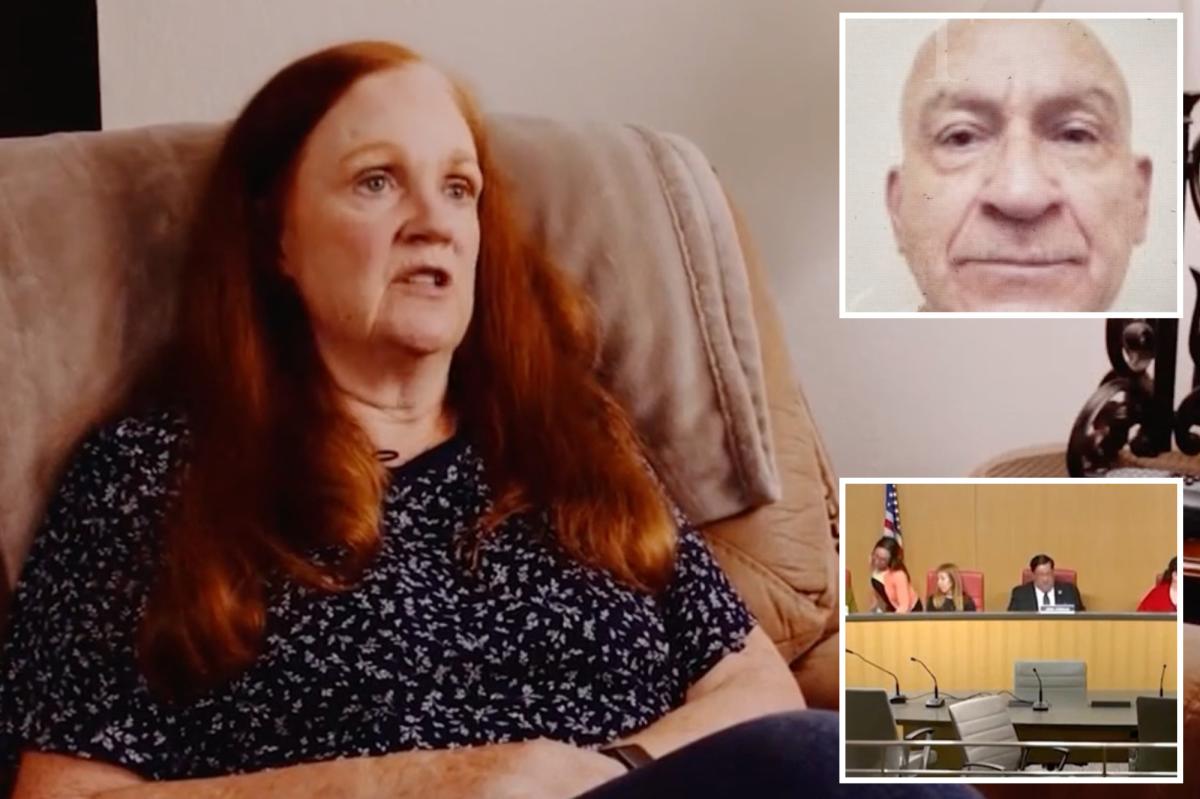
Victims of rapists and murderers are distressed by a quiet change in California law that allow violent offenders to walk free decades earlier than expected.
Victims across the state are pleading with officials to keep their attackers behind bars after a controversial expansion of so-called “elder parole,” which now allows inmates to seek early release at just 50 years old.
Under the previous rules, inmates were eligible for elder parole only after serving at least 25 years of their sentence and reaching age 60.
But in 2021, the law was loosened in an effort to ease prison overcrowding, allowing inmates to apply for parole after serving just 20 years once they turn 50.
One victim, Jennifer Carvalho, wrote an emotional letter to Gov. Gavin Newsom urging him to intervene and keep her rapist, Thomas Martinez, despite him turning 54, KCRA reported.
“Please, I beg you to review this case. He is a repeat violent offender and a rapist. Lives are at stake,” Carvalho wrote.
Martinez was sentenced to 56 years to life for raping Carvalho and another woman.
“As he had the knife to my neck, I remember thinking, ‘If I scream, he’s going to kill me, and my son’s going to wake up in the morning and find his mom dead,’” Carvalho said.
Martinez was convicted in 2004, and Carvalho said she initially felt safe knowing he was “going to go away for life.”
More than two decades later, that sense of security has vanished after she learned Martinez qualifies for elder parole.
“I said, ‘No, no, no, no — he got a 56-to-life sentence. He wasn’t supposed to be eligible for parole until the year 2051. What do you mean he’s up for parole?’” she said.
Following Carvalho’s plea, the state postponed Martinez’s planned January release and is now reconsidering his parole eligibility.
Another victim, Karen Huestis, has repeatedly written to the parole board after learning her mother’s killer could walk free under the same law.
Huestis’ mother, Nancy Nelson, was murdered by George Bouras in 1981.
“What can I possibly say today to make complete strangers understand the magnitude of our loss?” Huestis wrote in her letters.
In 1991, Bouras was sentenced to 25 years to life for killing his girlfriend, Nancy, 43, with a hammer.
Karen recalled the assurance she received from prosecutors at the time.
“You don’t have to worry now. He’s going to be put away for a long time, and you can go and live in peace,” she said she was told.
Instead, Bouras has since been released on parole — leaving Huestis living in fear.
“I have a sentence of life because I have to watch my back all the time,” she said. “That is not the freedom I would like to live with, but it is what it is.”
Sacramento District Attorney Thien Ho branded the elder parole policy a “ticking time bomb.”
“It is an absolute failure of our criminal justice system because it endangers people,” Ho said.
“We made a promise to the victims. The judge made a promise. Society made a promise. The jurors did their job,” he added. “And now, years later, this law just rips everything open.”
California Assemblymember Stephanie Nguyen said the law is “disgusting” and must be revisited.
“I think now is the time we need to bring this back and ask: is 50 old enough?” Nguyen said. “Fifty is still young.”
The policy does not apply to inmates sentenced to death or life without the possibility of parole, according to the California Department of Corrections and Rehabilitation.
Read the full article here