




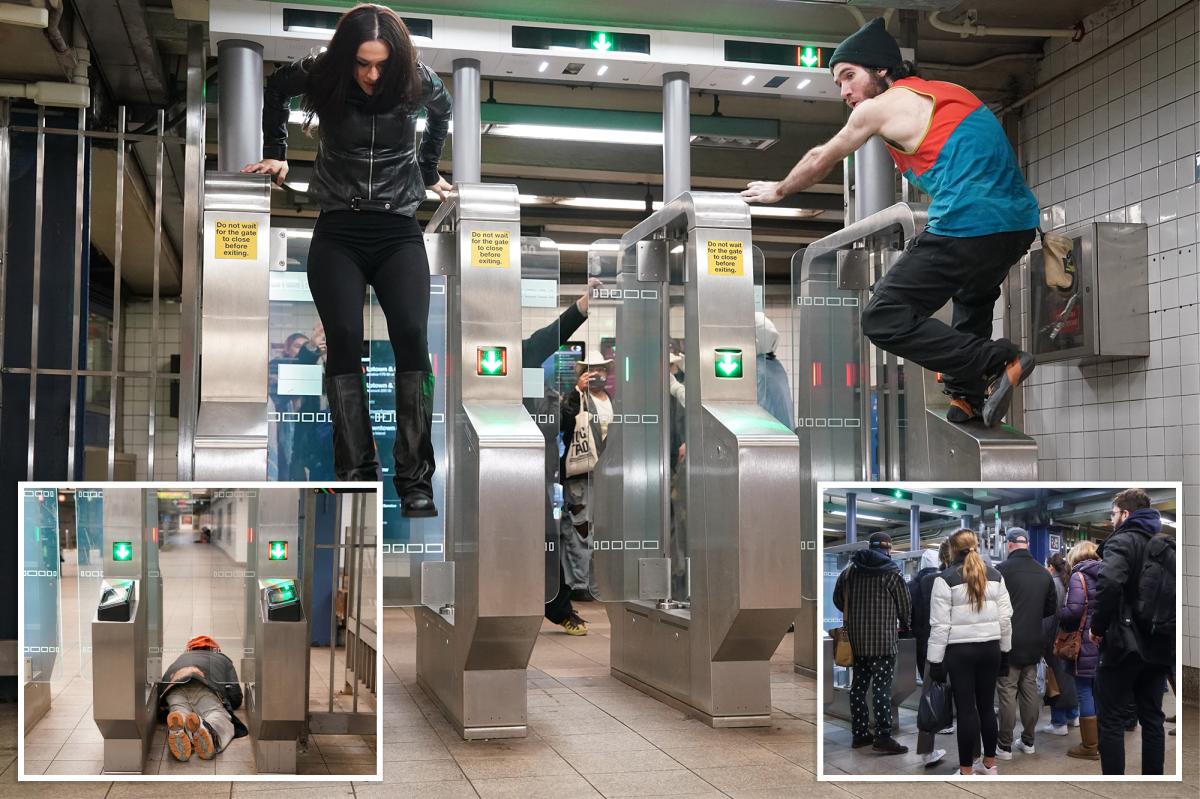
The MTA boasted that its “modern” fare gate pilot was a success on Wednesday — touting drops in fare evasion using limited data while ducking questions about how much the $1.1 billion system will actually cut down on the problem.
At a board meeting, officials flashed a chart claiming the towering glass paddles have cut fare beating by anywhere from 19% to 70%, depending on the station. But those numbers came from a single week of data on a pilot that has been running for more than three months.
Jamie Torres‑Springer, president of MTA Construction & Development, admitted the agency didn’t even have working technology to measure evasion when the first gates went live in December.
“It’s a sample of the data that we showed. It’s pretty consistent across the board,” he said, explaining that the agency’s camera‑based system needed “training” before staff felt confident in the results.
“We’ll have more data shortly,” Torres-Springer added.
When one board member asked Deputy Chief of Staff Cathy Li how much the new gates would shave off the MTA’s about $350 million a year in subway fare evasion, Chair Janno Lieber jumped in before she could answer.
“I’m going to interrupt and take the fifth on that one,” Lieber said. “We have to see more data before we can have confidence.”
The floundering pilot has also sent riders to the hospital.
Several people have been caught in the doors, including a 5‑year‑old girl whose head was trapped long enough that she had to be taken to the emergency room with swelling. Lieber made headlines when he blamed the girl’s mom.
MTA General Counsel Paige Graves told board members the authority has already been put on notice.
“With respect to lawsuits, we have received some notices of claims, but no actual lawsuits at the moment,” she said.
Lieber brushed off the legal risk.
“The MTA gets sued every day, all day,” he said, adding that similar gates are used in other “first‑class world transit systems.”
He insisted the agency is learning from the pilots and making adjustments.
Li tried to lean into the viral videos of New Yorkers hurdling and crawling under the 6‑foot‑tall paddles.
“We know we have many creative New Yorkers who have been able to get over and under and they’ve loved sharing that with us on social media,” she said. Still, she argued, “most New Yorkers are not training for the high jump Olympics.”
“We realize that it’s going to be very difficult to crack down on 100% of fare evasion,” Li said. “But these new gates really eliminate the major sources of fare evasion that we see with our turnstiles and our exit gates.”
Li said the MTA has already tweaked the “paddle reaction times” and the gates’ sensors to better detect backpacks and luggage, calling the rollout a “learning curve.”
“Like the introduction of any new technology there’s going to be a learning curve,” Li said.
The gates are now installed at 20 stations, with plans to expand to 150 stations by 2029.
Lieber framed the pricey project as a morale-builder for paying riders.
“Updating fare gates is one of the most impactful things we can do to encourage fare payment and rebuild New Yorkers’ morale,” he said, calling fare evasion “a fundamental morale issue” as well as a financial one.
Read the full article here