


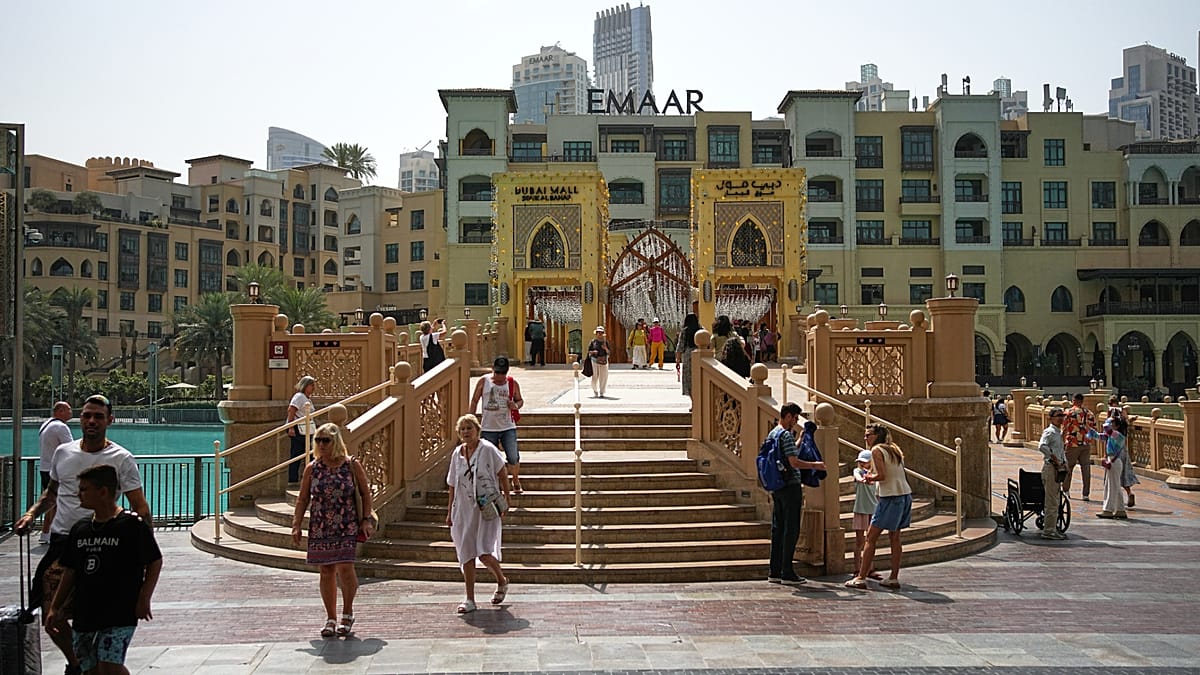
The regional conflict between the US-Israel and Iran is reportedly costing the Middle East travel and tourism industry €515 million a day.
That figure is based on the World Travel & Tourism Council (WTTC)’s 2026 pre-conflict forecast for the Middle East, which projected €178 billion in international visitor spending across the region this year.
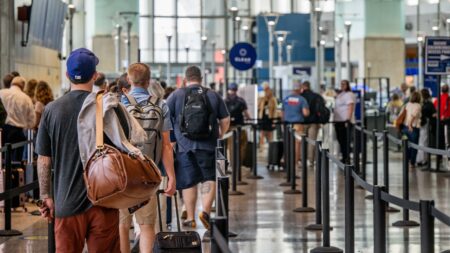
Regional aviation hubs in Abu Dhabi, Dubai, Doha and Bahrain typically process around 526,000 passengers per day, but that number has plummeted as airspace closures have seen flights grounded.
While many of these passengers are just passing through – the Middle East accounts for 14% of global international transit traffic as a key connector between Europe and Asia and Africa – the region also accounts for 5% of global international arrivals.
Currently many airlines are only operating limited flights, a fraction of their typical schedule. Analysis from Flightradar24 shows that on 24 February, Emirates, Etihad Airways and Qatar Airways operated 527, 325 and 563 flights respectively. On 10 March, those numbers were just 309, 56 and 66.
Middle East tourist numbers could drop by 30 million
The rising tensions look set to stifle what had recently been a significant tourism upsurge in the Middle East and the Gulf – but whether temporarily or permanently remains to be seen.
Ibrahim Khaled is the head of marketing for the Middle East Travel Alliance, a network of Destination Management Companies (DMCs) throughout the Middle East.
“We’ve been seeing steady [visitor] growth year over year, especially with all the new tourism investments happening across the region,” he tells Euronews Travel.
“Saudi Arabia is currently at about 10%, but it’s growing incredibly fast since they opened up to leisure tourism in 2019. It’s definitely our most exciting up-and-coming destination.”
The events of the past two weeks have halted that growth in its tracks.
“For places that the US and UK governments have put on no-go or no-fly lists, we’ve unfortunately seen a ton of cancellations,” Khaled says. “Flights are disrupted, and trips to those specific areas are pretty much on hold.”
A report by Tourism Economics has released projections for the impact of the war on regional tourism, which tally with the travel alliance’s outlook.
“We estimate inbound arrivals to the Middle East could decline 11%-27% year on year in 2026 due to the conflict, compared to our December forecast that projected 13% growth,” said Director of Global Forecasting Helen McDermott and Senior Economist Jessie Smith.
“In absolute terms, this would mean a range of 23-38 million fewer international visitors compared to our baseline / previous forecast, and $34bn-$56bn (€29bn-€48bn) loss in visitor spend. This includes expected lingering sentiment impacts beyond the immediate conflict period.”
They added that the impact on tourism demand of this conflict will be larger than that of the conflict last year.
This is due in large part to the retaliatory strikes from Iran on neighbouring GCC countries, which are more established tourism destinations, as well as the wider airspace closures across the region than last year.
GCC countries will be worst hit
Tourism Economics projects that GCC countries will see the largest losses in volume terms, “as they are the largest destinations in the region which have previously relied on perceptions of safety and stability”, McDermott and Smith said.
The UAE and Saudi Arabia are particularly vulnerable due to large international visitor volumes and a heavy reliance on air connectivity. Air transport is more significantly impacted by poorer sentiment than land transport options, the group said in their report.
In comparison, Qatar and Bahrain see land arrivals accounting for 32% and 74% of total arrivals, so they are proportionally less impacted.
“Given the widespread retaliatory strikes by Iran, sentiment effects are likely to be more widely spread across GCC countries,” the report said.
Tourism Economics also highlighted the Middle East’s role as a global transit hub, with its airports accounting for around 14% of international transit activity.
This will inevitably lead to knock-on impacts outside of the region, according to the group. The current disruption will affect travel flows, which typically transit through the Middle East hubs, including major routes between Europe and the Asia-Pacific region.
A resilient region
Despite the gravity of the current situation, tourism industry experts say the long-term effects may not be so drastic.
“We aren’t worried about the long-term impact on the company or tourism in the region. The Middle East has always been an incredibly resilient market, and demand always bounces back fast once stability returns,” says Khaled.
According to the WTTC, which represents the industry’s private sector with members across airlines, hotels, cruise lines and tour operators, the industry could recover in “as little as two months”.
“The impact of international visitor spending across the Middle East is significant and averages around US$600 million per day, but history shows that the sector can recover quickly, especially when governments support travellers through hotel support or repatriation,” says Gloria Guevara, president and CEO of the WTTC.
“Our analysis of previous crises demonstrates that security-related incidents often see the fastest tourism recovery times, in some cases as quickly as two months, when governments and industry work together to restore traveller confidence.”
Read the full article here