


For a destination that’s best known for its ancient wonders, Egypt is undergoing a modern transformation.
Home to some of the oldest – and most recognisable – landmarks on the planet, the North African nation is reshaping its tourism offering with a host of new attractions and locations that both first-time and returning visitors are now discovering.
From the much anticipated opening of the Grand Egyptian Museum to the construction of a new administrative capital east of Cairo, Egypt is investing heavily in new developments, which is helping to drive strong growth in visitor numbers.
In 2025, Egypt welcomed nearly 19 million tourists – a 21% increase year on year. This made it one of the fastest-growing tourism destinations around the world last year, according to UN Tourism’s World Tourism Barometer published in January.
Sherif Fathy, Egypt’s Minister of Tourism and Antiquities, believes that while the country has one of the world’s richest cultural landscapes, its appeal extends beyond its most iconic landmarks.
“The country has touristic infrastructure, different types of products, lots of attractions,” he says in an interview with Euronews Travel at the ITB Berlin tourism trade event. “We have archaeology, we have beaches and many other products.
“We started focusing on this ‘unmatched diversity’, showing the world that we have much more than a beach trip to Hurghada or Sharm El Sheikh or another trip to see the pyramids.”
Grand museums and exhibitions
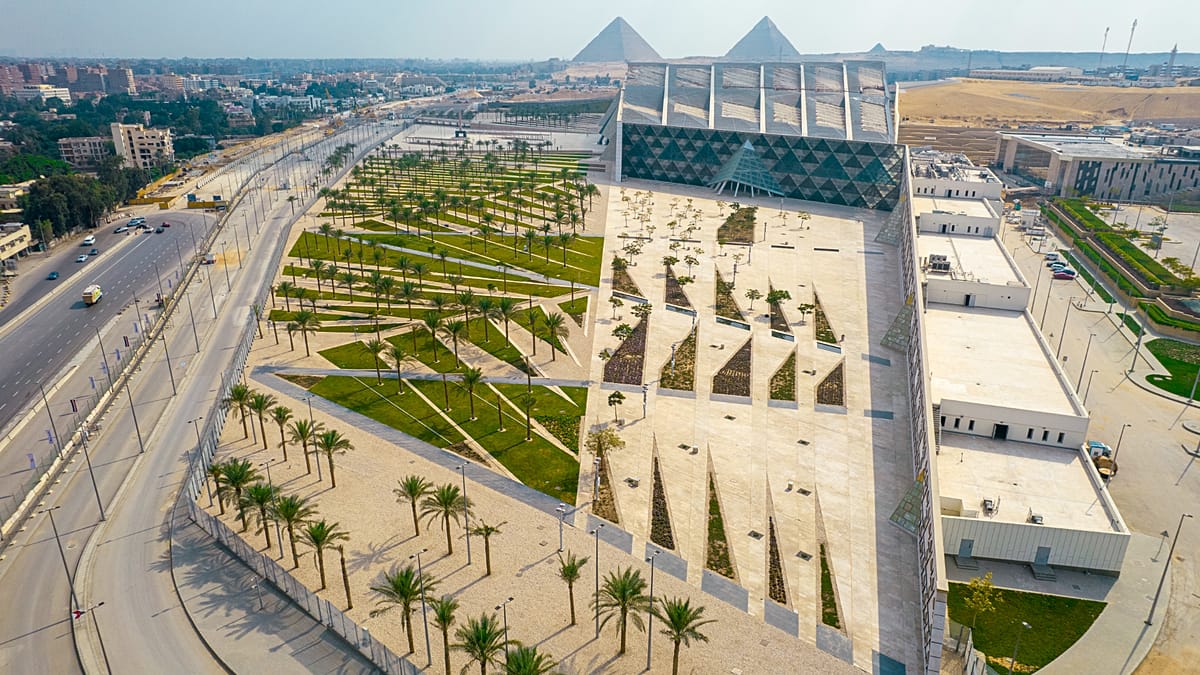
A key symbol of Egypt’s cultural revival has been the long-awaited Grand Egyptian Museum, which officially opened its doors to the public in November 2025.
Twenty years in the making, the $1 billion (€865 million) project is the world’s largest museum dedicated to an ancient civilization. It showcases 50,000 artefacts, including the entire collection of treasures from the tomb of King Tutankhamun, many of which are displayed for the first time.
Located just outside Cairo, and within sight of the Giza pyramids, the complex is expected to attract five million visitors annually.
“The Grand Egyptian Museum is a great addition to our touristic capabilities,” says Fathy. “It’s not just a museum, it’s a museum and a research and development centre, a restoration centre with great infrastructure.”
Alongside the new museum, Egypt is also taking its cultural heritage international through travelling exhibitions. One example is Ramses and the Pharaohs’ Gold: The Exhibition, which is now on display until 31 May at NEON at Battersea Power Station in London.
It features 180 artefacts which have been “selected carefully”, says Fathy. “I invite people to go and have a look at what we’re displaying at this great exhibition, or mobile museum, as I always call them.”
Variety of experiences and a new capital
While Egypt’s historic sites remain the country’s primary draw, tourism officials are also working to highlight the variety of experiences available across the country – from Mediterranean beaches and Red Sea diving to Nile cruises and spiritual journeys.
“Egypt is the country where you can combine cultural visits with beach and sun and fun, as we call it,” Fathy says.
The Mediterranean north coast, for example, is emerging as a fast-growing destination thanks to new infrastructure and improved connectivity.
At the same time, the Egyptian government is investing in long-term projects that will support business tourism and international events.
The biggest project under way is its “New Capital”.
Situated along the corridor between Cairo and the Red Sea, it’s one of the region’s most ambitious urban developments
“The New Capital represents the future,” says Fathy. “It proves that Egyptians are builders and they have been building all over history.”
The city includes major conference venues, theatres and exhibition facilities within a dedicated Culture and Arts district, alongside a growing number of hotels.
“The new capital for us is going to be the future destination for exhibitions and MICE business in general,” he says. “And it will be the hub for business meetings and business-related activities.”
Egypt dominates hotel development in Africa
It’s not just new attractions that are being built in Egypt, but hotels, too.
Africa’s hotel development pipeline is dominated by new projects in Egypt, according to the 2026 Hotel Chain Development Pipelines in Africa report by W Hospitality Group.
Egypt leads the continent with 45,984 rooms across 185 hotels and resorts, accounting for more than one-third of the entire African pipeline and more than four times the number of rooms in second-placed Morocco.
The momentum in Egypt is also being driven by a steady flow of new projects, with 39 hotel deals signed last year and 33 openings expected in 2026, reinforcing its position as Africa’s most active hotel development market.
Read the full article here