



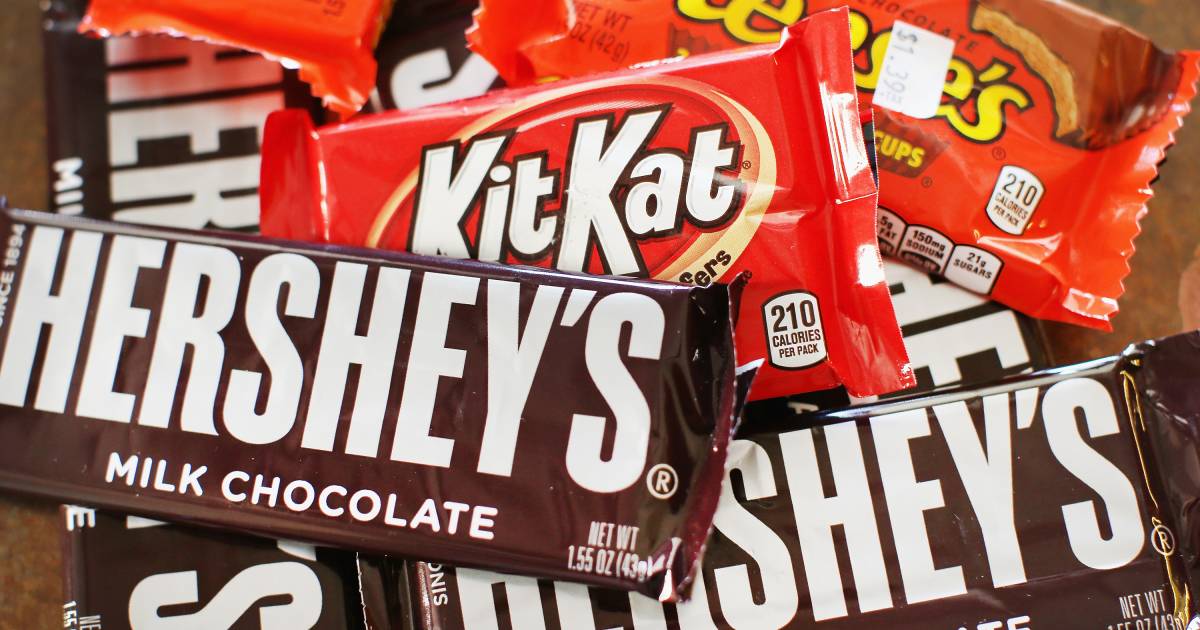
The Hershey Company announced it will return to using “classic milk and dark chocolate recipes” across its Reese’s and Hershey’s products by 2027 — a reversal driven by viral social media scrutiny and a public campaign by the grandson of the brand’s founder.
CEO Kirk Tanner confirmed the shift in an interview with Bloomberg on Tuesday, March 31.
“We’re going to make some small investments to really align the portfolio to what the brand stands for,” Tanner said. “That consistency is important across the brand.”
What’s Actually Changing When It Come to Hershey’s Most Popular Products
Starting in 2026, products inspired by original Reese’s items — including mini cups, seasonal shapes and the Fast Break bar — will be made with real milk chocolate instead of compound coatings. All classic Hershey’s chocolate bars will use “pure milk and dark chocolate,” and Kit Kat is being “enhanced” for “a creamier taste and texture,” according to Tanner.
Hershey said the shift from compound coatings to real chocolate affects less than 3% of Reese’s products and a small portion of Hershey’s products. The company also said it is “on track” to remove all artificial colors from its products by the end of 2026.
The original Reese’s Peanut Butter Cups have used the same ingredients — milk chocolate and peanut butter — since their creation in 1928. But some expanded Reese’s products, including Reese’s Mini Eggs and Reese’s Pieces, do not contain milk chocolate, according to their labels.
How the Hershey’s Backlash Started
Brad Reese, the grandson of H.B. Reese, publicly criticized Hershey earlier in 2026 after discovering some products used chocolate-flavored coatings instead of milk chocolate. He shared a letter of complaint on LinkedIn that went viral.
“My grandfather,” Reese wrote, “built REESE’S on a simple, enduring architecture: Milk Chocolate + Peanut Butter.”
He added that Hershey had replaced the original formula “with compound coatings and Peanut Butter with peanut-butter style cremes across multiple REESE’S products.”
Around the same time, videos on TikTok showing Hershey’s chocolate bars bending instead of snapping gained traction online, with users suggesting the formula had changed.
In an April 2026 interview with NBC News, Reese credited consumers: “If this is true, the people who deserve the credit are the loyal fans who were alarmed by what Hershey was doing.”
But he expressed skepticism about Hershey’s motives: “But I am seeing a lot of red flags here. I think what Hershey is trying to do here is change with PR narrative.”
Reese also challenged the company’s timeline and set a personal benchmark: “If something like the Valentine’s Day Reese’s Mini Heart still doesn’t taste like real milk chocolate next year, I’ll know they’re lying.”
Why the Timing of the Hershey’s Dispute Matters
Tanner said the shift was already underway before Reese’s public criticism. “Right when I started with the company, we did a deep dive across our portfolio,” he said. Tanner joined Hershey in August 2025.
But the announcement arrives amid significant cost pressures. Cocoa prices increased approximately 70% in 2024 due to crop disease, aging trees and extreme weather in West Africa, which produces about 70% of the world’s cocoa supply, according to the Associated Press. Prices reached a record high in late 2024.
Chocolate prices rose 14.4% in early 2026 compared to the same period in 2025, according to data shared with ABC News by Datasembly. During a February 2025 earnings call, former CEO Michele Buck said the company could adjust pricing, packaging and recipes in response to rising costs.
How to Spot the Difference on Your Hershey’s Bars
If you want to know what you’re buying right now, check the label. Products labeled “milk chocolate” meet FDA standards for real chocolate. Labels using terms such as “chocolate candy,” “chocolatey” or “crème” may indicate the use of alternative ingredients, including vegetable oils instead of cocoa butter.
That distinction is exactly the kind of quiet label shift that consumers and viral critics are now scrutinizing more closely — and it signals a broader trend of ingredient transparency being forced by social media pressure rather than corporate initiative.
Read the full article here