



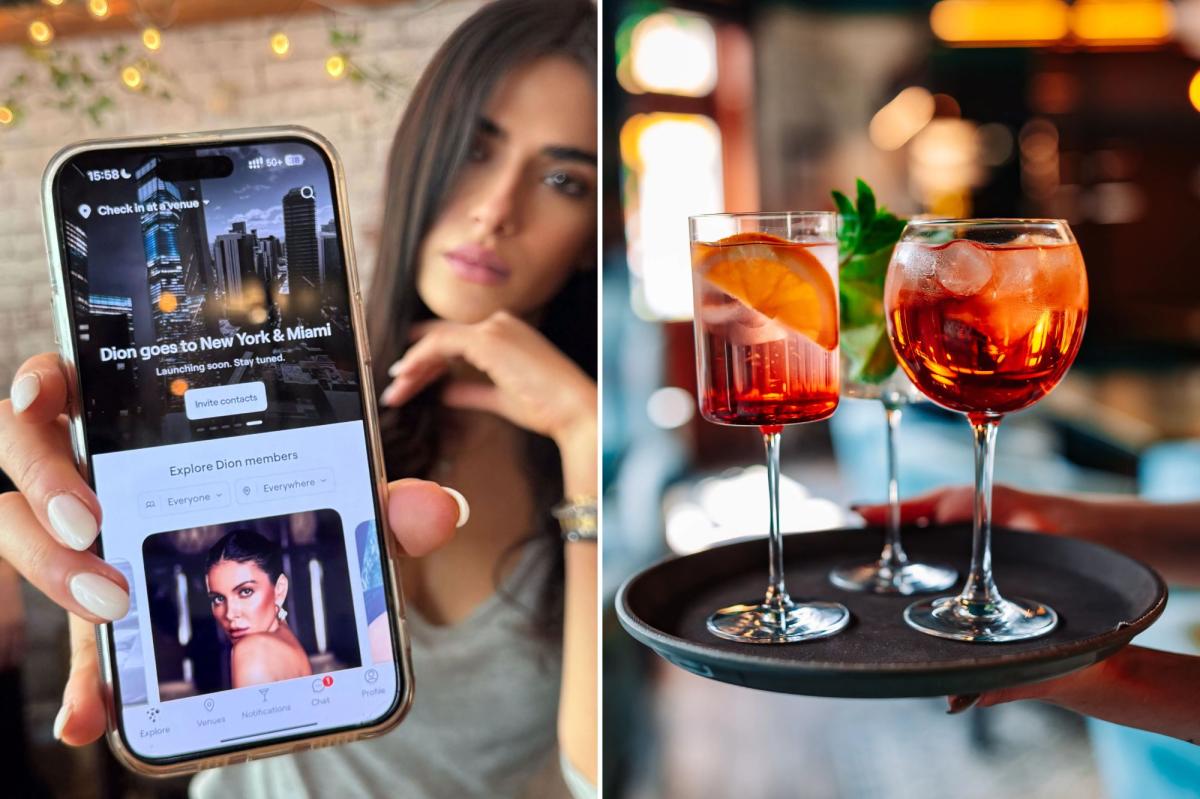
The move is as classic as a good New York bar — you catch someone’s eye, or notice them and want them to notice you. You slide down, amble over, or even call out from down the other end, offering to buy the object of your sudden interest a drink.
Or, rather, you did until the age of the smartphone, which now has everyone avoiding social interaction like it’s a religion, even when out on the town trying to meet people.
Now, IRL-phobes can take not speaking to each other to a new level, thanks to a popular app that allows you to send cocktails to strangers — without so much as an “is this seat taken?”
The first-of-its-kind and free-to-use, Dion — which calls itself a “social club with taste” — is being downloaded left and right by New Yorkers looking to meet cute on the sly, make business connections, or even gift a friend.
After being vetted and moved off a 20,000-strong waitlist, members can send each other anything from coffee to an espresso martini, at one of more than 90 venues.
And it’s not just about digitizing yet another human interaction, said co-founder Revekka Palaiologou — who told The Post that the idea for Dion (named after the Greek god of winemaking and fertility) was sparked after she attempted and failed at gifting a bottle of champagne for a friend’s birthday dinner.
“I couldn’t be there, so I called the restaurant up to surprise her with it at the table,” said Palaiologou, who previously worked at Bloomberg as a senior software engineer. “It was a whole process: you have to give them your card, sign an authorization form. The next day I asked ‘How was your birthday?’ and she said it was nothing special. She never got my gift.”
Founded by Palaiologou and fellow entrepreneur Miltos Kambourides in 2024, word of mouth has turned it into a sensation both in the Big Apple and in jetsetter hotspots like Miami and Dubai.
Here in NYC, users can send drinks back and forth at hotspots like Caffe Dante and Chez Margaux in the West Village, FiDi’s exclusive Casa Cipriani and SoHo’s retro-cool Fanelli Cafe, with users paying for the gifted libations directly through the app.
Drinks can cost users anywhere from $3 for a cup of java to a $19 Negroni — plus a service fee that Dion collects.
Ben Schroeder, a 30-year-old Williamsburg resident who runs a staffing agency for private chefs, is a big fan. He’s mostly used the app to land dates, saying that before downloading Dion, he found meeting new people difficult, because he’s typically zipping around the country for work.
“It’s nice to have a consolidated group of people beyond a Raya situation,” he told the Post, referencing an exclusive dating app. “When I was in Dubai for New Year’s, I had a few women send me drinks and I actually met up with some of them. When somebody sends you a drink, it sends you a notification and starts a conversation.”
Whether trying to network or shack up, users like Schroeder can find each other on Dion by searching for specific friends — or hopeful contacts.
They also have the option to flip through Dion’s user categories, which include technology, fashion, finance and real estate, mimicking a dating app, as it includes users’ pictures, short bio and their drink of choice.
After being treated to a drink by a friend or secret admirer, app users can instantly redeem it at one of the app’s many partner venues.
“I’m not one to sit here and swipe through dating apps,” Schroeder explained. “Obviously, I’d like to meet in person because I’m busy, so everyone on Dion values time and has a lot going on otherwise.”
According to Dion’s stats, 60% of drinks sent result in a one-on-one meeting, which the team says is ten times higher than the digital norm on comparable connection services.
“Dating will absolutely keep getting more digital, but the most interesting apps are the ones that treat technology as a doorway back to real‑world experiences, not a replacement for them, so I’m optimistic about that,” Natassia Miller, a Manhattan-based AASECT Certified Sexologist for DatingAdvice.com, told The Post.
The downside?
“When money is built into the first interaction, it can blur the line between flirting and financial obligation, especially for women who are already navigating safety, power dynamics, and entitlement in dating,” Miller added.
According to Palaiologou, users have the choice to reject drinks, too, and the cost of the drink will then revert back to whoever sent it.
“It’s just a way to break the ice, it’s your choice if you want to carry on the discussion,” she added.
While some might roll their eyes at Dion being another way to virtually engage with someone, others believe there’s great value in it.
“Before the dating apps took over, men and women already had cited major approach anxiety as a main reason they didn’t approach someone in real life who they found attractive,” said Alessandra Conti, Celebrity Matchmaker & Dating Expert, to www.matchmakersinthecity.com.
“I love that this app combines the idea of approaching someone without the risk of public rejection.”
However, Conti warns, “Apps and companies that encourage in-person meetings as soon as possible with as little communication beforehand are positive. However, people do need to be wary of anyone they are meeting through an app.”
Since Dion is also designed to send matchas and martinis to people users already know — Drew Jessup, an East Villager creative director and menswear influencer, has used the app to send drinks to his girlfriend, Tess, when she’s out on the town.
“When I heard the mission behind it, it made a lot of sense to me,” Jessup told The Post. “If my girlfriend is in Miami, I can easily send her a glass or bottle of something.”
Jessup has also relied on Dion to discover places he would have otherwise not visited, like the NoHo cocktail hideaway Jac’s on Bond, or the East Village haunt Ella Funt.
“… it’s a great way to discover new restaurants,” he mused.
Beyond sending flirty drinks or discovering new eateries, NYU student Kaylee Chen has utilized Dion to expand her professional network.
“I’ve sent a couple of drinks, because I’m recruiting for consulting and it’s really hard to set up coffee chats because it’s the hardest industry to break into,” Chen told The Post. Her fandom led to applying and later interning for the company.
“It’s definitely different than sending a cold email, but it’s also more fun and intentional. I met one person working in tech, and we were laughing about how it was so untraditional,” Chen recalled.
“ We live in the most connected generation, but it’s the most lonely one as well,” said Palaiologou. “Everything gets lost and there is so much fatigue and noise. This is about bringing people together in a very intentional and real way.
Read the full article here