



NEWYou can now listen to Fox News articles!
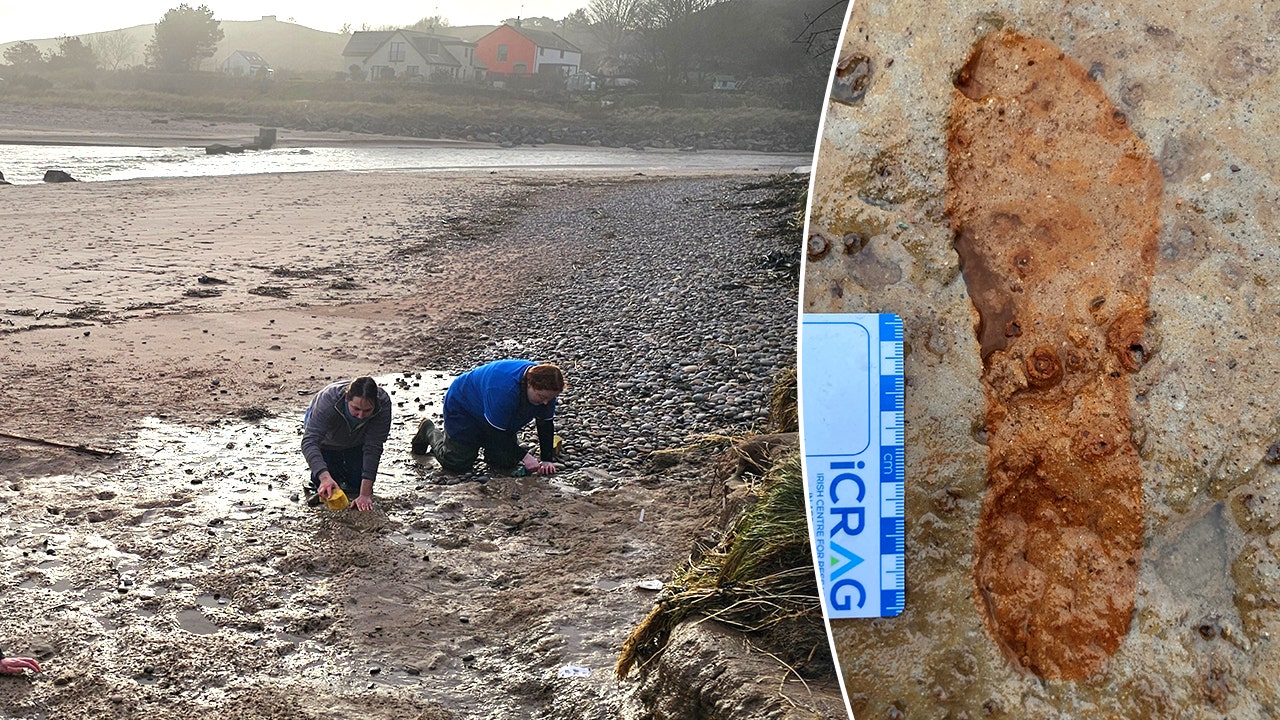
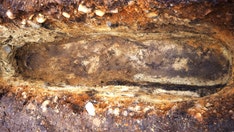
Dog walkers recently stumbled across strange-looking footprints on a Scottish beach — a discovery that triggered an urgent archaeological excavation.
The footprints were uncovered at Lunan Bay in Angus, on Scotland’s eastern coast. Sands had shifted during winter storms in the area, revealing the prints.
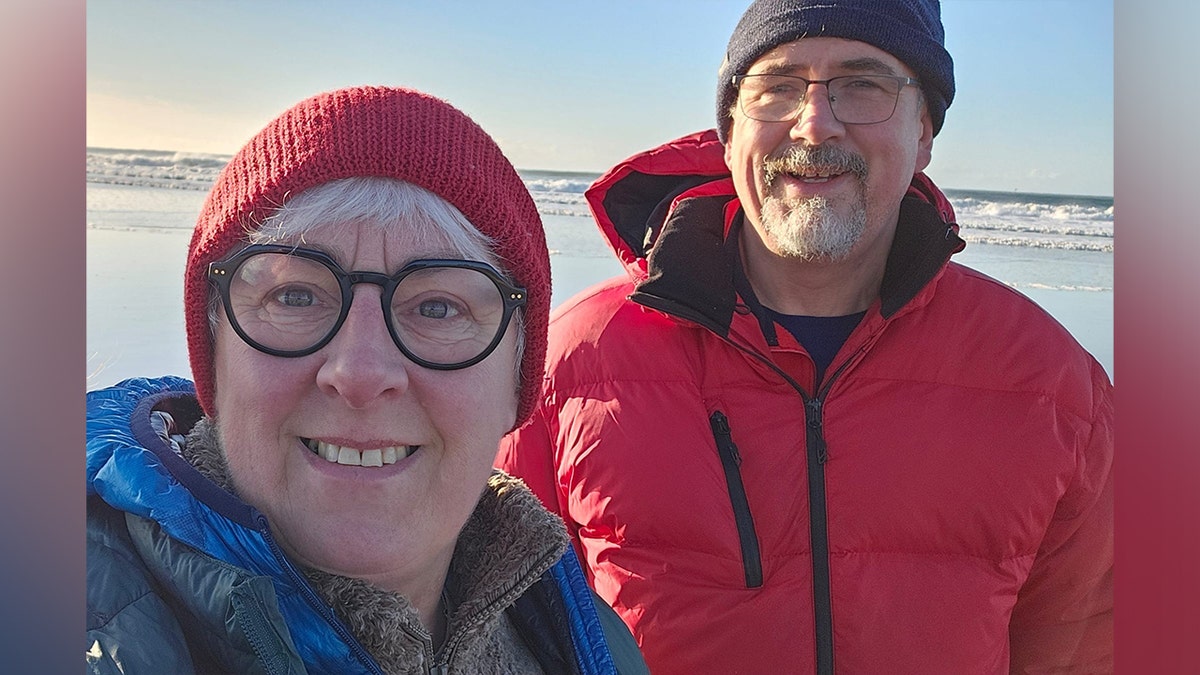
Two locals named Ivor Campbell and Jenny Snedden were strolling along the beach with their dogs, Ziggy and Juno, when they spotted “distinct markings,” the University of Aberdeen said in a recent press release.
“[Campbell] called council archaeologist Bruce Mann who, suspecting both the significance of the discovery and the race against time they faced to capture it — called in expertise from the University of Aberdeen,” the statement added.
A team from the university, led by Professor Kate Britton, “dashed to the scene” to study the footprints.
They were in such a rush that they picked up Plaster of Paris from a craft store on the way.
Once they arrived, archaeologists fought wind speeds of 55 miles per hour to document the site.
“We were all very conscious this truly was an archaeological emergency.”
Authorities dated the footprints back to the early first century A.D. — the “time of Boudicca, Jesus and the height of the Roman Empire,” the university said.
Though the footprints have now been lost to time, archaeologists successfully recorded and mapped the site, as well as making 3D models and physical casts. Radiocarbon dating confirmed the prints were 2,000 years old.
ARCHAEOLOGISTS UNCOVER EERIE ANGLO-SAXON ‘SAND BODIES’ AT NUCLEAR POWER STATION SITE
Only a handful of similar footprints have been found at sites in England — but never Scotland, Britton told Fox News Digital.
The expert said that three features proved the footprints were ancient, rather than modern: the semi-fossilized nature of the clay, the fact that the clay had not been previously exposed and the way the prints cut into the stratified sediment layers.

Britton said her team was concerned that “very destructive storms and unusually high spring tides could destroy what they had revealed at any time.
“We prioritized getting to the site, equipping ourselves as best we could in a hurry. … We were all very conscious this truly was an archaeological emergency.”
TEST YOURSELF WITH OUR LATEST LIFESTYLE QUIZ
“The weather was still so horrendous that we couldn’t fly our drone, and it was a battle just to clear the site to properly see the footprints so we could document them.”
Britton added, “Working on the site was like being sand-blasted — truly the worst conditions I have ever worked in.”
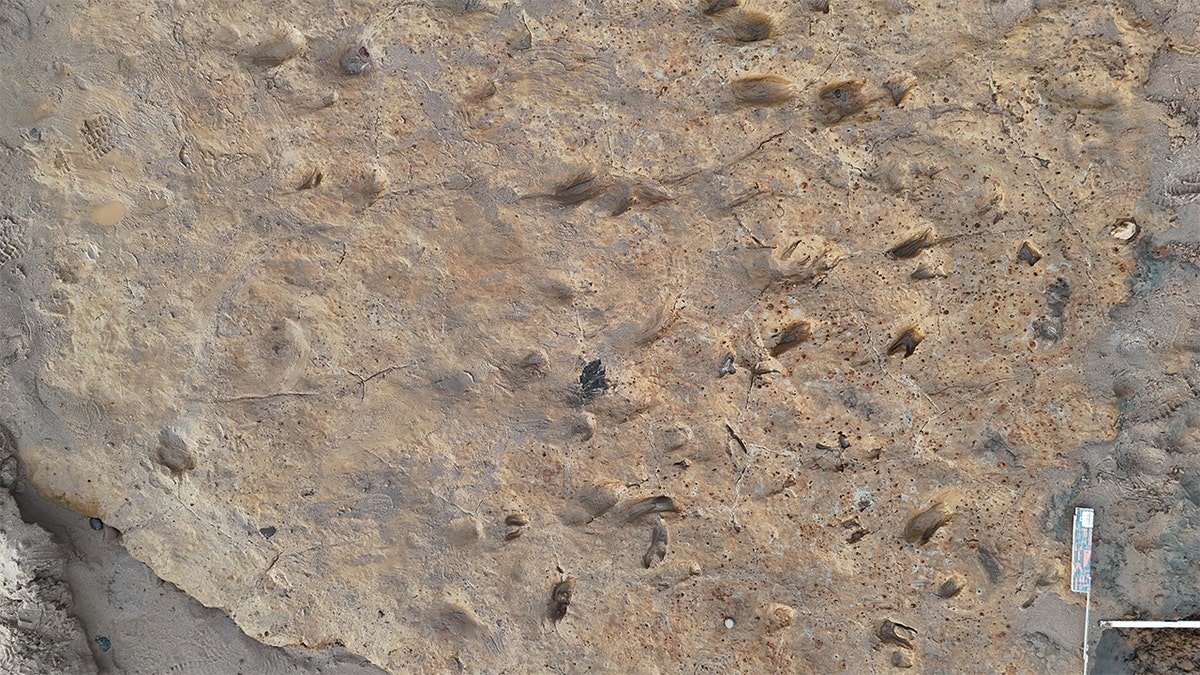
After three days of work, archaeologists successfully logged what they could.
Within days, the sea had destroyed the site.
“We visited again the following week, and could see very few of the features remaining — the sea had claimed the site,” said Britton.
She emphasized that the site is “very rare” globally, in addition to being the first of its kind in Scotland.
“While there are famous examples of footprint sites globally, they are very unusual, and many archaeologists never have the opportunity to work on a site like this — it’s once-in-a-career stuff,” she said.
“It provides some fascinating new insights into human life and the environment in this area millennia ago.”
Britton had experience working on similar sites in England — and stressed that the site “isn’t just interesting because it’s rare. It provides some fascinating new insights into human life and the environment in this area millennia ago,” she said.
TEST YOURSELF WITH OUR LATEST LIFESTYLE QUIZ
“The plant sub-fossils, and the nature of the deposits, tell us this was a muddy estuary in the past — like a salt-marsh. The footprints and the dates tell us this was an environment that held attractive resources for animals, with opportunities for grazing, but also for people.”
Britton said Campbell and Snedden even became “enthusiastic” participants in the fieldwork.
“[They] let us park our vehicles on their land, offered us warm drinks and respite from the cold, and helped out preparing materials and carrying buckets,” she said. “They were brilliant.”
Britton stressed that the public is “vital” in reporting archaeological sites, as coastal erosion remains a global problem.
She urged members of the public to “keep an eye on known sites at risk, but also to report new sites as they emerge before they are lost forever.”
Related Article

Read the full article here