



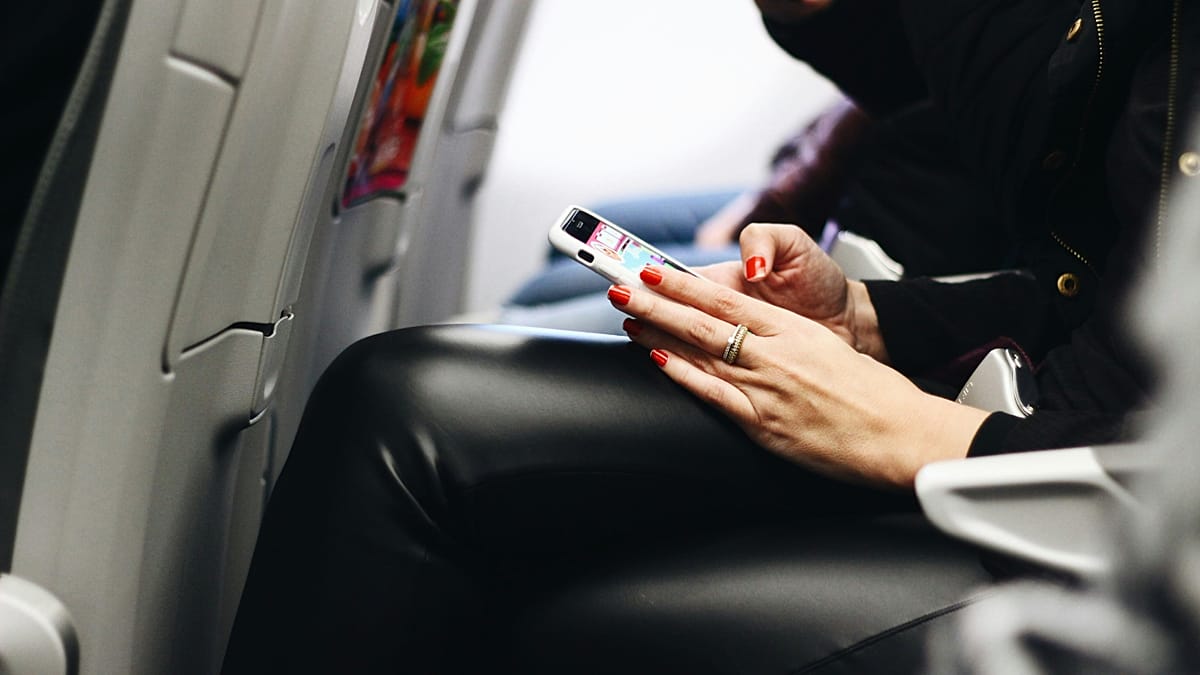
Have you ever been mid-flight and wished you could make a quick call – just to check in or share a quick update with someone? Or, does the thought of in-flight phone calls make you recoil? Well, with British Airways (BA), this might soon be a new reality.
In March, BA’s Houston-bound 787-8 aircraft took to the skies, equipped with Starlink wifi – the first such occurrence for a British carrier. The service includes download speeds of up to 500+ Mbps and supports streaming, scrolling (doom, or otherwise), gaming and video calls.
BA described the moment as a “milestone in the flag carrier’s investment in transforming the customer experience”, with the free service allowing passengers to stream, work and stay connected.
“This milestone is part of a wider investment in elevating every aspect of our customer journey as we continue to modernise our airline”, said Sean Doyle, BA’s Chairman and Chief Executive.
Powered by Elon Musk’s Starlink technology, the move marks a step in BA’s digital overhaul. But while seamless connectivity in the air may appeal to many, not everyone is convinced, especially with the prospect of in-flight calls already raising some eyebrows.
Are calls on board controversial?
Over the next two years, BA plans to roll out the high-speed wifi across its fleet of more than 300 aircraft. The carrier added that the service will be free to all passengers, regardless of cabin class.
But as connectivity improves in-flight, the Oneworld alliance member is already urging caution, especially when it comes to calls, advising travellers to “please be considerate”.
Alongside guidance advising to use headphones when listening or watching content on devices, BA hinted at the concerns the calls could bring, adding: “If you’re making a call, keep your voice low and use headphones.”
While some online observers lauded the move, Sophie Dickinson, deputy travel editor of The Independent newspaper in the UK, said that “the air was once a happy haven from intrusive (and one-sided) conversations”.
In his piece for the same paper, travel expert Simon Calder cited Dickinson as “deploring the decision”, where she also suggested that it would be better to postpone meetings altogether to preserve the commonplace ASMR-style airplane hum in cabins.
Calder also wrote that in-flight calls might prompt the introduction of “quiet zones”, similar to those on certain train carriages.
Global airlines vs US restrictions
BA follows Air France and Qatar Airways as the latest carrier to partner with Starlink and offer in-flight connectivity.
Latvian airline airBalticbecame the first to introduce the service in Europe, starting from February 2025, followed by Air France and SAS later that year.
Air France began with 30% of its fleet and plans to have all its aircraft connected by the end of 2026. Similarly to BA, Air France’s advice encourages “discrete” device usage to maintain “a quiet environment on board”.
The US context is slightly more complicated.
While American Airlines’ onboard wifi is sponsored by AT&T, the carrier’s policy explicitly prohibits in-flight calls and passengers must put all their devices in airplane mode.
This is in line with the US Federal Communications Commission ban on mobile devices on certain radio frequencies within domestic flights. According to a study by the American Department of Transportation (DOT), as many as 96% of respondents from a pool of 1,700 people supported the ban on in-flight calls, with an additional 2% saying they would be in favour of allowing in-flight calls only in the case of emergencies.
The department also found that respondents were concerned about “air rage” from calls placing a strain on in-flight atmosphere, including disruptions to sleep.
Just 2% of participants were against the ban.
However, wifi-based calls aren’t restricted, according to the US DOT, leaving a loophole for airlines to offer in-flight calling.
“Consumers deserve to have clear and accurate information about whether an airline permits voice calls before they purchase a ticket and board the aircraft”, the previous Secretary of Transport said in 2016.
Read the full article here