


Apple’s WWDC26 was not the kind of event that sends the tech world into a collective sugar high.
There was no dramatic new device category, foldable iPhone, or surprise hardware reveal — and none of the AI demos made the industry stop and say, “Well, that changes everything.”
For some Apple watchers, that will be enough to call the event underwhelming. I think that misses the point, because Apple was making a quieter but more important statement.
As I discussed in my SmartTechCheck EduSeries episode on WWDC26, Apple used this year’s developer conference to reinforce a different vision for AI: it should not feel like a separate destination. Instead, it should become part of how the entire Apple ecosystem works.
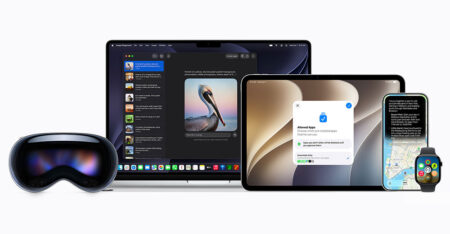
That is a very different message from much of the AI industry. Apple is not trying to convince users to live inside a chatbot. It is not trying to turn every interaction into a prompt. It is trying to make intelligence appear in the places people already spend time: Siri, Photos, Safari, Messages, Mail, Calendar, Shortcuts, the iPhone camera, the Mac, Apple Watch, and Vision Pro.
That may not be as dramatic as a new piece of hardware, but it may be more meaningful.
Siri AI Is the Reset Apple Needed
The centerpiece was Siri AI, and Apple badly needed this reset. Siri has been drifting for years. It has been useful enough for basic commands, but nowhere near the intelligent assistant Apple users should expect in 2026.
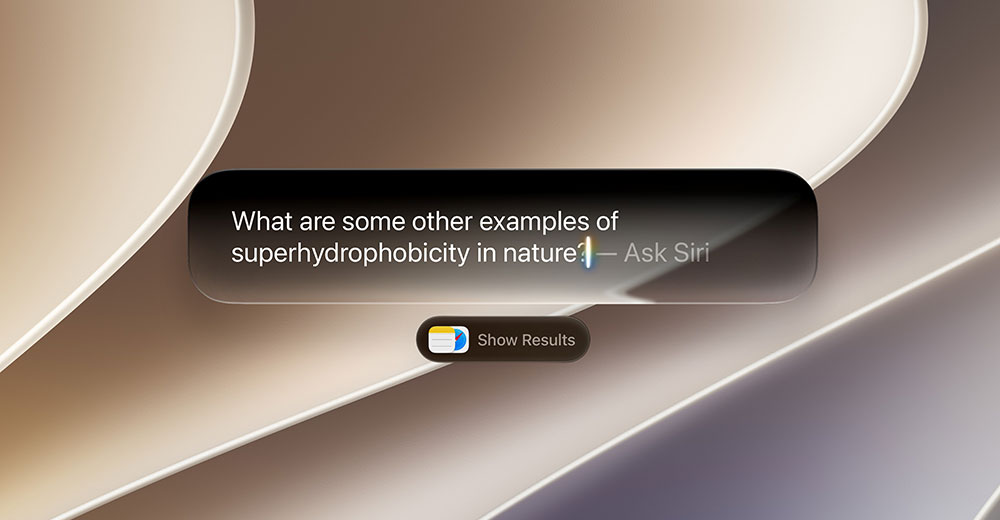
The new Siri AI is designed around personal context, onscreen awareness, web knowledge, and the ability to take action across apps. That means Siri should be able to understand what you are looking at, find relevant information from your messages, emails, photos, and apps, and then help move the task forward. That is the right direction, and it sets up the broader value of the new Siri experience.
The dedicated Siri app also matters more than the name suggests. It gives Siri a place where conversations can continue, and history can follow users across Apple devices. That is important because most AI interactions today still feel disposable. You ask something, get an answer, and the thread often disappears.
Apple wants that context to travel with you across devices, which is where its ecosystem advantage becomes obvious. If Siri AI can move across iPhone, iPad, Mac, Apple Watch, and Vision Pro in a useful way, Apple has something competitors will struggle to match in terms of device integration.
However, there is one concern Apple cannot ignore: speed. Some Siri AI demos exhibited noticeable latency. That is not a small issue. When users ask an assistant to help in the moment, the experience has to feel quick and natural. A delayed response breaks the illusion fast.
To Apple’s credit, the demos did not look overly sanitized. The company seemed willing to show the experience with some real-world delay baked in. That transparency is better than pretending everything is instantaneous. Still, users will not grade Siri AI on Apple’s honesty. They will grade it on how well it works.
Apple’s Best AI Pitch Was Practical, Not Theatrical
Visual Intelligence may end up being the most mainstream-friendly announcement from the show. The concept is easy to understand: point your iPhone camera at something, ask a question, and get useful help. Food, bills, objects, screenshots, and on-screen content all serve as entry points for AI.
That is the kind of feature regular users can understand in seconds, and that simplicity matters.
It also shows why Apple’s approach could resonate: the company is not presenting AI as a novelty act, but as a tool that removes friction from ordinary moments. That same philosophy appeared throughout the company’s AI announcements.
Across Apple Intelligence, the company focused on practical improvements: smarter photo editing, AI-assisted web and productivity tools, stronger password management, and more capable image generation features.
None of those features are sci-fi, and that is the point. They are useful, understandable, and address the daily annoyances that make technology feel heavier than it should be.
Brett Faulk, my colleague and SmartTech Research contributor, made a similar point after watching the event. His view was that Apple Intelligence and the enhanced Siri AI feel more tangible because Apple tied them to everyday use cases rather than abstract AI promises.
Apple was not trying to dazzle developers and consumers with AI theater. Instead, it was trying to show how AI can help with the stuff people already do every day.
Trust May Be Apple’s Biggest AI Advantage
The parental control updates also deserve more attention than they will probably get. Child Accounts, Ask to Browse, Time Allowances, communication approvals, content safety filters, and a redesigned Screen Time experience are not headline-grabbing features. But for families, they may be among the most useful announcements Apple made.
Faulk called the parental control updates his biggest takeaway from the event, and he is right to highlight them. Apple delivered a comprehensive family safety update, with a stronger focus on child protection and more effective tools for parents who are trying to manage screen time, app access, websites, contacts, and age-appropriate content.
Parents are confronted with a mix of screens, apps, websites, messaging, social media, adult content, violent content, and kids who often know how to work around restrictions. Apple is trying to make those controls more usable and less exhausting.
That also fits the company’s broader story of trust. Many mainstream consumers remain deeply uneasy about AI. They worry about privacy, scams, fake content, surveillance, and whether their personal data is being used in ways they do not understand. Apple has spent years building a brand around privacy, and WWDC26 made clear that it intends to make that reputation a central part of its AI strategy.
That does not mean Apple automatically wins, though the challenge is still clear.
What Apple Still Has to Prove
Siri AI has to be fast. Visual Intelligence has to be accurate. Private Cloud Compute has to live up to Apple’s promises. Developers need to embrace App Intents, Foundation Models, Core AI, and the new Xcode capabilities. If those pieces do not come together, this could become another ambitious Apple Intelligence story that sounds better on stage than it feels in daily use.
One notable omission was any discussion of foldable devices or foldable-screen development. If Apple is moving in that direction, WWDC would have been a logical place to begin preparing developers. The silence does not rule out a future foldable iPhone, but it suggests Apple is not ready to open that door yet.
My takeaway is that WWDC26 was not a fireworks event, but a platform event with a clear purpose.
Apple did not deliver one massive, market-shaking moment. Instead, it laid out a clear roadmap for making AI more native, more useful, more private, and less intrusive.
That may frustrate people looking for the next big Apple spectacle, but the payoff could be bigger later.
If Apple can make AI feel helpful without feeling creepy, WWDC26 may prove more important than it seemed at first glance.
Read the full article here