


Published on •Updated
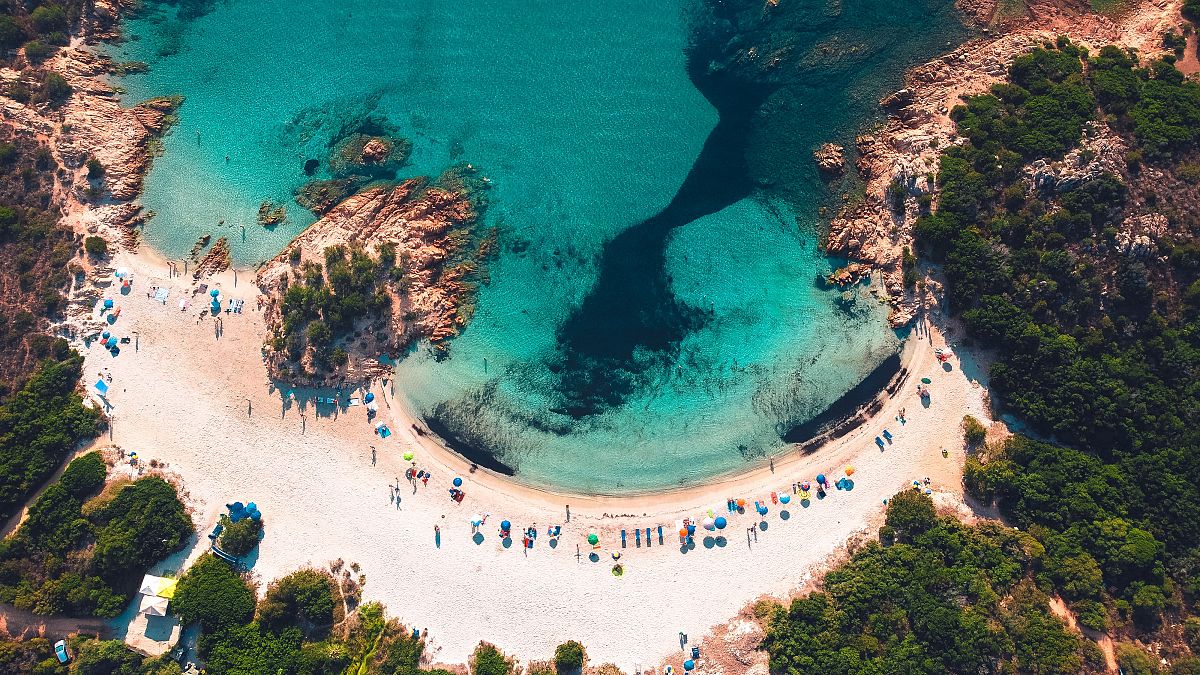
On the Italian island of Sardinia, going to the beach requires some planning.
The summer hotspot now has visitor caps, obligatory booking and etiquette rules on many of its most famous sandy stretches.
The island’s coastline is world-renowned and is frequently voted as one of the top places in Italy for a seaside holiday.
But it has also been suffering due to disrespectful visitor behaviour and overcrowding.
Here are all the places where the island has limited access or introduced regulations to safeguard its most popular beaches.
Spiaggia Rosa: €3,500 for stealing sand
The Spiaggia Rosa, located on the outlying Budelli island, draws thousands of tourists a day in summer to admire its magnificent pink sand. But visitors can only see the picturesque sands from a distance on a boat.
Because of the beach’s fame, it has been closed off to visitors since the mid-1990s after its coveted sand began to disappear. The local government took action after tourists were found to be smuggling kilos worth away as souvenirs.
Local authority regulations now mean walking on the beach will land you a €500-plus fine, while anyone caught stealing the sand will have to pay up to €3,500.
La Maddalena, Cala Coticcio and Cala Brigantina are capping visitor numbers
In the archipelago of La Maddalena, two beaches now have restricted access. Only 60 people a day can visit Cala Coticcio and Cala Brigantina over the summer.
Travellers need to book their slot online and pay €3 per person to access the beaches. You can only visit with an authorised guide, whom you need to contact directly.
Several other beaches around the island now only allow access to a limited number of visitors.
In the north, Cala Brandinchi and Lu Impostu will limit numbers to 1,447 and 3,352 respectively between 1 June and 30 September. Visitors also need to book via the San Teodoro app or on the dedicated website.
At Cala Mariolu, 700 people are allowed at a single time between 15 June and 15 September, with a €2-3 environmental levy depending on how you arrive and whether you visit other beaches.
In Villasimius in the southeast, beachgoers heading to Punta Molentis have to pay a €10 fee. Visitors to Riu Trottu and Portu Sa Ruxi are required to pay to access the car park. Each vehicle costs €10-15 while cyclists and pedestrians pay €3.
Staff are stationed at car parks and beach access points to check tickets.
Beach towels banned on Pelosa beach
On the west coast, Stintino’s famed Pelosa beach is now only open to a limited number of visitors per day. A maximum of 1,500 people are allowed to access the beach daily. Last year, visitor numbers reached as many as 4,000 on some days.
Those looking to sunbathe on Pelosa beach need to book a ticket costing €3.50. Regulations also state that visitors can only use beach towels if they place mats underneath them, which trap less sand. This rule will reportedly be more strictly enforced this year, with possible €100 on-the-spot fines.
Ogliastra: Time limits for beachgoers
In Ogliastra on the east coast, 300 people a day are permitted on Cala Birìala and beachgoers who arrive by boat can only stay for 90 minutes.
Similarly, visitors to Cala dei Gabbiani are also capped at 300 and can stay between 70 and 90 minutes.
How is Italy clamping down on overtourism?
Sardinia joins several other popular tourist destinations that have introduced restrictions as a result of overcrowding.
Venice now has a booking system and fee to visit the city. In the Italian Riviera town of Portofino, tourists lingering too long and blocking streets face fines of €270.
Read the full article here